Asphalt Rolled Roofing Material vs. EPDM and Mod-Bit Compared
Compare asphalt rolled roofing material against EPDM and modified bitumen. Explore costs, lifespans, failure modes, and low-slope installation specifics.

The Low-Slope Dilemma: Budget vs. Longevity
When addressing low-slope or flat roof structures—such as garages, sheds, porches, and commercial outbuildings—property owners typically narrow their choices to three primary membranes. Asphalt rolled roofing material (often referred to as Mineral Surfaced Roll Roofing or MSR) is the undisputed budget champion. However, it competes directly with Modified Bitumen (Mod-Bit) and Ethylene Propylene Diene Monomer (EPDM) rubber membranes, both of which offer superior lifespans at a higher initial investment.
Choosing the right system requires looking past the initial price per square foot. This comparison breaks down the material science, installation realities, failure modes, and true lifecycle costs of asphalt rolled roofing against its two main competitors, providing a definitive framework for your next roofing project.
Material Profiles and Technical Specifications
Before comparing performance, it is critical to understand the chemical and structural makeup of each contender. According to the University of Minnesota Extension, understanding the base substrate and surfacing of low-slope materials dictates their weather resistance and thermal movement capabilities.
Asphalt Rolled Roofing Material (MSR)
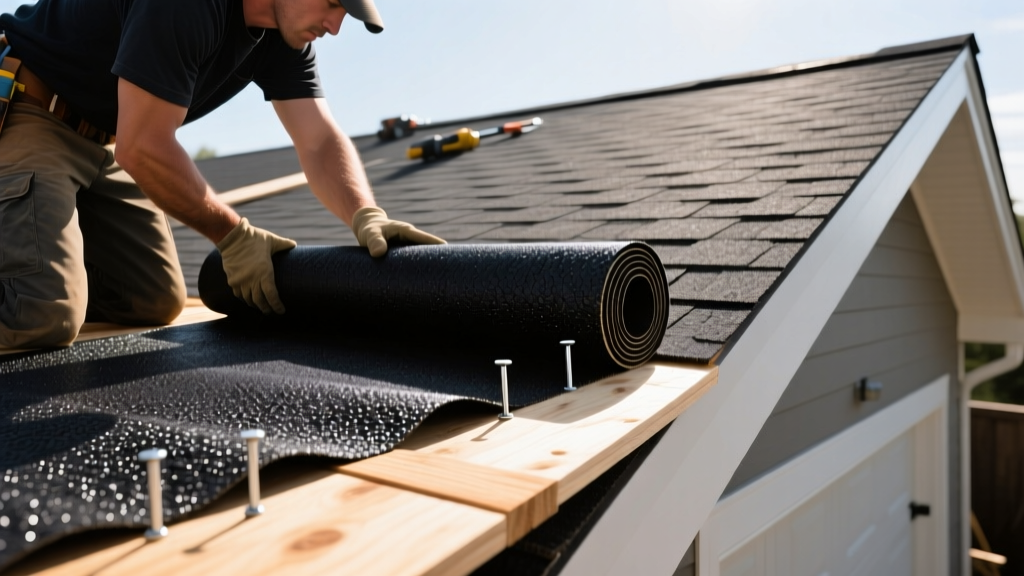
Manufactured similarly to standard asphalt shingles, rolled roofing consists of an organic felt or fiberglass mat saturated and coated with asphalt, then topped with mineral granules. It is typically sold in 36-inch wide rolls covering 100 square feet (one "square"). It relies on mechanical fastening (nails) and asphalt-based lap cements for waterproofing.
Modified Bitumen (SBS and APP)
Mod-Bit is an evolution of the built-up roof (BUR). It features asphalt modified with either SBS (styrene-butadiene-styrene) for rubber-like elasticity or APP (atactic polypropylene) for plastic-like rigidity. SBS is generally preferred in climates with extreme temperature swings due to its superior elongation properties. It is installed via torch-down, hot-mopped asphalt, or cold-applied adhesives.
EPDM (Rubber Membrane)
EPDM is a synthetic rubber membrane typically manufactured in large sheets (up to 50 feet wide), minimizing seams. It is highly resistant to UV radiation and ozone. Installation methods include fully adhered (glued), mechanically attached, or ballasted systems.
Head-to-Head Comparison Matrix
| Feature | Asphalt Rolled Roofing (MSR) | Modified Bitumen (SBS) | EPDM Rubber |
|---|---|---|---|
| Material Cost (per sq. ft.) | $0.50 - $1.20 | $1.50 - $3.00 | $1.00 - $2.50 |
| Installed Cost (per sq. ft.) | $1.75 - $3.50 | $4.50 - $8.00 | $3.50 - $6.50 |
| Expected Lifespan | 5 - 10 Years | 15 - 25 Years | 20 - 30+ Years |
| Minimum Slope Requirement | 2:12 (Double coverage) / 3:12 (Single) | 1/4:12 (with specific underlayment) | 1/4:12 |
| Primary Installation Method | Nails + Lap Cement | Torch, Hot Mop, or Cold Adhesive | Fully Adhered or Mechanically Fastened |
| Puncture Resistance | Low | High | Moderate |
Asphalt Rolled Roofing: Failure Modes and Edge Cases
While asphalt rolled roofing material is highly accessible and DIY-friendly, its shorter lifespan is driven by specific, predictable failure modes. Recognizing these edge cases is vital for determining if the material suits your specific microclimate and structural conditions.
Many manufacturers void warranties if asphalt rolled roofing is installed on slopes below 2:12 (a 2-inch vertical drop for every 12 horizontal inches). On dead-flat roofs, water pools in minor depressions, leading to rapid deterioration of the lap seams and eventual capillary action wicking under the mineral surface.
Common Failure Mechanisms
- Fishmouthing: Occurs when the roll is applied in cold weather or without sufficient tension. As the material heats up and expands, the lap edges curl upward, resembling a fish's mouth, creating a direct pathway for wind-driven rain.
- Blistering: Trapped moisture in the wood decking or between the underlayment and the roll vaporizes under solar heat. The expanding gas creates raised blisters that eventually crack, exposing the organic mat to the elements.
- Alligatoring: The ultimate end-of-life symptom. Prolonged UV exposure bakes the asphalt oils out of the mat, causing the surface to crack in a pattern resembling alligator skin. Once alligatoring begins, the roof can no longer be effectively patched.
The Decision Framework: Which Material Fits Your Project?
Use this practical decision tree to select the appropriate membrane based on your structural realities and financial constraints.
Choose Asphalt Rolled Roofing Material If:
- The structure is temporary or low-value: Sheds, detached carports, or agricultural outbuildings where a 25-year roof lifespan is financially unjustifiable.
- The pitch is between 2:12 and 4:12: Rolled roofing performs adequately on low slopes where standard shingles are prohibited, but water still sheds relatively quickly.
- You are executing a DIY overlay: If local building codes permit a single tear-off exemption, rolled roofing can be nailed directly over existing, flat-laid wood shingles or old rolled roofing, saving massive labor costs.
Upgrade to Modified Bitumen If:
- The roof experiences heavy foot traffic: HVAC maintenance or rooftop decks require the multi-ply, reinforced thickness of SBS Mod-Bit to resist puncture.
- Extreme thermal cycling occurs: SBS modifiers allow the roof to stretch and contract without cracking in regions with 50+ degree daily temperature swings.
Upgrade to EPDM If:
- The roof is completely flat (0:12 to 1/4:12): EPDM's large, seamless sheets and specialized seam tapes handle standing water far better than asphalt-based products.
- Long-term lifecycle cost is the priority: Despite higher upfront costs, a 60-mil EPDM membrane will easily outlast two generations of rolled roofing.
2026 Installation Realities and Hidden Costs
When budgeting for an asphalt rolled roofing project, the cost of the roll itself is only a fraction of the total expenditure. Current 2026 material pricing reflects stabilization in petroleum markets, but accessory costs remain a significant factor.
Do not use standard roofing tar in a bucket for lap seams. Specify a specialized asphalt lap cement, such as Henry 208 Wet Patch or Karnak 19 Ultra Lap Cement. These formulations contain higher concentrations of SBS rubber and solvents designed to remain pliable, preventing the lap seams from becoming brittle and cracking during winter freezes.
The Hidden Substrate Costs
Asphalt rolled roofing material is unforgiving of substrate imperfections. Unlike EPDM, which can bridge minor gaps, rolled roofing will telegraph every seam and knot hole in the plywood beneath it. Budget for the following hidden requirements:
- Drip Edge Metal: Code requires a minimum 26-gauge galvanized steel drip edge at the eaves and rakes. Rolled roofing must overlap the eaves drip edge but tuck under the rake drip edge to prevent lateral wind uplift.
- Ice and Water Shield: In northern climates, applying a self-adhering polymer-modified bitumen underlayment (e.g., GAF WeatherWatch) along the eaves and in all valleys is mandatory to prevent ice dam backflow, which will easily bypass the single-ply rolled material.
- Fastener Volume: Standard practice requires galvanized roofing nails spaced 6 inches on center along the lap and 12 inches on center in the field. A standard 10-square roof requires roughly 2,500 nails, plus the labor to drive them flush without tearing the fiberglass mat.
Code Compliance and Industry Standards
Specifying the correct product requires verifying compliance with ASTM International standards. For mineral-surfaced asphalt rolled roofing, ensure the product data sheet explicitly lists compliance with ASTM D6380 (Standard Specification for Mineral Surfaced Asphalt Roll Roofing). If you are purchasing an organic felt underlayment to go beneath the roll, it must meet ASTM D226 (Type I or Type II).
Furthermore, the Insurance Institute for Business & Home Safety (IBHS) notes that while asphalt products generally perform well in standard wind events, rolled roofing lacks the advanced sealant strips found on architectural shingles, making proper mechanical fastening and lap cement application critical for achieving basic wind uplift resistance in coastal or high-wind zones.
For detailed technical specifications on multi-ply low-slope systems that may serve as an upgrade path from rolled roofing, the GAF Low-Slope Roofing Systems guide provides comprehensive data on modified bitumen membranes and their integration with standard asphalt accessories.
Expert Verdict
Asphalt rolled roofing material remains an essential tool in the contractor's arsenal for specific, budget-conscious, and adequately pitched applications. It is the most cost-effective solution for a 3:12 pitched shed or a detached garage where a 10-year lifecycle is acceptable. However, for flat commercial roofs, high-value residential additions, or structures subject to severe thermal shock, the marginal upfront savings of rolled roofing are quickly erased by premature failure. In those scenarios, investing in SBS Modified Bitumen or a fully adhered EPDM system provides the structural resilience and longevity required for modern building standards.
Written by
Elena RodriguezElena Rodriguez is a civil engineer and technical writer specializing in concrete technology, masonry systems, and ASTM/ACI compliance. She earned her B.S. in Civil Engineering from Texas A&M University and spent a decade at a materials testing laboratory, performing over 2,000 concrete compressive strength tests and masonry prism evaluations. Elena is an ACI-certified Field Testing Technician (Grade I) and a member of ASTM Committee C12 on Natural Building Stone. She currently consults on forensic engineering cases involving concrete failures and moisture intrusion. Based in San Antonio, TX, Elena is a proud member of the Society of Women Engineers (SWE) and coaches her daughter's FIRST Robotics team.
More from Elena Rodriguez
View all
Walls & Panels
Cost Analysis: Light Gauge Steel Framing Advantages and Disadvantages
Evaluate light gauge steel framing advantages and disadvantages through a strict cost analysis lens, comparing material, labor, and lifecycle expenses.
Aug 4, 2026

Walls & Panels
Gypsum Board Types: Exact Specifications, Thickness & Dimensions
Compare standard, Type X, and moisture-resistant gypsum board types. Get exact specifications, thicknesses, dimensions, and ASTM standards for your project.
Aug 4, 2026

Fire Resistance
Best Fire-Resistant Outdoor Decking Materials: 2026 Buyer Guide
Discover the best fire-resistant outdoor decking materials for 2026. Compare Class A PVC, aluminum, and hardwood options for WUI compliance and safety.
Aug 4, 2026