Evaluating Roofing Material Options: 2026 Cost Guide
Compare top roofing material options for 2026. Analyze costs, lifespans, and climate performance for asphalt, metal, tile, and synthetic roofs.

The 2026 Landscape of Residential Roofing
Selecting from available roofing material options requires balancing initial capital expenditure against long-term lifecycle value, structural load limits, and localized climate threats. The 2026 residential roofing market has stabilized post-supply-chain disruptions, but material science has advanced. Premium architectural shingles now feature wider nailing zones, synthetic polymers have achieved near-perfect UV resistance, and standing seam metal profiles are increasingly engineered for extreme thermal expansion. This guide evaluates the top-tier options, providing exact specifications, framing requirements, and real-world cost data to inform your procurement strategy.
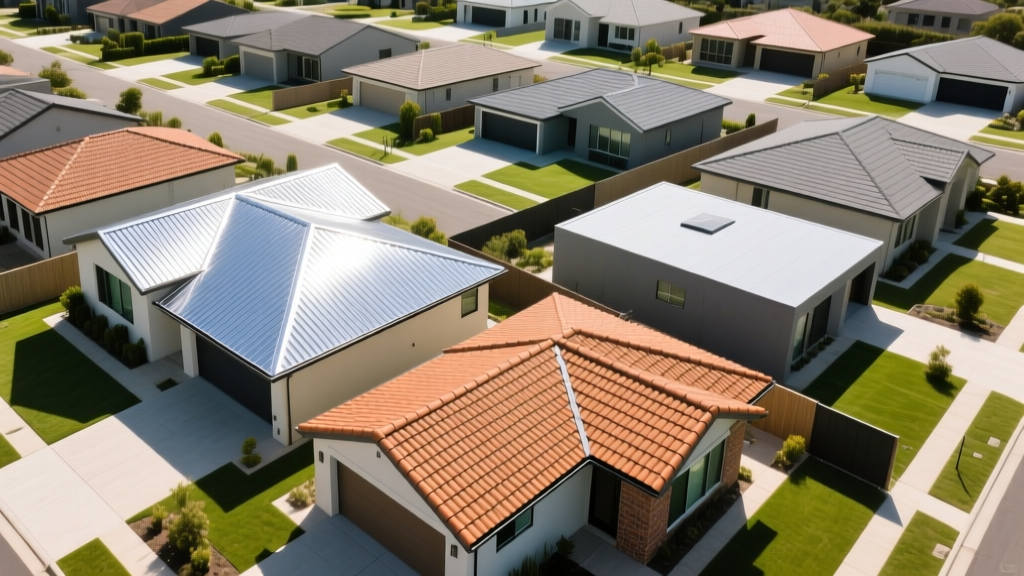
Decision Matrix: Matching Material to Climate Zone
Before evaluating aesthetics, map your geographic location to specific material performance standards. The Insurance Institute for Business & Home Safety (IBHS) outlines strict criteria for high-wind and wildfire zones through their FORTIFIED Home standard. Use the matrix below to align your primary environmental threat with the correct material specification.
| Primary Climate Threat | Ideal Material Category | Required Specification / Standard | Critical Installation Detail |
|---|---|---|---|
| Hurricane / High Wind (130+ mph) | Standing Seam Metal | ASTM E1592 (Wind Uplift) | 2-inch mechanical lock seam; concealed clips |
| Wildfire / WUI Zones | Class A Synthetic or Metal | UL 790 / ASTM E108 (Class A Fire) | Fire-resistant underlayment required at eaves |
| High Heat / Solar Gain | Cool Roof Metal or Tile | CRRC Rated (SRI > 50) | Kynar 500 cool-pigment paint system |
| Heavy Hail / Impact Zones | Thick Synthetic Slate | UL 2218 (Class 4 Impact) | Minimum 5/8-inch OSB decking for rigidity |
Deep Dive: Top Roofing Material Options
1. Architectural Asphalt Shingles (Premium Grade)
While 3-tab shingles are largely obsolete in modern premium construction, heavy-weight architectural shingles remain the dominant choice for steep-slope roofs. The current benchmark is the GAF Timberline HDZ (High Definition Zoning). Unlike older generations, the HDZ features a 1.5-inch strike zone for nailing, drastically reducing installer error and blow-offs.
2. Standing Seam Metal Roofing
For longevity and weather-tightness, a 24-gauge Galvalume steel standing seam roof is unmatched. Avoid 29-gauge panels for residential applications; the thinner metal is highly susceptible to "oil-canning" (visible waviness caused by thermal expansion). A 24-gauge panel with a 1.5-inch to 2-inch mechanical lock seam allows the roof to expand and contract independently of the fasteners, which are hidden beneath the clips.
According to the U.S. Department of Energy, specifying a cool-roof pigment coating (like Kynar 500 HYLAR 5000) can reflect up to 70% of solar radiation, significantly reducing cooling loads in southern climates. Expect to pay between $480 and $720 per square for premium 24-gauge material.
3. Synthetic Polymer Slate
Natural slate is prohibitively heavy and expensive. Synthetic slate, such as DaVinci Roofscapes Multi-Width Slate, is molded from 100% recyclable virgin polymers. It replicates the shadow lines and texture of quarried stone but weighs roughly 300 lbs per square, compared to 1,000+ lbs for natural slate. This eliminates the need for costly structural reinforcement of the roof trusses. Synthetic slate holds a Class 4 impact rating and a Class A fire rating, making it the premier choice for hail-prone regions like the American Midwest. Material costs range from $750 to $1,050 per square.
Lifecycle Cost vs. Initial Investment Breakdown
Evaluating roofing material options strictly on day-one cost is a financial error. The table below illustrates the 50-year lifecycle cost, factoring in initial installation, mid-life maintenance, and replacement cycles.
| Material Option | Initial Cost (Per Sq. Ft.) | Expected Lifespan | 50-Year Replacement Cycles | Estimated 50-Yr Total Cost (Per Sq. Ft.) |
|---|---|---|---|---|
| Premium Architectural Asphalt | $4.50 - $6.50 | 25 - 30 Years | 2 | $11.00 - $16.00 |
| 24-Gauge Standing Seam Metal | $9.00 - $14.00 | 50 - 70 Years | 1 | $9.00 - $14.00 |
| Synthetic Polymer Slate | $12.00 - $18.00 | 50+ Years | 1 | $12.00 - $18.00 |
| Natural Quarried Slate | $25.00 - $40.00 | 75 - 100+ Years | 1 | $25.00 - $40.00 |
Structural Load and Framing Requirements
The dead load of your chosen material dictates the required framing architecture. Standard residential trusses are typically engineered for a 15 PSF (pounds per square foot) dead load, which easily accommodates asphalt shingles (approx. 2.5 to 3.5 PSF) and metal panels (approx. 1.5 to 2.0 PSF).
However, if you are evaluating heavier options like concrete tile (9.5 to 12 PSF) or natural slate (10 to 15 PSF), standard 2x4 trusses spaced 24 inches on-center will deflect over time. You must upgrade to 2x6 trusses spaced 16 inches on-center, or install structural purlins over the decking. Failing to account for this during the design phase will result in catastrophic framing failure or the need for a $15,000+ structural retrofit before roofing can commence.
Warranty Red Flags and Installation Nuances
Manufacturer warranties are highly conditional. When reviewing contracts for your selected roofing material options, scrutinize the following exclusion clauses:
- Prorated vs. Non-Prorated Periods: A "50-year warranty" often only covers full material replacement for the first 10 years. Years 11 through 50 are prorated, meaning the manufacturer pays a depreciated percentage of the material cost, leaving you responsible for 100% of the tear-off and labor.
- Ventilation Mandates: Almost all asphalt shingle manufacturers will void the warranty if the attic lacks a balanced intake/exhaust ventilation system (typically 1 sq. ft. of net free ventilation area per 150 sq. ft. of attic space). Trapped heat bakes the shingles from below, causing premature curling.
- Underlayment Compatibility: Using a third-party synthetic underlayment instead of the shingle manufacturer's proprietary brand can sometimes void the system warranty. Always verify the approved underlayment matrix before signing the scope of work.
Environmental Impact and Cool Roofing Integration
Urban heat island effects and rising energy costs have pushed cool roofing into the mainstream. The Environmental Protection Agency (EPA) notes that cool roofs can lower peak cooling demand by 10-15%. If you are selecting metal or synthetic options, ensure the product carries a Cool Roof Rating Council (CRRC) label with a Solar Reflectance Index (SRI) of at least 50 for steep-slope applications. Many utility companies in 2026 offer direct rebates ranging from $0.10 to $0.25 per square foot for installing CRRC-rated materials, effectively offsetting the premium cost of high-reflectivity coatings.
By aligning your material choice with structural capacities, localized weather data, and precise installation standards, you secure a roofing system that performs flawlessly for decades rather than merely covering a building.
Written by
Sarah WhitfieldSarah Whitfield is a chartered quantity surveyor (MRICS) and construction cost analyst with 15 years of experience in material pricing, procurement strategy, and project budgeting. She earned her degree in Construction Management from the University of Reading (UK) and has worked on projects ranging from $2M custom homes to $180M mixed-use developments across North America and Europe. Sarah currently leads cost estimating for BuildMat Insight, maintaining a proprietary database of 4,000+ material price points updated quarterly. She is a frequent contributor to RSMeans cost data panels and has presented at the International Cost Engineering Council (ICEC) congress. Based in Denver, CO, Sarah is an avid trail runner and volunteer mentor for Women in Construction.
More from Sarah Whitfield
View all
Wood & Lumber
What Are the Different Types of Wood? A Builder's Guide
Compare structural softwoods, finish hardwoods, and engineered lumber. Analyze Janka ratings, MOE values, and 2026 pricing for construction.
Aug 4, 2026

Walls & Panels
Steel Framing vs Wood Framing: Corrosion and Moisture Defense
Compare steel framing vs wood framing for moisture resistance. Learn about galvanized coatings, condensation risks, and corrosion protection strategies.
Jul 21, 2026

Stone & Masonry
How to Cut Stone Veneer: Wet Saw vs Grinder Comparison
Compare the best tools for cutting stone veneer. We review wet saws, angle grinders, and chop saws to help you achieve clean, chip-free cuts.
Jul 21, 2026