Asphalt Roofing Materials: A Strategic Selection Framework
A strategic selection framework for asphalt roofing materials. Compare 3-tab, architectural, and luxury shingles by climate, wind ratings, and 30-year ROI.

The Core Decision Matrix for Asphalt Shingles
Selecting asphalt roofing materials requires balancing upfront capital expenditure against long-term weathering performance, structural load limits, and regional climate demands. Rather than defaulting to the most common option, professional specifiers and homeowners must evaluate materials through a multi-variable framework. The Asphalt Roofing Manufacturers Association (ARMA) categorizes these materials primarily by weight, dimensional profile, and ASTM testing standards.
| Shingle Category | Avg. Weight per Square | Standard Wind Rating | Best Application Scenario |
|---|---|---|---|
| 3-Tab Strip | 240 - 265 lbs | 60 mph (ASTM D3161 Class A) | Budget-constrained flips, low-wind inland regions, shed roofs. |
| Architectural (Laminated) | 300 - 360 lbs | 110 - 130 mph (Class F/H) | Standard residential replacements, moderate-to-high wind zones. |
| Premium / Luxury | 400 - 500+ lbs | 110 - 150 mph (Class H) | High-end custom builds, historic restorations (slate/shake mimicry). |
Step 1: Climate and Wind Resistance Profiling
The first filter in the selection framework is environmental stress. Asphalt shingles fail primarily through wind uplift, thermal cycling, and moisture intrusion. You must match the shingle’s ASTM ratings to your specific microclimate.
Wind Uplift and Sealant Technology
Modern architectural shingles utilize advanced sealant strips. For example, GAF’s Timberline HDZ features a StrikeZone nailing area and Dura Grip adhesive that activates at lower temperatures, achieving wind resistance up to 130 mph. If your property is located in a High-Velocity Hurricane Zone (HVHZ) or a coastal corridor, you must specify shingles rated for ASTM D3161 Class H (150 mph) and pair them with a synthetic underlayment and ice-and-water shield extending at least 24 inches past the interior wall line.
Algae Resistance and Coastal Humidity
In regions with high humidity and consistent ambient temperatures above 70°F, Gloeocapsa magma (blue-green algae) will colonize standard asphalt, causing black streaking that degrades the limestone filler in the shingle matrix. Specify materials with copper-lined ceramic granules. Owens Corning Duration and CertainTeed Landmark both offer proprietary algae-resistant (AR) granule blends that provide a minimum 10-year algae resistance warranty. Do not rely on zinc strips installed at the ridge; they are largely ineffective on slopes longer than 20 feet due to uneven wash-down.
If you are building in Texas, Colorado, or the Midwest, standard architectural shingles will fracture under 1.5-inch hail. You must specify a UL 2218 Class 4 impact-rated shingle, such as the Malarkey Legacy or GAF Timberline AS II. According to the IBHS FORTIFIED Home Roof Standard, Class 4 shingles significantly reduce the probability of mat fracturing, which prevents immediate water intrusion and subsequent deck rot.
Step 2: Evaluating Warranties and System Integration
A common mistake is evaluating asphalt roofing materials based solely on the manufacturer’s material warranty. A "Lifetime" or "50-Year" limited warranty only covers manufacturing defects (e.g., premature granule loss, cupping). It does not cover wind blow-off or installation errors unless you upgrade to a system warranty.
The System Warranty Requirement
To unlock enhanced warranties like the GAF Golden Pledge or Owens Corning Platinum Protection, you must purchase a complete roof system from a single manufacturer and use a factory-certified contractor. This framework requires:
- Underlayment: Proprietary synthetic underlayment (e.g., GAF FeltBuster) rather than traditional #15 asphalt felt, which degrades and wrinkles when exposed to moisture prior to shingle installation.
- Starter Shingles: Pre-cut starter strips with continuous sealant (e.g., Pro-Start) rather than cutting the tabs off standard shingles, which leaves the eaves vulnerable to wind-driven rain.
- Ridge Ventilation: High-profile ridge caps that match the shingle’s dimensional profile and integrate with continuous ridge venting to maintain a minimum 1:150 net free ventilation area.
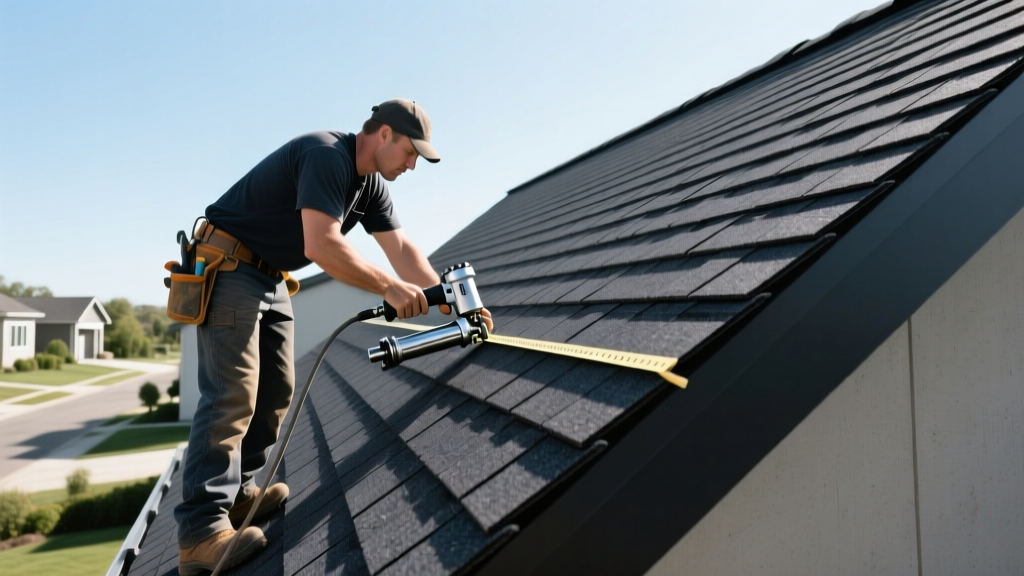
Step 3: The Budget-to-Lifespan ROI Calculator
When presenting options to stakeholders, use a 30-year lifecycle cost analysis rather than initial material cost. The following data reflects 2026 national averages for material costs per square (100 sq. ft.) and projected lifecycle performance.
| Material Tier | Material Cost / Sq. | Expected Lifespan | 30-Year Replacement Probability | Estimated 30-Yr Material Cost |
|---|---|---|---|---|
| 3-Tab Strip | $95 - $120 | 12 - 18 Years | 95% (Requires 1 replacement) | $190 - $240 (x2) |
| Standard Architectural | $135 - $175 | 22 - 28 Years | 60% (May require 1 replacement) | $135 - $350 |
| Premium Architectural | $190 - $260 | 30 - 40 Years | 15% (Unlikely to need replacement) | $190 - $260 |
| Luxury / Designer | $300 - $450 | 40 - 50 Years | 0% (Outlasts 30-year mortgage) | $300 - $450 |
Luxury shingles (like CertainTeed Grand Manor or Owens Corning Duration Designer) weigh upwards of 450 lbs per square. Before specifying these materials, verify the structural integrity of the roof decking. Older homes with 1/2-inch CDX plywood or spaced board sheathing may require a full deck overlay with 5/8-inch OSB or plywood to prevent sagging and nail pull-through under the increased dead load.
Step 4: Common Selection Mistakes and Edge Cases
Even with the right material selected, misapplication will void the warranty and cause catastrophic failure. Apply these edge-case filters to your specification:
The Low-Slope Trap
Asphalt shingles are strictly designed for water-shedding, not waterproofing. No manufacturer will warrant asphalt shingles installed on a roof pitch below 2:12. For slopes between 2:12 and 4:12, you must install a double layer of ice-and-water protective membrane over the entire deck before shingling. If the pitch is below 2:12, you must abandon asphalt entirely and specify a low-slope system such as modified bitumen, TPO, or EPDM.
Solar Reflectance and Urban Heat Islands
In southern climates or regions with strict energy codes, standard dark asphalt shingles can reach surface temperatures of 160°F, driving up cooling loads. Look for ENERGY STAR Certified Roof Products. Manufacturers now offer "cool roof" granule coatings on architectural shingles (e.g., GAF Timberline HDZ Reflexx or Owens Corning Duration Cool) that reflect solar energy, reducing roof surface temperature by up to 30°F and lowering attic ambient temperatures.
Finalizing Your Material Specification
To finalize your asphalt roofing materials selection, document the following specifications on your project bid sheet to ensure contractors cannot substitute inferior products:
- Shingle Make and Model: (e.g., Owens Corning Duration, Desert Tan, Class F Wind).
- Underlayment Specification: (e.g., Synthetic underlayment, minimum 240-inch tear strength).
- Ice and Water Shield: (e.g., Self-adhering modified bitumen at all eaves, valleys, and penetrations).
- Fastener Requirement: (e.g., 1-1/4 inch hot-dipped galvanized roofing nails, minimum 6 nails per architectural shingle in high-wind zones).
- Ventilation Ratio: (e.g., 1:150 net free area, balanced 50% intake / 50% exhaust).
By adhering to this framework, you eliminate guesswork, ensure compliance with local building codes, and maximize the lifecycle value of the roofing investment.
Written by
Elena RodriguezElena Rodriguez is a civil engineer and technical writer specializing in concrete technology, masonry systems, and ASTM/ACI compliance. She earned her B.S. in Civil Engineering from Texas A&M University and spent a decade at a materials testing laboratory, performing over 2,000 concrete compressive strength tests and masonry prism evaluations. Elena is an ACI-certified Field Testing Technician (Grade I) and a member of ASTM Committee C12 on Natural Building Stone. She currently consults on forensic engineering cases involving concrete failures and moisture intrusion. Based in San Antonio, TX, Elena is a proud member of the Society of Women Engineers (SWE) and coaches her daughter's FIRST Robotics team.
More from Elena Rodriguez
View all
Walls & Panels
Cost Analysis: Light Gauge Steel Framing Advantages and Disadvantages
Evaluate light gauge steel framing advantages and disadvantages through a strict cost analysis lens, comparing material, labor, and lifecycle expenses.
Aug 4, 2026

Walls & Panels
Gypsum Board Types: Exact Specifications, Thickness & Dimensions
Compare standard, Type X, and moisture-resistant gypsum board types. Get exact specifications, thicknesses, dimensions, and ASTM standards for your project.
Aug 4, 2026

Fire Resistance
Best Fire-Resistant Outdoor Decking Materials: 2026 Buyer Guide
Discover the best fire-resistant outdoor decking materials for 2026. Compare Class A PVC, aluminum, and hardwood options for WUI compliance and safety.
Aug 4, 2026