Flat Roofing Material Types: 2026 Cost Breakdown & Guide
Compare flat roofing material types with our 2026 cost breakdown. Analyze EPDM, TPO, PVC, and Mod-Bit pricing, lifespans, and hidden installation variables.
The 2026 Flat Roofing Cost Landscape
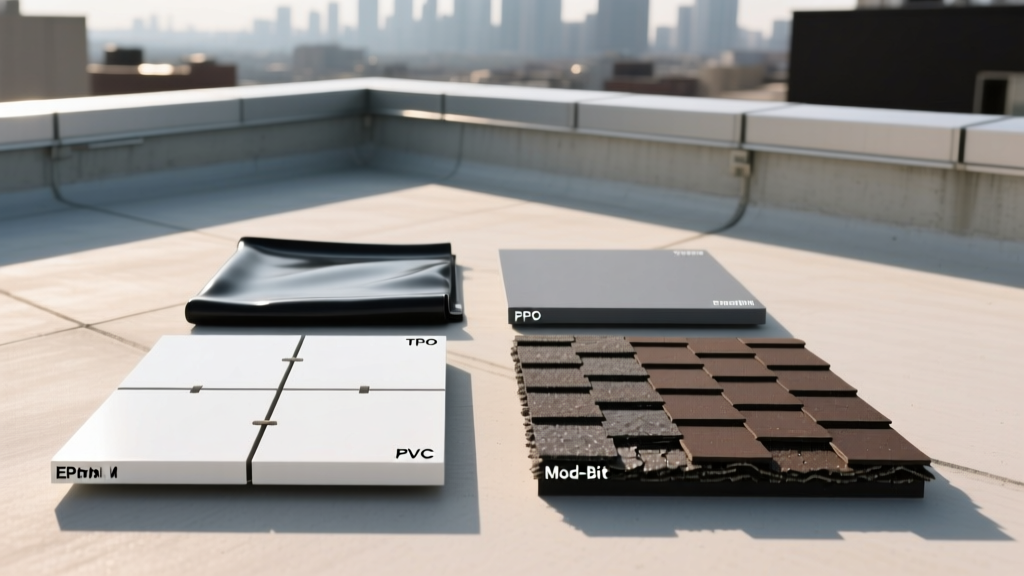
When evaluating flat roofing material types for commercial or residential low-slope applications, the initial membrane price is only a fraction of the total investment. In 2026, while raw material costs for synthetic polymers have stabilized following the supply chain disruptions of the early 2020s, specialized labor and code-mandated insulation requirements continue to drive up total installed costs. A proper cost breakdown requires analyzing the membrane, the insulation system, the fastening method, and the long-term maintenance profile.
The low-slope roofing market is dominated by four primary systems: EPDM, TPO, PVC, and Modified Bitumen. Each possesses distinct chemical properties, installation methodologies, and failure modes. Selecting the wrong material for a specific climate or building use-case (such as installing TPO over a commercial kitchen) will result in premature membrane degradation, voiding warranties and doubling lifecycle costs.
Comprehensive Cost Matrix: Flat Roofing Material Types
The following table outlines the baseline installed costs per square foot for a standard 10,000 sq. ft. commercial roof with a fully adhered or mechanically fastened single-ply system. These 2026 estimates include the membrane, fasteners/adhesives, and standard labor, but exclude complex tear-offs or specialized tapered insulation.
| Material Type | Installed Cost (per sq. ft.) | Expected Lifespan | Primary Fastening Method |
|---|---|---|---|
| EPDM (Rubber) | $4.50 - $7.50 | 20 - 30 Years | Fully Adhered / Ballasted |
| TPO (Thermoplastic) | $5.50 - $9.00 | 20 - 25 Years | Mechanically Fastened |
| PVC (Vinyl) | $7.00 - $11.50 | 25 - 30+ Years | Mechanically Fastened / Adhered |
| Modified Bitumen | $5.00 - $8.50 | 15 - 20 Years | Torch-Applied / Cold Adhesive |
Material Deep-Dive: Specs, Brands, and Failure Modes
EPDM (Ethylene Propylene Diene Monomer)
EPDM remains a staple in cold climates due to its exceptional flexibility at sub-zero temperatures and its resistance to thermal shock. However, not all EPDM is created equal. Budget installations often utilize 45-mil non-reinforced membranes, which are highly susceptible to puncture from hail or foot traffic.
- Specification Standard: Demand 60-mil reinforced EPDM (e.g., Carlisle Sure-Seal). The internal polyester scrim provides critical tensile strength and puncture resistance.
- Color Dynamics: Black EPDM absorbs solar radiation, which can help melt snow loads in northern latitudes but drastically increases cooling costs in southern zones. White EPDM is available but typically costs 15-20% more and requires specialized top-coat maintenance to prevent chalking.
- Primary Failure Mode: Membrane shrinkage. Over a 15-year period, unreinforced EPDM can shrink up to 4%, pulling away from parapet walls and tearing the flashing. Seam tape failure is also common if the primer is applied incorrectly in high humidity.
TPO (Thermoplastic Polyolefin)
TPO currently holds the largest market share in North America due to its balance of reflectivity, weldability, and cost. It is a blended polymer of polypropylene and ethylene-propylene rubber. The seams are heat-welded using hot-air guns at temperatures exceeding 1,000°F, creating a monolithic, watertight bond that is stronger than the membrane itself.
- Specification Standard: Specify a minimum 60-mil thickness with a top-ply weathering layer of at least 40 mils. Leading models include GAF EverGuard and Firestone UltraPly. Avoid generic 45-mil imports, which suffer from 'crazing' (micro-cracking) and premature plasticizer loss.
- Primary Failure Mode: TPO is highly sensitive to standing water and extreme thermal cycling if the weld temperature is not calibrated to the ambient weather. Poorly executed welds will delaminate within 3 to 5 years, leading to catastrophic seam leaks.
PVC (Polyvinyl Chloride)
PVC is the premium single-ply membrane, engineered for chemical resistance and long-term flexibility. It utilizes ketone ethylene ester (KEE) or internal plasticizers to maintain flexibility over decades. According to the U.S. Department of Energy's Cool Roofs guidelines, highly reflective PVC membranes can reduce peak cooling demand by 10% to 15% in hot climates.
- Specification Standard: Sika Sarnafil and Johns Manville PVC are industry benchmarks. For roofs exposed to animal fats, oils, or greases (such as restaurants or food processing plants), PVC is mandatory. Oils will chemically dissolve TPO and EPDM within months.
- Primary Failure Mode: Plasticizer migration. If low-quality PVC is installed over incompatible polystyrene insulation, the plasticizers can leach out, leaving the membrane brittle and prone to shattering in high winds.
Modified Bitumen (Mod-Bit)
Mod-Bit is an asphalt-based system reinforced with fiberglass or polyester, designed for roofs that require high durability against physical abuse. It is heavily utilized on residential flat roofs, balconies, and commercial decks with high foot traffic.
- Specification Standard: SBS (Styrene-Butadiene-Styrene) modified bitumen offers superior cold-weather flexibility and can be applied with cold adhesives or torches. APP (Atactic Polypropylene) is torch-applied only and performs better in high-heat environments. The National Roofing Contractors Association (NRCA) provides extensive guidelines on proper Mod-Bit substrate preparation and torch safety protocols.
- Primary Failure Mode: Blistering and ridging. If moisture is trapped between the plies during torch application, or if the asphalt is overheated, blisters will form and eventually rupture, compromising the waterproofing layer.
The Hidden Cost Variables (What Ruins Budgets)
Contractor quotes that only list the membrane price are incomplete. To accurately budget for flat roofing material types, you must account for the following structural and code-mandated variables:
Warning: IECC Insulation Mandates
The International Energy Conservation Code (IECC) has aggressively increased R-value requirements for commercial roofs. In Climate Zones 4 and above, R-30 to R-38 is now standard. Upgrading from a 2-inch to a 4-inch Polyiso insulation layer adds $1.80 to $3.20 per square foot to the project. Failing to meet these codes will result in failed municipal inspections and severe HVAC inefficiency.
- Tear-Off and Disposal: Removing an existing 2-ply BUR system and disposing of the debris costs between $1.50 and $3.00 per square foot. If multiple layers exist, costs compound.
- Tapered Insulation for Drainage: Flat roofs are never truly flat; building codes require a minimum slope of 1/4 inch per foot. If the structural deck is level, contractors must install tapered polyiso insulation panels to create drainage pathways to the scuppers. This custom cutting and layout adds $2.00 to $4.50 per square foot.
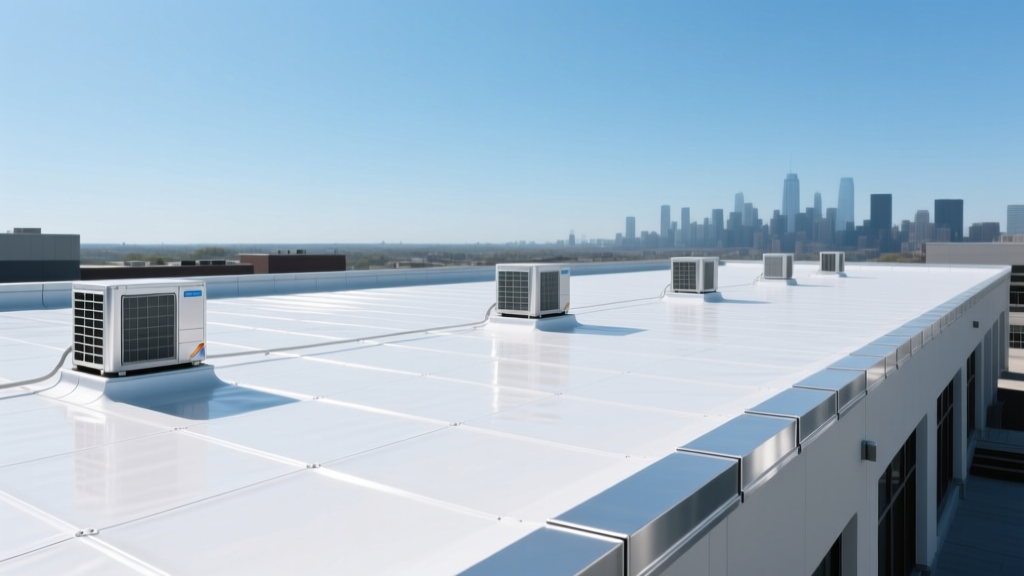
- Flashing and Penetrations: The membrane field rarely fails; the leaks happen at the edges. Pipe boots, HVAC curbs, and parapet wall flashings are priced per linear foot or per penetration. Complex roofs with dozens of exhaust vents can see detailing costs exceed the membrane cost.
Climate & Application Decision Framework
Use this diagnostic matrix to select the optimal flat roofing material based on your specific building profile:
| Building / Climate Profile | Optimal Material Choice | Why It Works |
|---|---|---|
| Restaurant / Commercial Kitchen | PVC (KEE Polymer) | Immune to animal fat and grease degradation; highly chemical resistant. |
| Northern Climate / Heavy Snow | 60-mil Reinforced EPDM | Black membrane aids snowmelt; extreme cold flexibility prevents cracking. |
| Southern Climate / Large Warehouse | 60-mil Mechanically Fastened TPO | High solar reflectance index (SRI) reduces HVAC loads; cost-effective for massive footprints. |
| High Foot Traffic / Roof Deck | 2-Ply SBS Modified Bitumen | Thick, rugged surface withstands physical abrasion and puncture better than single-plies. |
Procurement and Warranty Verification
When sourcing materials, never rely solely on the manufacturer's baseline warranty. A standard 20-year material warranty only covers defects in the membrane itself, not the labor to replace it or the interior water damage caused by a leak. To achieve true protection, require a System Warranty (often called a No Dollar Limit or NDL warranty) from the manufacturer. This requires the contractor to be a certified, factory-approved installer and mandates strict adherence to the manufacturer's detailing specifications for flashings, seams, and adhesives. The premium for an NDL warranty typically adds $0.30 to $0.60 per square foot, but it shifts the liability of installation errors and material failures entirely onto the manufacturer.
Written by
Sarah WhitfieldSarah Whitfield is a chartered quantity surveyor (MRICS) and construction cost analyst with 15 years of experience in material pricing, procurement strategy, and project budgeting. She earned her degree in Construction Management from the University of Reading (UK) and has worked on projects ranging from $2M custom homes to $180M mixed-use developments across North America and Europe. Sarah currently leads cost estimating for BuildMat Insight, maintaining a proprietary database of 4,000+ material price points updated quarterly. She is a frequent contributor to RSMeans cost data panels and has presented at the International Cost Engineering Council (ICEC) congress. Based in Denver, CO, Sarah is an avid trail runner and volunteer mentor for Women in Construction.
More from Sarah Whitfield
View all
Wood & Lumber
What Are the Different Types of Wood? A Builder's Guide
Compare structural softwoods, finish hardwoods, and engineered lumber. Analyze Janka ratings, MOE values, and 2026 pricing for construction.
Aug 4, 2026

Walls & Panels
Steel Framing vs Wood Framing: Corrosion and Moisture Defense
Compare steel framing vs wood framing for moisture resistance. Learn about galvanized coatings, condensation risks, and corrosion protection strategies.
Jul 21, 2026

Stone & Masonry
How to Cut Stone Veneer: Wet Saw vs Grinder Comparison
Compare the best tools for cutting stone veneer. We review wet saws, angle grinders, and chop saws to help you achieve clean, chip-free cuts.
Jul 21, 2026