Lightweight Roofing Materials for Extreme Climate Zones
Discover the best lightweight roofing materials for high-wind, heavy snow, extreme heat, and wildfire zones. Expert specs, costs, and climate guides.

The Structural and Climatic Imperative of Lightweight Roofing
Traditional roofing systems like natural slate (800–1,000 lbs per square) or concrete tile (900–1,100 lbs per square) impose massive dead loads on structural framing. In extreme climate zones—where high winds, heavy snow accumulation, and seismic activity dictate building code requirements—reducing the roof's weight is not just a structural preference; it is a critical resilience strategy. Modern lightweight roofing materials, ranging from 40 to 300 lbs per square, allow architects and builders to allocate structural engineering budgets toward enhanced lateral bracing and impact resistance rather than mere load-bearing support.
Selecting the correct lightweight material requires moving beyond basic aesthetics and matching specific material properties to regional climatic stressors. This guide breaks down the optimal lightweight roofing systems for four extreme climate zones, detailing exact specifications, installation nuances, and 2026 market pricing.
Zone 1: High-Wind and Hurricane-Prone Coasts
Coastal environments subject roofs to sustained uplift pressures and salt-spray corrosion. The primary failure mode in these zones is not the material tearing, but the fastener withdrawal and clip deformation under cyclical wind loading.
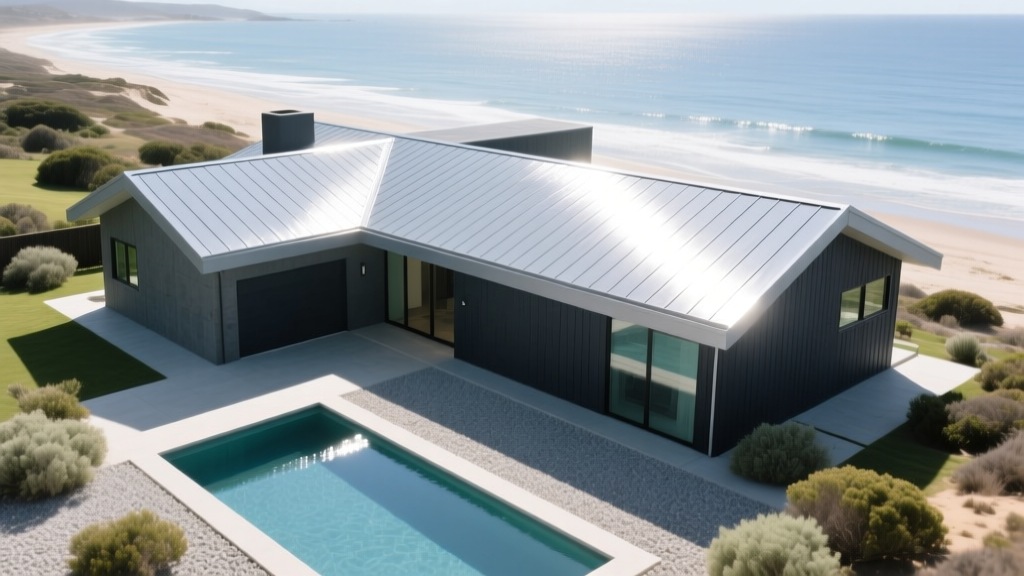
Material Focus: 0.032" Aluminum Standing Seam
For coastal applications, 5052 marine-grade aluminum alloy is the undisputed standard. Unlike steel, aluminum forms a self-protecting oxide layer that resists salt-spray corrosion without relying on painted galvanic coatings that can scratch and fail. A structural standing seam profile (such as the Petersen PAC-750) with a 2-inch seam height provides the necessary bite for mechanical seaming.
Never use standard galvanized steel fasteners or flashing with aluminum roofing in salt-air environments. The dissimilar metals will create a galvanic cell, rapidly corroding the aluminum. Always specify 300-series stainless steel fasteners and aluminum or stainless steel flashing components.
Installation Specifics: To meet the IBHS FORTIFIED Home standard for high-wind zones, panel clips must be spaced at 12 inches on-center (compared to the standard 24 inches). The system must achieve ASTM D7158 Class H rating, resisting uplift pressures equivalent to 150 mph winds. Expect 2026 installed costs for marine-grade aluminum standing seam to range between $16.50 and $21.00 per square foot, reflecting recent increases in marine-grade alloy premiums.
Zone 2: Heavy Snow and Alpine Freeze-Thaw
Alpine and northern climates present a dual threat: massive static snow loads and destructive ice damming. While metal roofing is famous for shedding snow, uncontrolled snow avalanches from metal roofs can destroy gutters, lower rooflines, and pose severe safety hazards. Furthermore, traditional asphalt shingles become brittle in sub-zero temperatures and are highly susceptible to ice-dam water backup.
Material Focus: Synthetic Polymer Slate
Synthetic slate (such as DaVinci Roofscapes Multi-Width Slate) offers a superior alternative. Weighing approximately 300 lbs per square (70% lighter than natural slate), it features a high coefficient of friction that holds snow in place, eliminating the need for extensive snow guard arrays required on metal roofs. More importantly, the polymer composite remains completely flexible at -40°F, preventing the micro-cracking that plagues natural slate and clay during freeze-thaw cycles.
In climates with an average January temperature below 25°F, building codes require a continuous ice and water shield (e.g., Grace Ice & Water Shield HT) extending from the eave edge to a point at least 24 inches inside the exterior wall line. For synthetic slate, ensure the underlayment is rated for high-temperature exposure, as the polymer can transfer significant heat to the decking during summer months.
Performance Metrics: High-end synthetic slates carry a UL 2218 Class 4 impact rating, meaning they can withstand a 2-inch steel ball dropped from 20 feet without cracking—essential for alpine regions prone to severe spring hailstorms. Installed costs in 2026 average $13.00 to $17.50 per square foot.
Zone 3: Extreme Heat and High UV Index
In the Southwest and deep South, roofs face relentless UV degradation and extreme thermal expansion. The primary goal in these zones is minimizing heat transfer into the building envelope to reduce cooling loads and prevent thermal shock degradation of the roofing membrane.
Material Focus: High-SRI TPO and Cool-Coated Metal
For low-slope and flat residential or commercial applications, Thermoplastic Polyolefin (TPO) membranes (like GAF EverGuard) are the optimal lightweight choice. TPO weighs less than 100 lbs per square and features heat-welded seams that are inherently stronger than the membrane itself, preventing the seam-splitting failures common in EPDM rubber roofs under extreme UV exposure.
For steep-slope applications, cool-coated standing seam metal with specialized infrared-reflective pigments is required. According to the Cool Roof Rating Council (CRRC), a true cool roof in extreme heat zones must maintain an aged Solar Reflectance Index (SRI) of 50 or higher. Modern Kynar 500® resin-based coatings infused with cool-pigment technology reflect near-infrared radiation, keeping the roof surface up to 50°F cooler than standard dark pigments.
- Thermal Movement: A 20-foot steel panel can expand up to 1/2 inch when transitioning from a 40°F morning to a 150°F surface temperature at noon. Floating clip systems must be used to allow for this movement without causing oil-canning (visible rippling).
- Membrane Thickness: Specify a minimum 60-mil TPO membrane. While 45-mil is code-compliant in milder zones, 60-mil provides the necessary puncture resistance for maintenance foot traffic and withstands thermal degradation longer in extreme UV.
Zone 4: Wildland-Urban Interface (WUI) Fire Zones
Wildfires destroy homes primarily through wind-blown embers (firebrands) that land on roofs or become trapped in debris-filled gutters and roof valleys. The NFPA Wildfire Safety guidelines mandate strict material and design standards for structures in the WUI.
Material Focus: Stone-Coated Steel
Stone-coated steel (such as Decra or Gerard Roofing Technologies) combines the Class A fire resistance of steel (ASTM E108) with the aesthetic profile of traditional tiles or shakes. Weighing roughly 150 lbs per square, it is a fraction of the weight of concrete tile. The critical advantage of stone-coated steel in WUI zones is its interlocking design and lack of deep profile cavities. Traditional clay barrel tiles create hollow voids at the eaves where wind-blown embers can lodge, ignite accumulated debris, and bypass the roof covering entirely. Stone-coated steel panels lay flat and interlock tightly, eliminating these ember-intrusion voids.
Expert Insight: In WUI zones, the roof material is only half the equation. A Class A lightweight roof will still fail if installed over a combustible wood-shake underlayment or if the ridge vents lack 1/8-inch metal mesh screening to block ember intrusion. Always pair stone-coated steel with non-combustible synthetic underlayment and ember-resistant venting.
Comparative Matrix: Lightweight Materials by Climate
The following matrix synthesizes the critical data points for selecting lightweight roofing systems based on regional climatic stressors.
| Climate Zone | Optimal Material | Critical Standard | Avg Cost (2026) | Primary Vulnerability |
|---|---|---|---|---|
| High-Wind / Coastal | 0.032" Aluminum Standing Seam | ASTM D7158 Class H | $16.50 - $21.00 / sq ft | Galvanic corrosion from dissimilar metals |
| Heavy Snow / Alpine | Synthetic Polymer Slate | UL 2218 Class 4 Impact | $13.00 - $17.50 / sq ft | Ice dam water backup at eaves |
| Extreme Heat / UV | 60-mil TPO / Cool-Coated Metal | CRRC Aged SRI > 50 | $7.50 - $14.00 / sq ft | Thermal expansion / Oil-canning |
| Wildfire (WUI) | Stone-Coated Steel | ASTM E108 Class A Fire | $12.00 - $16.00 / sq ft | Ember intrusion at unsealed ridges |
Structural Retrofitting: When Lightweight is Mandatory
When upgrading older structures (pre-1980s), the existing roof framing is often engineered only for the original dead load plus local snow loads. Adding a heavy tile or slate roof requires expensive structural reinforcement, such as sistering rafters or adding load-bearing interior walls. Lightweight roofing materials eliminate this need.
Decking Requirements for Lightweight Systems
While the framing may not need reinforcement, the roof decking (sheathing) must be meticulously prepared. Lightweight materials, particularly standing seam metal and synthetic slate, telegraph underlying imperfections.
- Substrate Flatness: For structural standing seam, the decking must not deviate more than 1/4 inch in any 10-foot span. Use 5/8-inch CDX plywood or OSB/3 minimum; avoid spaced sheathing (skip sheathing) unless specifically engineering the purlin system for the exact panel span.
- Fastener Withdrawal: Synthetic slate requires a minimum of two fasteners per shingle. Ensure the decking has sufficient edge-distance holding power. If the existing decking is degraded, a full tear-off to the rafters and installation of new AdvanTech engineered panels is highly recommended to prevent fastener pop-through during high-wind events.
FAQ: Lightweight Roofing in Extreme Weather
Do lightweight roofs perform worse against hail than heavy roofs?
No. Impact resistance is a function of material elasticity and substrate support, not mass. A 24-gauge steel panel or a polymer slate backed by solid 5/8-inch decking will easily achieve a UL 2218 Class 4 rating, outperforming heavy but brittle materials like natural slate or clay tile, which shatter upon high-velocity impact.
Can I install solar panels on lightweight metal roofing?
Yes, and it is highly efficient. Standing seam metal roofs allow for S-5! clamp-on solar attachments that grip the seam without penetrating the roof membrane. This eliminates the thousands of drilled holes required for asphalt shingle solar mounts, preserving the roof's waterproof integrity and maintaining its high-wind uplift rating.
Written by
Sarah WhitfieldSarah Whitfield is a chartered quantity surveyor (MRICS) and construction cost analyst with 15 years of experience in material pricing, procurement strategy, and project budgeting. She earned her degree in Construction Management from the University of Reading (UK) and has worked on projects ranging from $2M custom homes to $180M mixed-use developments across North America and Europe. Sarah currently leads cost estimating for BuildMat Insight, maintaining a proprietary database of 4,000+ material price points updated quarterly. She is a frequent contributor to RSMeans cost data panels and has presented at the International Cost Engineering Council (ICEC) congress. Based in Denver, CO, Sarah is an avid trail runner and volunteer mentor for Women in Construction.
More from Sarah Whitfield
View all
Wood & Lumber
What Are the Different Types of Wood? A Builder's Guide
Compare structural softwoods, finish hardwoods, and engineered lumber. Analyze Janka ratings, MOE values, and 2026 pricing for construction.
Aug 4, 2026

Walls & Panels
Steel Framing vs Wood Framing: Corrosion and Moisture Defense
Compare steel framing vs wood framing for moisture resistance. Learn about galvanized coatings, condensation risks, and corrosion protection strategies.
Jul 21, 2026

Stone & Masonry
How to Cut Stone Veneer: Wet Saw vs Grinder Comparison
Compare the best tools for cutting stone veneer. We review wet saws, angle grinders, and chop saws to help you achieve clean, chip-free cuts.
Jul 21, 2026