How to Use a Metal Roof Material Cost Calculator for Climate-Specific Builds
Learn how to adjust a metal roof material cost calculator for coastal, alpine, and desert climates. Get exact pricing for wind, snow, and heat upgrades.

The Flaw in Baseline Metal Roof Estimates
When homeowners and contractors input their square footage into a standard metal roof material cost calculator, the output typically reflects a national average—usually between $9.00 and $14.00 per square foot for architectural standing seam panels. However, this baseline assumes a moderate, temperate climate. A roof in Miami faces vastly different physical stresses than one in Aspen or Phoenix. Failing to adjust your calculator inputs for regional weather extremes leads to severe underestimating, resulting in change orders, compromised warranties, or catastrophic structural failure during extreme weather events.
To generate an accurate estimate, you must manually add climate-specific line items to your metal roof material cost calculator. This guide breaks down the exact material upgrades, code requirements, and hidden costs required for high-wind, heavy snow, and extreme heat environments.
Zone 1: Coastal and High-Velocity Hurricane Zones (HVHZ)
In coastal regions, particularly those governed by the Florida Building Code (FBC) or similar HVHZ mandates, standard 26-gauge steel panels with exposed fasteners will fail under extreme wind uplift and salt corrosion. Your calculator must account for specialized alloys, concealed clip systems, and enhanced perimeter detailing.
Required Material Upgrades
- Substrate Shift: Switch from standard Galvalume steel to 0.032-inch or 0.040-inch aluminum, or heavily coated AZ55 Galvalume. Aluminum naturally resists salt spray corrosion, though it carries a premium.
- Concealed Fastener Clips: You must use floating clips that allow for thermal expansion while securing the panel to the deck. Fixed cleats will tear under cyclic wind loading.
- High-Wind Perimeter Details: HVHZ codes require double-fastening at all perimeter and corner zones. You will need to increase your edge metal and eave strut quantities by 20% to 30%.
Zone 2: Heavy Snow and Alpine Environments
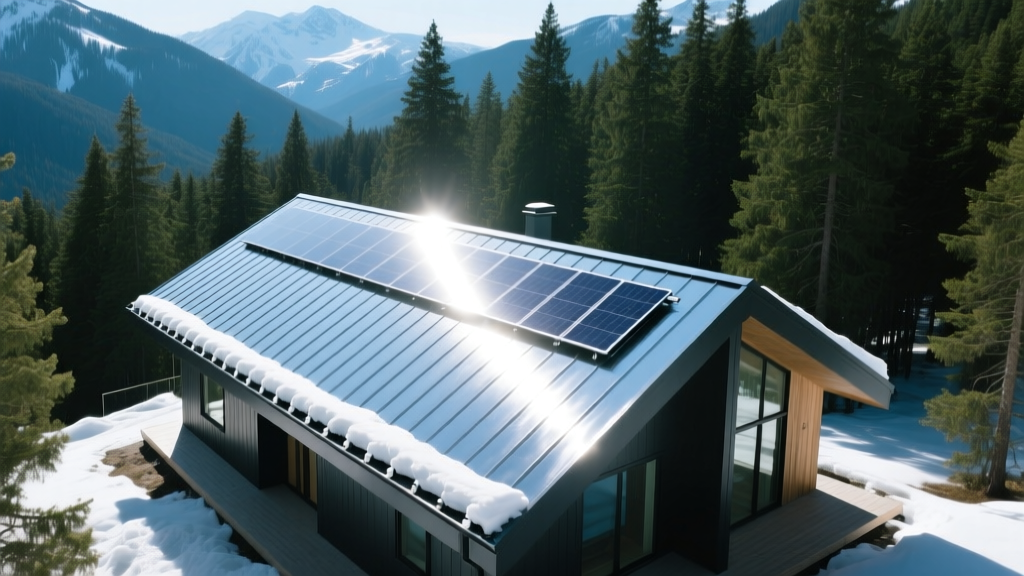
In regions experiencing heavy snow loads (ground snow loads exceeding 30 psf), the primary threats are ice damming, ponding water, and sudden snow avalanches. A standard metal roof material cost calculator will not automatically include snow retention or premium underlayments, which are mandatory for alpine builds.
Required Material Upgrades
- Structural Standing Seam: Upgrade from a 1.5-inch architectural seam to a 2-inch or 3-inch mechanical lock seam (24-gauge minimum). The taller rib provides superior structural integrity against snow deflection.
- Snow Retention Systems: Pad-mount snow guards or continuous rail systems (like those from S-5!) are critical. For a standard 2,000 sq. ft. roof in a high-snow zone, expect to install 2 to 3 rows of snow rails.
- Ice and Water Shield: Standard synthetic underlayment is insufficient. You must upgrade to a high-temperature ice and water protective membrane (e.g., Grace Ice & Water Shield HT) at the eaves, valleys, and penetrations to prevent ice dam backups.
Zone 3: High-Heat and Arid Desert Climates
In desert environments, UV degradation and thermal shock are the primary adversaries. Standard polyester (PE) or silicone modified polyester (SMP) paint systems will chalk, fade, and lose their reflective properties within a few years under intense, direct sun. Furthermore, without proper thermal breaks, the metal panels will transfer massive amounts of radiant heat into the building envelope.
Required Material Upgrades
- PVDF (Kynar 500) Coatings: You must specify a 70% PVDF resin-based coating. These cool-roof pigments reflect solar radiation and resist UV degradation, maintaining their Solar Reflectance Index (SRI) over decades.
- Above-Sheathing Ventilation (ASV): To maximize energy efficiency, install thermal break struts or a batten/counter-batten grid system between the roof deck and the metal panels. This creates an air channel that dissipates heat before it reaches the insulation.
According to the U.S. Department of Energy, installing a highly reflective cool metal roof can reduce peak cooling demand by 10% to 15%, significantly offsetting the initial material premium over the lifespan of the structure.
Climate-Specific Cost Multipliers Matrix
Use the table below to adjust the output of your metal roof material cost calculator based on your specific regional requirements. These figures represent the added cost per square foot on top of the national baseline.
| Climate Zone | Primary Material Upgrade | Added Cost (per sq. ft.) | Critical Accessories |
|---|---|---|---|
| Coastal / HVHZ | 0.032" Aluminum, Floating Clips | +$3.50 - $5.50 | Heavy-duty edge metal, NOA-approved sealants |
| Alpine / Heavy Snow | 2" Mechanical Lock, 24-Gauge | +$2.00 - $3.50 | S-5! Snow rails ($18-$25/lin. ft.), HT Underlayment |
| Desert / High Heat | PVDF Cool Roof Coatings | +$1.50 - $2.50 | Thermal break struts, high-temp synthetic felt |
Step-by-Step: Recalibrating Your Estimate
To ensure your final budget is accurate, follow this sequence when inputting data into your metal roof material cost calculator:
- Calculate Base Area and Pitch: Input the total roof square footage and pitch multiplier. (e.g., a 12:12 pitch increases surface area by 41% compared to the footprint).
- Select the Climate-Adjusted Panel Profile: Override the default panel selection. Choose structural standing seam for snow zones, and aluminum architectural panels for coastal zones.
- Add Underlayment Line Items: Remove standard felt. Add high-temp ice and water shield for the first 6 feet of eaves in cold climates, or a breathable synthetic membrane for humid/coastal zones.
- Input Accessory Linear Footage: Calculate the linear footage of eaves and rakes. Multiply snow guard requirements by the number of required rows (usually 2-4 rows depending on roof slope and rafter length).
- Factor in Waste and Overlap: Standard waste is 5-10%. For complex roofs in extreme climates where custom flashings and precise water-shedding overlaps are required, increase the waste factor to 15%.
Building Codes and Certification Standards
When adjusting your estimates, ensure the materials you are pricing meet the rigorous testing standards required by modern building codes. The Insurance Institute for Business & Home Safety (IBHS) FORTIFIED Home program provides excellent benchmarks for wind and hail resistance. For wind uplift, panels must pass ASTM E1592 testing. In hail-prone regions (such as the Midwest and Great Plains), your calculator must include the cost for Class 4 impact-rated panels, which typically utilize a heavier 24-gauge or 22-gauge steel substrate to prevent denting from 2-inch hailstones.
Furthermore, the Metal Construction Association (MCA) publishes technical guidelines detailing the exact clip spacing and fastener pull-out requirements for varying wind zones. Referencing these guidelines ensures your material list includes the correct volume of fasteners and clips, preventing dangerous under-ordering.
Summary: Precision Over Averages
A metal roof material cost calculator is only as accurate as the variables you feed it. By recognizing the unique demands of your local climate—whether that means specifying AZ55 Galvalume for coastal salt spray, engineering mechanical seams for alpine snow loads, or investing in PVDF coatings for desert UV exposure—you transform a generic estimate into a precise, actionable budget. Always prioritize climate-specific material grades and structural accessories to ensure your roof performs flawlessly for its entire 40- to 60-year lifecycle.
Written by
Elena RodriguezElena Rodriguez is a civil engineer and technical writer specializing in concrete technology, masonry systems, and ASTM/ACI compliance. She earned her B.S. in Civil Engineering from Texas A&M University and spent a decade at a materials testing laboratory, performing over 2,000 concrete compressive strength tests and masonry prism evaluations. Elena is an ACI-certified Field Testing Technician (Grade I) and a member of ASTM Committee C12 on Natural Building Stone. She currently consults on forensic engineering cases involving concrete failures and moisture intrusion. Based in San Antonio, TX, Elena is a proud member of the Society of Women Engineers (SWE) and coaches her daughter's FIRST Robotics team.
More from Elena Rodriguez
View all
Walls & Panels
Cost Analysis: Light Gauge Steel Framing Advantages and Disadvantages
Evaluate light gauge steel framing advantages and disadvantages through a strict cost analysis lens, comparing material, labor, and lifecycle expenses.
Aug 4, 2026

Walls & Panels
Gypsum Board Types: Exact Specifications, Thickness & Dimensions
Compare standard, Type X, and moisture-resistant gypsum board types. Get exact specifications, thicknesses, dimensions, and ASTM standards for your project.
Aug 4, 2026

Fire Resistance
Best Fire-Resistant Outdoor Decking Materials: 2026 Buyer Guide
Discover the best fire-resistant outdoor decking materials for 2026. Compare Class A PVC, aluminum, and hardwood options for WUI compliance and safety.
Aug 4, 2026