2026 Roofing Materials Market: Top Systems Compared
Analyze the 2026 roofing materials market with our in-depth comparison of asphalt, metal, and synthetic systems, including costs and performance data.

The 2026 Roofing Materials Market Landscape
The 2026 roofing materials market is defined by a distinct bifurcation between traditional volume leaders and high-performance emerging alternatives. Driven by stringent municipal building codes, extreme weather resilience requirements, and widespread cool-roof mandates, contractors and property owners are fundamentally re-evaluating standard specifications. While asphalt shingles continue to dominate residential applications by sheer volume, the fastest-growing segments in the roofing materials market belong to standing seam metal, synthetic polymer composites, and advanced thermoplastic membranes.
Understanding these shifts requires looking beyond basic aesthetics. Modern roofing decisions are heavily influenced by lifecycle costing, solar reflectance index (SRI) values, and impact resistance ratings. Below, we break down the primary systems competing in the current market, providing exact performance metrics, installation costs, and ideal use cases.
Market Share & Growth Snapshot (2026)
- Asphalt Shingles: ~58% residential market share; growing at 2.1% CAGR.
- Metal Roofing: ~18% residential, 35% commercial; growing at 6.8% CAGR.
- Synthetic Polymers: ~7% residential market share; growing at 9.4% CAGR.
- Single-Ply Membranes (TPO/PVC): ~65% of the low-slope commercial market.
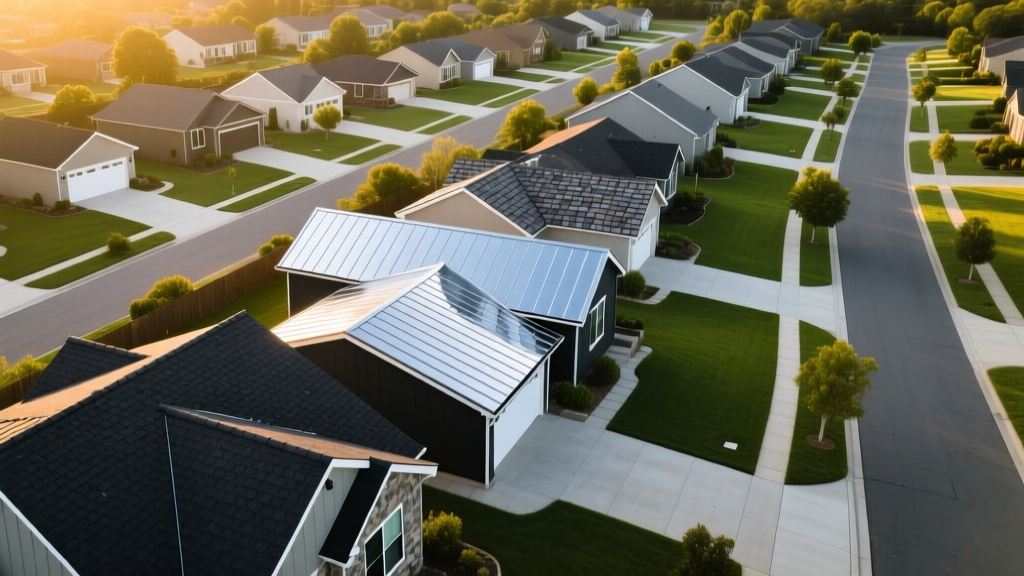
Comparative Matrix: Core Roofing Systems
Before examining the technical nuances of each material, it is essential to understand how they compare across critical procurement metrics. The following matrix outlines the baseline expectations for the top systems in the roofing materials market.
| Material System | Avg. Installed Cost (per sq. ft.) | Expected Lifespan | Wind Rating (ASTM D7158) | Best Application |
|---|---|---|---|---|
| Architectural Asphalt | $4.50 - $8.50 | 25 - 35 Years | Class F (110 mph) or H (150 mph) | Standard residential pitched roofs |
| Standing Seam Metal | $14.00 - $24.00 | 50+ Years | Up to 190 mph (System dependent) | Coastal, high-wind, and premium residential |
| Synthetic Polymer | $11.00 - $19.00 | 40 - 50 Years | Class H (150 mph) | Hail-prone regions, historic replicas |
| TPO Membrane | $8.00 - $14.00 | 20 - 30 Years | N/A (Tested for uplift via FM 1-90) | Commercial flat or low-slope roofs |
Asphalt Shingles: The Volume Leader Evolves
Despite the rapid growth of alternatives, fiberglass-backed architectural asphalt shingles remain the undisputed volume leader in the residential roofing materials market. However, the 2026 product landscape looks vastly different from a decade ago. Standard 3-tab shingles have been almost entirely phased out in favor of dimensional and luxury architectural profiles.
The Rise of SBS Modified Asphalt
The most significant technical advancement in this sector is the widespread adoption of Styrene-Butadiene-Styrene (SBS) modified asphalt. Originally reserved for commercial flat roofs, SBS rubberized polymers are now integrated into premium residential shingles to provide superior flexibility and impact resistance. Products like the GAF Timberline UHDZ and CertainTeed Landmark IR utilize these modifiers to achieve a UL 2218 Class 4 impact rating—the highest standard for hail resistance. In regions like Texas and Colorado, specifying a Class 4 SBS-modified shingle is no longer optional; it is a prerequisite for securing affordable homeowners insurance premiums.
Metal Roofing: The Growth Driver in the Roofing Materials Market
Metal roofing is capturing market share at an unprecedented rate, driven by its longevity, recyclability, and compatibility with solar panel integrations. Within the metal category, standing seam systems heavily outperform exposed-fastener (corrugated) panels in residential and premium commercial applications due to their concealed clip designs.
Gauge, Coatings, and Thermal Movement
Specifying metal roofing requires precise attention to gauge and coating. For residential standing seam, 24-gauge Galvalume steel is the industry baseline, offering a thickness of approximately 0.0239 inches. In coastal environments where salt spray accelerates corrosion, contractors must pivot to 0.032-inch or 0.040-inch marine-grade aluminum, which sacrifices some structural rigidity but eliminates the risk of red rust entirely.
Furthermore, the finish coating dictates the roof's color retention. Standard polyester paints will chalk and fade within 15 years. For long-term viability, specify a Kynar 500 or Hylar 5000 PVDF (polyvinylidene fluoride) resin-based coating. According to data tracked by the National Roofing Contractors Association (NRCA), PVDF coatings retain up to 90% of their original reflectivity and color integrity after three decades of UV exposure.
Thermal movement is another critical engineering factor. Steel expands and contracts significantly with temperature fluctuations. A mechanically seamed standing seam panel utilizing a floating clip system allows the metal to slide laterally over the deck without stressing the fasteners or compromising the weathertight seal.
Synthetic Polymers: The Emerging Contender
Synthetic roofing materials—engineered from recycled rubber, plastics, and engineered polymers—represent the fastest-growing niche in the roofing materials market. These products are designed to mimic the aesthetic profile of natural slate and cedar shake while eliminating the structural loading and maintenance issues associated with those natural materials.
Performance vs. Natural Equivalents
Natural slate weighs between 800 and 1,500 pounds per square (100 square feet), often requiring expensive structural reinforcement of the roof trusses. Synthetic alternatives, such as DaVinci Roofscapes Multi-Width Slate or Inspire Roofing products, weigh roughly 300 pounds per square. They can be installed on standard 2x4 truss systems using conventional roofing nails or pneumatic staples.
Beyond weight savings, synthetic polymers offer unmatched impact resistance. Unlike natural slate, which can shatter under heavy hail or foot traffic during HVAC maintenance, high-density polymer tiles absorb kinetic energy and rebound. Most premium synthetic systems carry a Class 4 impact rating and a Class A fire rating per ASTM E108, making them highly desirable in Wildland-Urban Interface (WUI) zones where ember resistance is legally mandated.
Commercial Low-Slope: TPO vs. PVC vs. EPDM
The commercial side of the roofing materials market is dominated by single-ply membranes. For flat or low-slope roofs (under 3:12 pitch), the choice between TPO (Thermoplastic Polyolefin), PVC (Polyvinyl Chloride), and EPDM (Ethylene Propylene Diene Monomer) depends on the building's specific environmental and chemical exposures.
- TPO: The current market leader for commercial roofs. It offers excellent solar reflectance, aiding in compliance with Department of Energy cool roof initiatives. TPO is heat-welded at the seams, creating a monolithic surface. However, early-generation TPO suffered from premature cracking; buyers must specify 60-mil or 80-mil thicknesses from top-tier manufacturers with reinforced polyester scrim.
- PVC: More expensive than TPO, but vastly superior in environments with high chemical or grease exhaust exposure, such as restaurants and manufacturing facilities. PVC membranes resist lipid degradation that would quickly destroy a TPO roof.
- EPDM: A synthetic rubber membrane that remains popular due to its low material cost and ease of repair. While traditionally black (which absorbs heat), white-coated EPDM is now available to meet municipal energy codes.
Decision Framework: Matching Material to Climate and Code
Selecting the right system from the roofing materials market requires aligning the material's physical properties with the local climate zone and municipal building codes. Use the following framework to guide your specification:
High-Wind & Coastal Zones
Primary Choice: Standing Seam Metal (Aluminum) or Class H Asphalt Shingles.
Rationale: Concealed fasteners prevent wind-driven rain intrusion. Aluminum resists saltwater corrosion. Avoid exposed fastener metal panels and clay tiles, which are highly susceptible to wind uplift.
Hail & Severe Storm Corridors
Primary Choice: SBS Modified Asphalt (Class 4) or Synthetic Polymer.
Rationale: Rubberized modifiers and high-density polymers absorb impact energy without fracturing. Avoid natural slate, standard wood shakes, and unmodified 3-tab asphalt.
High-Heat & Urban Heat Islands
Primary Choice: Cool-rated TPO (Commercial) or High-SRI Metal/Coated Asphalt.
Rationale: Materials listed in the Cool Roof Rating Council (CRRC) directory with an SRI above 50 drastically reduce HVAC cooling loads and mitigate urban heat island effects.
Final Procurement Considerations
The roofing materials market in 2026 rewards buyers who look past initial material costs and evaluate total lifecycle performance. When drafting your specifications or reviewing contractor bids, demand documentation for ASTM wind uplift testing, UL impact ratings, and specific coating formulations. A roof is a long-term capital asset; aligning your material choice with verified engineering data ensures structural integrity and financial predictability for decades to come.
Written by
Sarah WhitfieldSarah Whitfield is a chartered quantity surveyor (MRICS) and construction cost analyst with 15 years of experience in material pricing, procurement strategy, and project budgeting. She earned her degree in Construction Management from the University of Reading (UK) and has worked on projects ranging from $2M custom homes to $180M mixed-use developments across North America and Europe. Sarah currently leads cost estimating for BuildMat Insight, maintaining a proprietary database of 4,000+ material price points updated quarterly. She is a frequent contributor to RSMeans cost data panels and has presented at the International Cost Engineering Council (ICEC) congress. Based in Denver, CO, Sarah is an avid trail runner and volunteer mentor for Women in Construction.
More from Sarah Whitfield
View all
Wood & Lumber
What Are the Different Types of Wood? A Builder's Guide
Compare structural softwoods, finish hardwoods, and engineered lumber. Analyze Janka ratings, MOE values, and 2026 pricing for construction.
Aug 4, 2026

Walls & Panels
Steel Framing vs Wood Framing: Corrosion and Moisture Defense
Compare steel framing vs wood framing for moisture resistance. Learn about galvanized coatings, condensation risks, and corrosion protection strategies.
Jul 21, 2026

Stone & Masonry
How to Cut Stone Veneer: Wet Saw vs Grinder Comparison
Compare the best tools for cutting stone veneer. We review wet saws, angle grinders, and chop saws to help you achieve clean, chip-free cuts.
Jul 21, 2026