Fire Resistant Building Materials Cost Analysis & 2026 Pricing
Compare the 2026 costs of fire resistant building materials. Discover pricing for Type X drywall, intumescent coatings, and fire-rated glass assemblies.

The True Cost of Fire-Resistant Building Materials in 2026
Specifying fire resistant building materials is no longer just a code compliance exercise; it is a critical financial decision that impacts upfront construction budgets, long-term insurance premiums, and lifecycle maintenance costs. As supply chain dynamics stabilize in 2026, material pricing for passive fire protection has shifted. While basic gypsum products have seen marginal price corrections, specialized intumescent coatings and fire-rated glazing systems continue to command premium pricing due to advanced chemical formulations and stringent testing requirements.
This cost analysis breaks down the exact 2026 market rates for primary fire-resistant assemblies, exposing the hidden labor multipliers and penetration-seal costs that frequently derail project budgets.
- Standard Fire-Rated Drywall (Type X): $2.65 - $3.10 per sq. ft. installed.
- Structural Steel Intumescent Coating: $11.00 - $16.50 per sq. ft. applied.
- 90-Minute Fire-Rated Glazing: $135.00 - $185.00 per sq. ft. installed.
- Budget Impact: Upgrading from standard to 2-hour fire-rated assemblies typically adds 4% to 7% to total envelope and partition costs.
Material-by-Material Cost Breakdown
To accurately forecast your 2026 construction budget, you must separate raw material costs from the specialized labor required for code-compliant installation. The table below reflects national average pricing for commercial and multi-family residential projects.
| Material Category | Product Example | Material Cost (per sq. ft.) | Installed Cost (per sq. ft.) | Standard Rating |
|---|---|---|---|---|
| 5/8' Type X Gypsum | USG Sheetrock Firecode X | $0.55 - $0.65 | $2.65 - $3.10 | 1-Hour |
| 5/8' Type C Gypsum | CertainTeed Firestop | $0.75 - $0.88 | $3.05 - $3.60 | 2-Hour |
| Intumescent Paint (Steel) | Nullifire SC902 | $4.50 - $6.00 | $11.00 - $16.50 | 2-Hour |
| Ceramic Fire Glass | Vetrotech Pyroswiss | $95.00 - $125.00 | $135.00 - $185.00 | 90-Minute |
| Cementitious Board | Promat PROMATECT | $3.20 - $4.50 | $8.50 - $11.00 | 2 to 4-Hour |
Type X and Type C Gypsum Board
Gypsum remains the most cost-effective fire resistant building material for interior partitions and shaft enclosures. The fire resistance comes from the chemically combined water within the gypsum core, which releases as steam when exposed to high heat, delaying structural failure. According to the Gypsum Association, Type X boards contain glass fibers to reinforce the core after the water calcifies, while Type C features a denser core with enhanced fiber content to prevent shrinkage and cracking during prolonged fire exposure. While Type C costs roughly 25% more in raw materials, it allows for single-layer installations in certain 2-hour rated assemblies, offsetting the labor cost of taping and mudding a second layer of Type X.
Intumescent Coatings for Structural Steel
Exposed structural steel requires passive fire protection to prevent yielding at temperatures above 1,000°F. Intumescent paints swell up to 50 times their original thickness when heated, forming an insulating carbonaceous char. The high installed cost ($11.00 to $16.50 per sq. ft.) is driven by the meticulous surface preparation (SSPC-SP6 commercial blast) and the precise wet-film thickness measurements required during application. For a 2-hour rating, applicators must achieve 20 to 30 dry mils, requiring multiple passes and strict climate control during curing.
Fire-Rated Glazing and Ceramic Glass
Traditional wired glass is largely obsolete for high-hazard areas. Modern fire-rated glazing utilizes multi-layered intumescent interlayers or specialized transparent ceramics. While the material cost is steep—often exceeding $100 per square foot—it eliminates the need for masonry fire walls in corridors and stairwells, preserving natural light and spatial flow. Installation requires specialized fire-rated framing systems (like steel or specially treated timber), which adds significantly to the total assembly cost.
Hidden Costs: Penetration Seals and Framing Labor
Project estimators frequently underbudget fire-resistant assemblies by ignoring the ancillary components required to maintain the integrity of the fire barrier. A wall is only as fire-resistant as its weakest penetration.
- Firestopping Penetrations: Every electrical conduit, HVAC duct, and plumbing pipe that breaches a fire-rated wall requires a tested through-penetration firestop system (F-rating and T-rating). Using products like Hilti CP 606 elastomeric sealant or 3M Fire Barrier wrap strips costs between $25.00 and $65.00 per penetration when factoring in certified labor and documentation.
- Framing Multipliers: Achieving a 2-hour or 3-hour rating often mandates staggered-stud framing, double bottom plates, or specialized resilient channels to decouple the drywall from the framing. This increases lumber costs by 15% and framing labor by up to 25%.
- Third-Party Inspections: In 2026, most jurisdictions require third-party special inspections for firestopping and sprayed fire-resistive materials (SFRM) per IBC Section 1705. Budget $3,500 to $8,000 per mid-rise project for these mandatory verification services.
Decision Matrix: Selecting Materials by ROI and Fire Rating
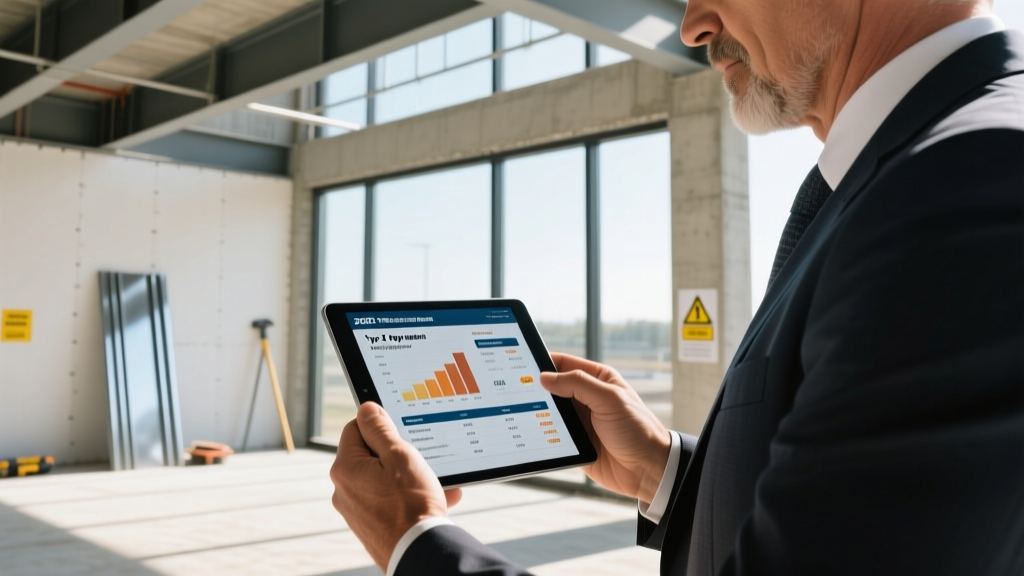
Choosing the right fire resistant building materials requires balancing the required code mandate with the project's functional needs. Use this framework to guide your specification decisions:
- Scenario A: Standard Corridor and Egress Walls (1-Hour Rating)
Optimal Choice: 5/8' Type X Gypsum on standard 3-5/8' metal studs.
Why: Lowest installed cost, universal labor familiarity, and easily accommodates electrical boxes with standard fire-putty pads. - Scenario B: High-Rise Structural Columns (2 to 3-Hour Rating)
Optimal Choice: Cementitious board enclosures (e.g., Promat) or Spray-Applied Fire Resistive Materials (SAFRM).
Why: Intumescent paint is cost-prohibitive for thick, heavy columns where aesthetics are hidden. Cementitious boards offer high impact resistance in elevator shafts and mechanical rooms. - Scenario C: Atriums and Visibility-Critical Fire Barriers (90-Minute Rating)
Optimal Choice: Multi-layer intumescent glass with steel framing.
Why: Provides the necessary radiant heat blocking (which standard ceramics fail to do) while maintaining architectural transparency. Justify the $160/sq. ft. cost by eliminating the need for artificial lighting and mechanical ventilation in enclosed spaces.
Long-Term Insurance Savings vs. Upfront Premium
The financial analysis of fire-resistant materials must extend beyond the construction phase. Commercial property insurance premiums are heavily influenced by the building's construction class and the presence of active and passive fire protection systems. Buildings that exceed the minimum National Fire Protection Association (NFPA) codes by utilizing enhanced 2-hour rated assemblies and comprehensive firestopping can achieve superior Insurance Services Office (ISO) ratings.
For a 50,000 square foot commercial warehouse, upgrading the perimeter fire walls from 1-hour to 2-hour masonry or specialized cementitious board may add $45,000 to the initial construction budget. However, this upgrade can reduce annual property insurance premiums by 8% to 12%. Over a 10-year hold period, the net present value of the insurance savings frequently eclipses the initial material premium, making high-performance fire resistant building materials a sound capital investment.
Frequently Asked Questions
Is fire-resistant drywall required by code in all commercial buildings?
Not universally, but it is mandated in specific areas. The International Building Code (IBC) requires 1-hour or 2-hour fire-resistance-rated construction for exit stairwells, elevator shafts, mechanical rooms, and corridor walls in most commercial and multi-family occupancies. Always consult the specific occupancy classification and the National Institute of Building Sciences guidelines for local amendments.
Can I paint over intumescent coatings with standard architectural paint?
No. Standard latex or acrylic paints can alter the thermal properties of the intumescent layer, preventing it from swelling correctly during a fire. You must use a compatible topcoat specifically approved by the intumescent manufacturer's technical data sheet, which typically adds $1.50 to $2.50 per square foot to the total finishing cost.
What is the cost difference between active and passive fire protection?
Active systems (sprinklers, alarms) and passive systems (fire-rated walls, doors, dampers) serve different functions and are both required. However, passive fire protection materials generally represent a one-time capital expenditure integrated into the building envelope, whereas active systems require ongoing annual maintenance, testing, and water-flow inspections, adding to the long-term operational budget.
Written by
Elena RodriguezElena Rodriguez is a civil engineer and technical writer specializing in concrete technology, masonry systems, and ASTM/ACI compliance. She earned her B.S. in Civil Engineering from Texas A&M University and spent a decade at a materials testing laboratory, performing over 2,000 concrete compressive strength tests and masonry prism evaluations. Elena is an ACI-certified Field Testing Technician (Grade I) and a member of ASTM Committee C12 on Natural Building Stone. She currently consults on forensic engineering cases involving concrete failures and moisture intrusion. Based in San Antonio, TX, Elena is a proud member of the Society of Women Engineers (SWE) and coaches her daughter's FIRST Robotics team.
More from Elena Rodriguez
View all
Walls & Panels
Cost Analysis: Light Gauge Steel Framing Advantages and Disadvantages
Evaluate light gauge steel framing advantages and disadvantages through a strict cost analysis lens, comparing material, labor, and lifecycle expenses.
Aug 4, 2026

Walls & Panels
Gypsum Board Types: Exact Specifications, Thickness & Dimensions
Compare standard, Type X, and moisture-resistant gypsum board types. Get exact specifications, thicknesses, dimensions, and ASTM standards for your project.
Aug 4, 2026

Fire Resistance
Best Fire-Resistant Outdoor Decking Materials: 2026 Buyer Guide
Discover the best fire-resistant outdoor decking materials for 2026. Compare Class A PVC, aluminum, and hardwood options for WUI compliance and safety.
Aug 4, 2026