Troubleshooting Waterproof Oxford Material: Leaks and Peeling
Diagnose and fix leaking, peeling, or degrading waterproof oxford material. Expert troubleshooting for tents, tarps, and outdoor structural covers.

The Anatomy of Waterproof Oxford Failures
Oxford cloth is a basket-weave textile prized in structural covers, awnings, and heavy-duty tarps for its high tensile strength and abrasion resistance. However, the weave itself is not waterproof. 'Waterproof oxford material' relies on a dual-layer defense system: a Durable Water Repellent (DWR) finish on the exterior face, and a Polyurethane (PU) or Polyvinyl Chloride (PVC) coating on the interior. When leaks occur, the failure is almost always isolated to one of these two layers, the structural seams, or a chemical breakdown of the coating itself.
Quick Diagnostic Matrix
- Water absorbs into the outer fabric but doesn't drip inside: DWR degradation (Surface wet-out).
- Water pushes through the fabric under pressure or contact: Hydrostatic Head (HH) failure or micro-abrasions.
- Interior coating feels tacky, flakes off, or smells like vinegar: PU Hydrolysis.
- Leaks occur exclusively where panels are stitched together: Seam tape delamination.
Symptom 1: Surface Wet-Out (DWR Degradation)
If your oxford cover looks soaked on the outside but isn't actively dripping inside, the underlying waterproof membrane is likely intact, but the face fabric's DWR has failed. While this doesn't immediately cause interior leaks, wet-out adds massive structural weight (water-logged 600D Oxford can gain 30% in weight) and eliminates breathability, leading to severe interior condensation that mimics a leak.
The Fix: DWR Reactivation and Reapplication
- Clean the substrate: Dirt, pollen, and tree sap mask the DWR. Wash the material with a specialized technical cleaner like Nikwax Tech Wash. Never use standard laundry detergents, as they leave hydrophilic residues that attract water.
- Apply a water-based DWR: While the fabric is still damp, spray an even coat of Nikwax Tent & Gear SolarProof or Grangers Tent + Gear Repel. According to Nikwax's technical guidelines, water-based formulations penetrate the individual yarns better than aerosolized solvent sprays.
- Heat activate: If the oxford item is machine-safe (like gear bags or lightweight jackets), tumble dry on low for 20 minutes. For fixed structures like awnings or tarps, use a heat gun on a low setting or an iron with a thick towel barrier to melt the DWR polymers into the fiber matrix.
Symptom 2: Interior Weeping Under Pressure (Hydrostatic Head Failure)
If water pushes through the fabric when you touch the wet interior, or when wind drives rain against a taut tarp, the PU coating's Hydrostatic Head (HH) rating has been compromised. HH measures how many millimeters of water pressure a fabric can withstand before leaking. As of 2026, standard 600D Oxford tarps feature a 1,500mm to 3,000mm PU coating, while heavy-duty 1000D structural covers push up to 5,000mm.
| Oxford Denier | Typical PU Thickness | Standard HH Rating | Primary Use Case |
|---|---|---|---|
| 210D Oxford | 0.02 - 0.04 mm | 1,000mm - 1,500mm | Lightweight tents, dust covers |
| 420D Oxford | 0.04 - 0.06 mm | 1,500mm - 2,000mm | Backpacks, standard tarps, luggage |
| 600D Oxford | 0.06 - 0.09 mm | 2,000mm - 3,000mm | Heavy-duty awnings, truck covers, pop-up tents |
| 1000D Oxford | 0.10 - 0.15 mm | 3,000mm - 5,000mm+ | Industrial enclosures, permanent structural covers |
The Fix: Liquid Urethane Re-coating
Micro-abrasions from folding, dragging, or UV exposure thin the PU layer. To restore the HH rating, you must apply a liquid urethane coating. Gear Aid Tent Sure is the industry standard for this. Dilute it slightly with water (per manufacturer instructions) and use a foam brush to paint it onto the interior coated side of the oxford fabric. Allow 24 hours to cure in a low-humidity environment before folding.
Symptom 3: Flaking, Stickiness, and Chemical Odor (PU Hydrolysis)
If the interior coating of your oxford material feels sticky, peels off in translucent sheets, or emits a sharp vinegar-like odor, the material is undergoing hydrolysis. This is a chemical reaction where ambient moisture breaks down the ester linkages in the polyurethane polymer chain. It is most common in PU-coated oxford stored in humid, unventilated spaces (like boat lockers or damp garages).
Material Warning: PVC vs. PU Oxford
If your oxford material is PVC-coated rather than PU-coated, it will not hydrolyze or peel in the same way. PVC is highly resistant to moisture breakdown but is vulnerable to UV degradation and cold-cracking. If a PVC Oxford tarp is cracking or stiffening, it is suffering from plasticizer migration due to UV exposure, and the material cannot be chemically restored; it must be replaced.
The Fix: Complete PU Stripping and Re-application
You cannot save a hydrolyzed coating; it must be completely removed before re-coating, otherwise the new urethane will not bond.
- Set up the oxford cover in a well-ventilated area.
- Scrub the interior coating with a stiff-bristled brush and 70% or higher isopropyl alcohol. The alcohol breaks down the degraded PU sludge.
- Wipe away the residue with microfiber towels until the base weave is exposed.
- Once fully dry, apply two thin coats of a specialized urethane sealant like Gear Aid Seam Grip FC (Fast Cure) or Tent Sure, allowing 6 hours between coats.
For comprehensive maintenance protocols, REI's expert gear care guides emphasize that storing PU-coated fabrics completely dry and loosely rolled (rather than tightly stuffed) dramatically slows the hydrolysis process.
Symptom 4: Pinhole Leaks at Stitch Lines (Seam Tape Delamination)
Oxford fabric is woven tightly, but the sewing needle punches thousands of holes through the waterproof membrane. Manufacturers seal these holes using heat-activated PU seam tape on the interior. Over time, UV exposure and repeated folding cause this tape to yellow, crack, and peel, exposing the needle holes to water ingress.
The Fix: Seam Tape Replacement and Liquid Sealing
- For active peeling tape: Do not just apply liquid sealant over peeling tape; it will trap moisture and fail. Use a hairdryer to gently warm the old tape and peel it away. Clean the seam line with rubbing alcohol.
- For liquid sealing: Apply a continuous bead of Gear Aid Seam Grip WP over the needle holes. Use a disposable brush to work the sealant deep into the stitch channels.
- For heavy-duty 1000D Oxford: Liquid sealants may not bridge the large needle holes of heavy deniers. Apply a fresh layer of 3/4-inch PU seam tape using a hot air welder or a specialized seam tape iron set to 140°C (285°F), applying firm pressure with a silicone roller as it cools.
According to Backpacker Magazine's technical testing, a properly sealed seam on a 600D Oxford tarp should withstand direct, high-pressure water sprays without weeping. If water beads on the seam tape itself, the seal is intact.
Decision Matrix: Repair vs. Replace
Not all oxford material failures warrant the time and chemical cost of repair. Use this framework to decide your next step based on 2026 market replacement costs.
| Failure Type | Repair Cost (Materials) | Time Investment | Verdict |
|---|---|---|---|
| Surface DWR Wet-Out | $15 - $25 | 2 Hours | Repair. Highly effective and extends gear life by years. |
| Localized Seam Leaks | $10 - $15 | 1 Hour | Repair. Spot-treating seams is the most cost-effective fix. |
| Widespread PU Hydrolysis (Tackiness/Peeling) | $35 - $60 | 6 - 8 Hours | Replace. The labor and chemical cost often exceeds the value of a standard 420D/600D tarp (approx. $85–$140 new). |
| PVC Cold-Cracking / UV Dry Rot | N/A | N/A | Replace. Structural integrity of the base weave is compromised. |
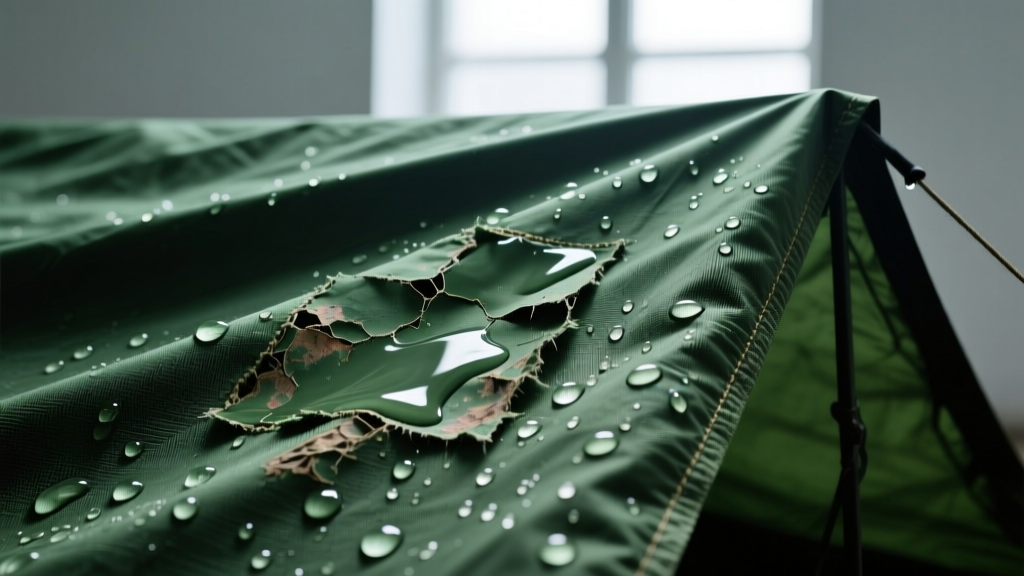
Preventative Storage Protocols
The lifespan of waterproof oxford material is dictated almost entirely by storage conditions. Never fold and store PU-coated oxford while damp. If forced to pack down a wet structural cover, unpack it within 12 hours and deploy it in the sun. For long-term storage, keep the material in a climate-controlled environment below 60% relative humidity, and avoid compressing the coated layers against themselves, which can cause the PU to bond and tear upon unfolding.
Written by
Sarah WhitfieldSarah Whitfield is a chartered quantity surveyor (MRICS) and construction cost analyst with 15 years of experience in material pricing, procurement strategy, and project budgeting. She earned her degree in Construction Management from the University of Reading (UK) and has worked on projects ranging from $2M custom homes to $180M mixed-use developments across North America and Europe. Sarah currently leads cost estimating for BuildMat Insight, maintaining a proprietary database of 4,000+ material price points updated quarterly. She is a frequent contributor to RSMeans cost data panels and has presented at the International Cost Engineering Council (ICEC) congress. Based in Denver, CO, Sarah is an avid trail runner and volunteer mentor for Women in Construction.
More from Sarah Whitfield
View all
Wood & Lumber
What Are the Different Types of Wood? A Builder's Guide
Compare structural softwoods, finish hardwoods, and engineered lumber. Analyze Janka ratings, MOE values, and 2026 pricing for construction.
Aug 4, 2026

Walls & Panels
Steel Framing vs Wood Framing: Corrosion and Moisture Defense
Compare steel framing vs wood framing for moisture resistance. Learn about galvanized coatings, condensation risks, and corrosion protection strategies.
Jul 21, 2026

Stone & Masonry
How to Cut Stone Veneer: Wet Saw vs Grinder Comparison
Compare the best tools for cutting stone veneer. We review wet saws, angle grinders, and chop saws to help you achieve clean, chip-free cuts.
Jul 21, 2026