Waterproof Foam Gasket Material Cost Breakdown 2026
Analyze 2026 waterproof foam gasket material costs. Compare EPDM, neoprene, and silicone pricing, fabrication fees, and lifecycle ROI for building envelopes.

The True Economics of Waterproof Foam Gasket Material
Specifying waterproof foam gasket material for building envelopes, curtain walls, and exterior electrical enclosures requires looking far beyond the per-linear-foot sticker price. In 2026, supply chain stabilization has normalized base elastomer costs, but the divergence in pricing between standard commercial grades and high-performance architectural grades has widened. A gasket that costs $0.15 per foot but fails due to compression set after three years will ultimately cost $12.00 per foot to remediate when factoring in scaffolding, labor, and building downtime.
According to moisture management principles outlined by Building Science Corporation, the primary defense against bulk water intrusion at joints is a continuous, compressible seal that accommodates thermal expansion without losing its recovery memory. This guide breaks down the exact material, fabrication, and lifecycle costs of closed-cell foam gaskets to help contractors and architects make data-driven procurement decisions.
Base Material Pricing Matrix (2026 Market Rates)
The cost of the raw elastomer foam is dictated by the polymer base, the blowing agent used during manufacturing, and the resulting cell structure. Closed-cell foams are mandatory for waterproofing; open-cell foams will wick and retain moisture, leading to substrate corrosion.
| Material Type | Base Cost (Per Linear Ft) | Compression Set (ASTM D395) | UV & Ozone Resistance | Primary Architectural Use |
|---|---|---|---|---|
| EPDM (Ethylene Propylene Diene Monomer) | $0.18 – $0.42 | < 20% (Excellent) | Superior | Window perimeters, roofing hatches |
| Neoprene (Chloroprene Blend) | $0.28 – $0.65 | 20% – 35% (Good) | Moderate | HVAC access panels, marine enclosures |
| Silicone Sponge | $0.95 – $1.85 | < 10% (Exceptional) | Superior | High-temp lighting fixtures, cleanrooms |
| PVC/NBR (Nitrile Blend) | $0.09 – $0.22 | 40% – 60% (Poor) | Poor (Degrades) | Interior non-critical seals, temporary |
As noted in technical specifications by Stockwell Elastomerics, EPDM remains the undisputed cost-to-performance leader for exterior building envelopes. It provides near-silicone UV resistance at a fraction of the cost, making it the default choice for 80% of commercial fenestration projects.
Hidden Cost Drivers: Density, Adhesives, and Tolerances
1. Density and Durometer Hardness
Foam gaskets are measured in pounds per cubic foot (PCF) and Shore hardness (typically Shore OO for soft foams or Shore A for denser sponges). A standard 5 PCF EPDM foam might cost $0.18/ft, but upgrading to a 10 PCF high-density formulation to withstand higher wind-driven rain pressures (e.g., Miami-Dade NOA requirements) will increase the material cost by 35% to 50%. High-density foams require greater closure force, meaning hardware (hinges, latches, mullion clips) must be spec'd to handle the increased compression load.
2. Pressure Sensitive Adhesive (PSA) Backings
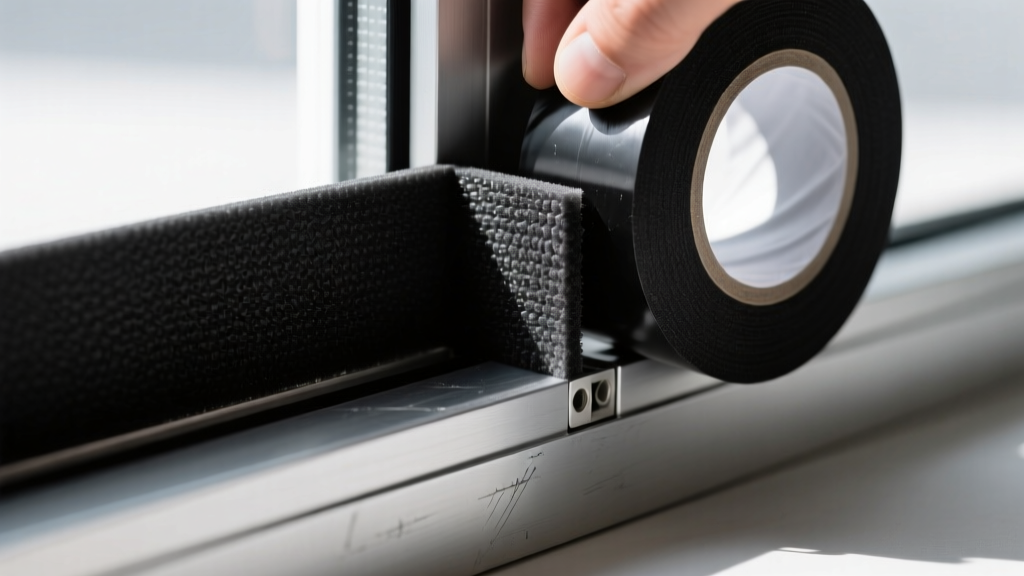
Bare foam is rarely installed in modern commercial construction; it is almost always supplied with a PSA backing to reduce labor time. The adhesive chemistry drastically alters the unit price:
- Standard Acrylic (e.g., 3M 9448A): Adds $0.03 – $0.06 per linear foot. Suitable for painted steel and primed aluminum.
- High-Bond Acrylic (e.g., 3M VHB 5952): Adds $0.12 – $0.18 per linear foot. Required for powder-coated aluminum, glass, and composite panels where structural adhesion is necessary to prevent the gasket from peeling under thermal cycling.
- Silicone Adhesives: Adds $0.25+ per linear foot. Mandatory when bonding to low-surface-energy plastics like PTFE or specific polyolefins.
Fabrication: Roll Stock vs. Custom Die-Cutting
How you purchase the waterproof foam gasket material dictates your waste factor and installation labor costs. According to supplier directories like ThomasNet, custom fabrication is a major value-add but introduces upfront tooling expenses.
Continuous Roll Stock
Purchasing in master rolls (typically 200 to 500 linear feet) yields the lowest per-foot cost. However, cutting and butting corners on-site introduces a 15% to 25% waste factor and creates vulnerable leak points at the miters. Labor costs for cutting and aligning rolls on-site average $1.50 to $3.00 per linear foot.
Custom Die-Cut and Kiss-Cut Gaskets
For repetitive assemblies (e.g., standardized access doors, electrical enclosures, or modular window units), custom die-cutting eliminates corner joints entirely.
- Steel Rule Die Tooling: $350 – $800 one-time fee. Capable of cutting foams up to 1/2" thick.
- Rotary Die Tooling: $1,500 – $3,500. Used for high-volume continuous web cutting.
- Kiss-Cutting on Liner: The foam is cut through, but the adhesive release liner remains intact. This allows installers to peel and apply pre-formed "picture frame" gaskets in seconds, reducing installation labor by up to 80%.
Lifecycle Cost Analysis: The Price of Compression Set Failure
The most critical metric for waterproof foam gasket material is not its initial tensile strength, but its compression set—the material's ability to return to its original thickness after being compressed for an extended period. ASTM D395 Method B is the standard test for this.
"A foam gasket with a compression set greater than 25% will permanently flatten under continuous architectural closure loads. Once it flattens, a 1/16-inch gap opens during winter thermal contraction, allowing bulk water ingress that will cause thousands of dollars in interior damage."
Consider a 10-story commercial building with 2,000 linear feet of exterior access panel gaskets:
| Cost Factor | Cheap PVC/NBR Blend | Premium EPDM |
|---|---|---|
| Initial Material Cost | $300 ($0.15/ft) | $700 ($0.35/ft) |
| Expected Lifespan | 2 – 3 Years | 15 – 20 Years |
| Remediation Labor (Scaffolding/Swing Stage) | $18,000 (Required in Year 3) | $0 |
| 10-Year Total Cost of Ownership | $18,700+ | $700 |
Sourcing Strategies to Optimize 2026 Budgets
To control costs without sacrificing waterproofing integrity, implement the following procurement frameworks:
- Co-Extrude for Complex Profiles: If your joint requires a rigid base for mechanical fastening and a soft foam bulb for sealing, look into co-extruded EPDM profiles. While the tooling for the extrusion die is expensive ($4,000+), the per-foot cost drops below $0.60 at volumes over 10,000 feet, eliminating the need for secondary adhesive application.
- Leverage Slitting Services: If you need a non-standard width (e.g., 3/8" instead of the standard 1/2"), do not buy 1/2" and trim it on-site. Master converters will slit 54" wide master rolls to your exact tolerance for an added $0.02 per foot, saving massive amounts of labor and material waste.
- Mandate Lot Testing: Require your supplier to provide a Certificate of Analysis (CoA) showing ASTM D1056 (Standard Specification for Flexible Cellular Materials) compliance for every batch. Variations in the blowing agent during manufacturing can result in a "soft batch" that fails to provide the necessary water-sealing compression force.
By prioritizing compression set data and UV stability over baseline linear foot pricing, project managers can effectively eliminate water intrusion callbacks and protect the long-term integrity of the building envelope.
Written by
Sarah WhitfieldSarah Whitfield is a chartered quantity surveyor (MRICS) and construction cost analyst with 15 years of experience in material pricing, procurement strategy, and project budgeting. She earned her degree in Construction Management from the University of Reading (UK) and has worked on projects ranging from $2M custom homes to $180M mixed-use developments across North America and Europe. Sarah currently leads cost estimating for BuildMat Insight, maintaining a proprietary database of 4,000+ material price points updated quarterly. She is a frequent contributor to RSMeans cost data panels and has presented at the International Cost Engineering Council (ICEC) congress. Based in Denver, CO, Sarah is an avid trail runner and volunteer mentor for Women in Construction.
More from Sarah Whitfield
View all
Wood & Lumber
What Are the Different Types of Wood? A Builder's Guide
Compare structural softwoods, finish hardwoods, and engineered lumber. Analyze Janka ratings, MOE values, and 2026 pricing for construction.
Aug 4, 2026

Walls & Panels
Steel Framing vs Wood Framing: Corrosion and Moisture Defense
Compare steel framing vs wood framing for moisture resistance. Learn about galvanized coatings, condensation risks, and corrosion protection strategies.
Jul 21, 2026

Stone & Masonry
How to Cut Stone Veneer: Wet Saw vs Grinder Comparison
Compare the best tools for cutting stone veneer. We review wet saws, angle grinders, and chop saws to help you achieve clean, chip-free cuts.
Jul 21, 2026