Specifying the Best Material for a Rug in Commercial Builds
Technical guide to specifying the best material for a rug in commercial construction, covering ASTM standards, polymer types, and acoustic ratings.
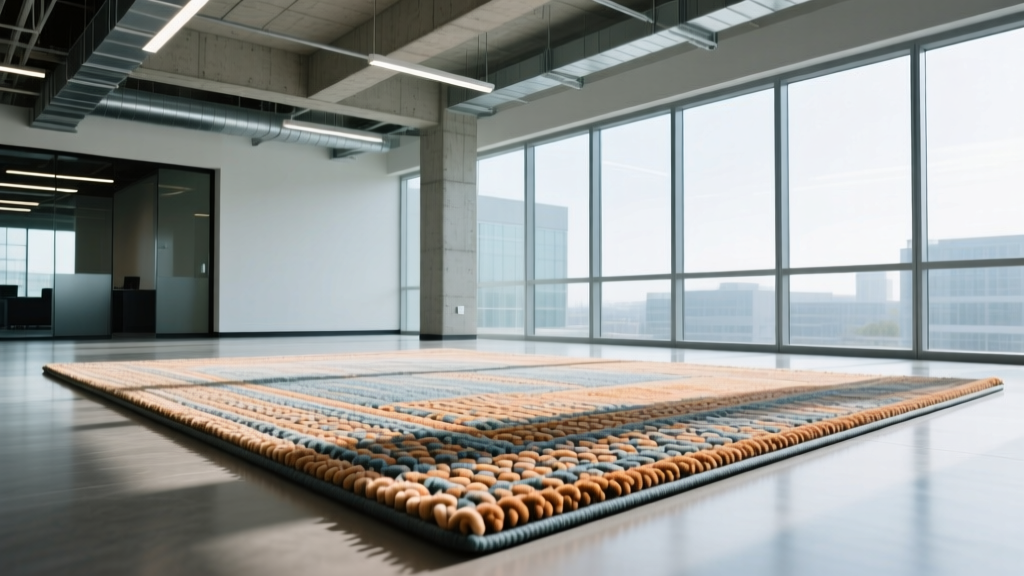
Architectural Flooring: Defining the Best Material for a Rug
When architectural specifiers, interior designers, and flooring contractors evaluate the best material for a rug in commercial, hospitality, or high-performance residential builds, the decision transcends aesthetic pile and colorways. In the built environment, a rug is a complex flooring system that must mitigate acoustic transfer, resist rolling loads, inhibit flame spread, and maintain structural integrity under heavy foot traffic. Selecting the optimal fiber and backing system requires a rigorous analysis of polymer chemistry, standardized testing metrics, and lifecycle cost analysis (LCCA).
The Specification Triad
Every commercial rug specification must balance three competing technical demands:
- Mechanical Durability: Resistance to pile crushing, tuft loss, and edge raveling under dynamic and static loads.
- Fire & Life Safety: Compliance with critical radiant flux thresholds for egress corridors.
- Acoustic Mitigation: Improvement of Impact Insulation Class (IIC) and Noise Reduction Coefficient (NRC) metrics.
Polymer Chemistry and Natural Fibers: A Technical Breakdown
The face fiber dictates the rug's primary performance characteristics. In 2026, the market is dominated by four primary materials, each with distinct molecular behaviors and architectural applications.
Solution-Dyed Nylon 6,6 (The Commercial Benchmark)
Nylon 6,6 remains the undisputed standard for high-traffic commercial zones. The "6,6" designation refers to the polymer's molecular structure, which features tight hydrogen bonding that yields exceptional tensile strength and resilience. For commercial specs, solution-dyed nylon is mandatory. Unlike piece-dyed fibers where color is applied post-extrusion, solution-dyed nylon incorporates pigment into the polymer melt. This renders the fiber virtually impervious to bleach, harsh alkaline cleaning agents, and UV fading. Look for a minimum face weight of 28 oz/sq yd and a pile density of 5,000 stitches per square inch for corridor applications.
Wool (The Hospitality and Luxury Standard)
Wool is a complex protein fiber with a natural crimp that provides excellent bulk and inherent flame retardancy. It naturally meets many stringent fire codes without topical chemical treatments. However, wool has a low melting point and poor resistance to high-alkaline cleaners. It is best specified for low-rolling-traffic environments such as executive boardrooms, luxury hotel suites, and formal dining areas. Specifiers must ensure the wool is moth-proofed and treated for static dissipation.
Polytrimethylene Terephthalate (PTT / Triexta)
PTT, commonly branded as Triexta or Sorona, is a highly engineered polymer that offers inherent stain resistance without the need for topical fluorochemical treatments (which are increasingly restricted by 2026 environmental regulations). PTT features a "kinked" molecular chain that acts like a microscopic spring, providing memory and recovery from compression that rivals nylon, though its overall tensile strength is slightly lower.
Polypropylene (Olefin)
Polypropylene is a budget-friendly, hydrophobic fiber. Because it absorbs virtually zero moisture, it is highly resistant to water-based stains and microbial growth. However, it has a very low melting point (approx. 160°C) and poor resilience, meaning it crushes easily under heavy furniture or rolling carts. It should be restricted to low-traffic, moisture-prone areas or specified strictly in low-pile, high-density loop constructions.
| Fiber Material | Melting Point | Moisture Regain | Resilience / Recovery | Primary Architectural Use |
|---|---|---|---|---|
| Nylon 6,6 | ~265°C | 4.0% - 5.0% | Excellent | Corridors, Lobbies, Open Offices |
| Wool | Chars / Ignites | 14.0% - 18.0% | Good | Hospitality, Executive Suites |
| PTT (Triexta) | ~228°C | 0.4% | Very Good | Education, Healthcare, Mid-Traffic |
| Polypropylene | ~160°C | 0.01% | Poor | Outdoor, Wet Areas, Budget Builds |
Mandatory ASTM Testing and Code Compliance
Specifying the best material requires validating manufacturer claims against independent laboratory testing. The following ASTM standards are non-negotiable for commercial flooring systems.
Fire Safety: ASTM E648 (Critical Radiant Flux)
In the event of a fire, flooring in egress corridors must not propagate flame. ASTM E648 measures the critical radiant flux of floor-covering systems. For a rug to be classified as Class 1 (required in most commercial corridors and exit ways per the International Building Code), it must achieve a critical radiant flux of ≥ 0.45 W/cm². Wool inherently passes this test easily, while synthetic fibers require specialized backing systems and fire-retardant additives to meet the threshold.
Mechanical Integrity: ASTM D1335 (Tuft Bind)
Tuft bind measures the force required to pull a single yarn tuft from the backing. Premature tuft loss leads to rapid aesthetic degradation and zippering in cut-pile rugs. Specify a minimum tuft bind of 3.0 lbf for cut pile and 4.0 lbf for level loop pile. High-density polyurethane backings consistently yield higher tuft bind results than traditional PVC or latex backings.
Acoustic Mitigation: IIC and NRC Metrics
In multi-story commercial and multi-family residential construction, the rug system is a primary acoustic control layer. The face fiber has minimal impact on acoustics; the backing system and pad dictate performance.
- Impact Insulation Class (IIC): Measures the reduction of impact noise (footsteps, dropped objects) transferring through the floor-ceiling assembly. A high-density polyurethane cushion backing can increase an assembly's IIC rating by 15 to 22 points compared to hard-surface flooring.
- Noise Reduction Coefficient (NRC): Measures the material's ability to absorb airborne sound within the room, reducing reverberation time. Heavy face weights (32+ oz/sq yd) combined with thick, open-cell padding can achieve NRC ratings of 0.35 to 0.50, significantly improving speech intelligibility in open-plan offices.

Environmental and IAQ Specifications
Indoor Air Quality (IAQ) is heavily regulated in modern green building certifications like LEED v5 and WELL. Rugs and their associated adhesives are primary sources of Volatile Organic Compounds (VOCs), specifically 4-PC and formaldehyde. Specifiers must mandate that all broadloom rugs and modular tiles carry the Carpet and Rug Institute (CRI) Green Label Plus certification. This ensures the product has been independently tested and meets the strictest VOC emission limits, safeguarding occupant health during and after installation.
Specification Decision Framework
Use the following conditional logic to select the optimal rug material based on the specific architectural zone:
IF the zone is a primary egress corridor or high-traffic lobby THEN specify Solution-Dyed Nylon 6,6, level loop construction, 28+ oz face weight, with a high-density polyurethane backing for rolling load resistance and Class 1 fire rating.
IF the zone is a luxury hospitality suite or executive boardroom THEN specify 100% Wool, cut pile or Wilton weave, with a natural jute backing and an acoustic underlayment to maximize NRC and luxury underfoot feel.
IF the zone is a healthcare facility or K-12 education space THEN specify PTT (Triexta) or Solution-Dyed Nylon with a non-PVC, impermeable backing to prevent moisture penetration and microbial growth, ensuring compliance with strict infection control protocols.
Lifecycle Cost Analysis (LCCA) Parameters
When evaluating the GSA PBS-P100 Facilities Standards and general LCCA models, the initial material cost of a rug represents only 15% to 20% of its total lifecycle expense. Maintenance, extraction cleaning, and premature replacement drive the remaining 80%. While a solution-dyed nylon rug with a high-performance backing may carry a 30% higher initial capital cost than a standard piece-dyed nylon with PVC backing, its resistance to permanent staining, edge ravel, and pile crushing typically extends its replacement cycle from 7 years to 12-15 years. Specifiers must evaluate the 15-year Net Present Value (NPV) of the flooring system rather than the initial square-yard bid price to deliver true value to the building owner.
Written by
Elena RodriguezElena Rodriguez is a civil engineer and technical writer specializing in concrete technology, masonry systems, and ASTM/ACI compliance. She earned her B.S. in Civil Engineering from Texas A&M University and spent a decade at a materials testing laboratory, performing over 2,000 concrete compressive strength tests and masonry prism evaluations. Elena is an ACI-certified Field Testing Technician (Grade I) and a member of ASTM Committee C12 on Natural Building Stone. She currently consults on forensic engineering cases involving concrete failures and moisture intrusion. Based in San Antonio, TX, Elena is a proud member of the Society of Women Engineers (SWE) and coaches her daughter's FIRST Robotics team.
More from Elena Rodriguez
View all
Walls & Panels
Cost Analysis: Light Gauge Steel Framing Advantages and Disadvantages
Evaluate light gauge steel framing advantages and disadvantages through a strict cost analysis lens, comparing material, labor, and lifecycle expenses.
Aug 4, 2026

Walls & Panels
Gypsum Board Types: Exact Specifications, Thickness & Dimensions
Compare standard, Type X, and moisture-resistant gypsum board types. Get exact specifications, thicknesses, dimensions, and ASTM standards for your project.
Aug 4, 2026

Fire Resistance
Best Fire-Resistant Outdoor Decking Materials: 2026 Buyer Guide
Discover the best fire-resistant outdoor decking materials for 2026. Compare Class A PVC, aluminum, and hardwood options for WUI compliance and safety.
Aug 4, 2026