What Material Underwear Is Best for Women in Construction?
Discover what material underwear is best for women in construction. We compare Merino, modal, and FR synthetics for female tradesworkers in 2026.

The Hidden PPE: Why Base Layers Matter for Female Tradesworkers
When female tradesworkers search for what material underwear is best for women, they are usually met with lifestyle or fashion advice that completely ignores the brutal realities of the job site. In construction, electrical work, and heavy manufacturing, underwear is not merely a comfort item; it is the foundational layer of your Personal Protective Equipment (PPE). For women navigating male-dominated trades, finding base layers that accommodate female biomechanics, manage extreme sweat loads, and comply with stringent safety codes is a daily challenge.
Standard cotton underwear retains moisture, leading to rapid conductive heat loss in winter and severe chafing in summer. Furthermore, wearing non-FR (Flame-Resistant) synthetic melts under FR outerwear can result in catastrophic burn injuries during an arc flash event. This 2026 comparison review cuts through the marketing fluff to evaluate the exact textile science, GSM weights, and safety ratings of the best base layer materials for women in the building trades.
Material Matrix: Job Site Fabric Performance
Not all fabrics are created equal when subjected to 10-hour shifts in unventilated mechanical rooms or freezing outdoor framing sites. Below is a performance matrix comparing the four most common base layer materials used by female construction professionals.
| Material | MVTR (Breathability) | FR Compliance | Chafe Resistance | Avg Cost (2026) |
|---|---|---|---|---|
| 100% Merino Wool (150 GSM) | Excellent | Naturally FR (Self-extinguishing) | High (if flatlock seamed) | $55 - $75 |
| Modacrylic / Aramid Blends | Good | Yes (NFPA 70E Compliant) | Medium | $40 - $60 |
| Nylon / Spandex (Cooling) | Very High | No (Melts at high heat) | Excellent (Compression) | $25 - $40 |
| Cotton / Modal | Poor (Traps moisture) | No (Highly flammable) | Low (Causes blistering) | $15 - $25 |
Merino Wool: The Undisputed Champion of Temperature Regulation
For general construction, carpentry, and plumbing where arc flash hazards are minimal, 150 to 175 GSM (Grams per Square Meter) Merino wool is the superior choice. Unlike synthetic fibers that merely push sweat to the surface of the fabric, Merino wool is hydrophilic—it can absorb up to 30% of its weight in moisture vapor while still feeling dry to the touch.
Understanding Micron Counts and Itch Factors
The primary hesitation women have regarding wool is the "itch factor." This is determined by the micron diameter of the wool fiber. Standard apparel wool sits around 22-25 microns, which bends stiffly against the skin, causing irritation. High-grade base layers use 17.5 to 18.5-micron Merino. At this diameter, the fiber bends upon contact with the skin rather than pricking it, making it imperceptible even in highly sensitive areas. Brands like Smartwool and Icebreaker consistently hit this 18.5-micron threshold in their premium job-site lines.
Field Insight: Merino wool contains lanolin-derived keratin proteins that naturally resist the buildup of odor-causing bacteria. For female tradesworkers spending 12 hours in heavy Tyvek suits or insulated bibs, this means a single pair of Merino underwear can be worn for 2-3 consecutive shifts without developing the ammonia-like odor common with polyester base layers.
The Arc Flash Hazard: When FR Underwear is Non-Negotiable
For electricians, HVAC technicians working on high-voltage rooftop units, and industrial welders, the material of your underwear is a matter of life and death. According to the NFPA 70E Standard for Electrical Safety in the Workplace, any clothing worn beneath FR-rated outerwear must also be non-melting.
⚠ Critical Safety Warning: The Melting Synthetic Trap
Wearing standard nylon, polyester, or spandex underwear beneath FR pants is a severe violation of job site safety protocols. In the event of an arc flash, the outer FR layer may successfully block the thermal wave, but the ambient heat trapped inside can cause synthetic underwear to melt directly into the skin, causing third-degree burns that are exponentially worse than the initial flash injury. Always verify that your base layer is rated for your specific Arc Thermal Performance Value (ATPV) requirements.
Modacrylic Blends: The FR Solution
The best FR underwear for women utilizes modacrylic and aramid blends (such as Protex or Nomex). Modacrylic is inherently flame-resistant; the FR properties are built into the polymer structure of the fiber, meaning they will not wash out over the garment's lifespan. Look for base layers featuring a blend of 55% modacrylic, 30% cotton, and 15% aramid. This specific ratio provides the necessary self-extinguishing properties while maintaining enough cotton for basic tactile comfort against the skin.
Combating Iliac Crest Chafing from Tool Belts
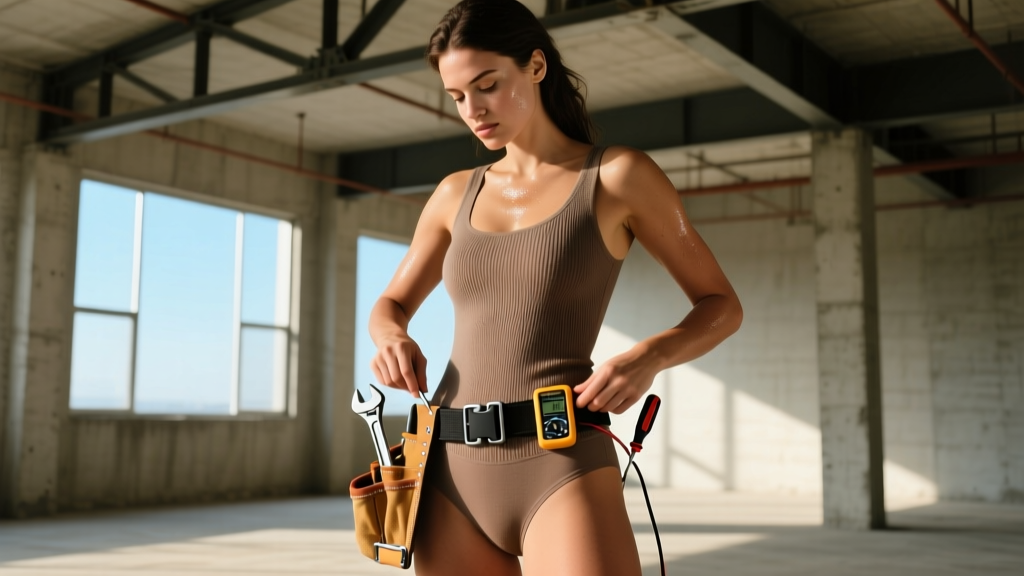
Female anatomy presents unique challenges when wearing heavy leather or nylon tool belts. The pressure of a 20-pound tool belt resting on the iliac crest (the upper ridge of the pelvis) frequently causes severe bruising, nerve compression (meralgia paresthetica), and skin abrasion. According to NIOSH guidelines on heat stress and physical strain, reducing localized friction is vital for maintaining core temperature regulation and worker endurance.
For non-FR environments, the best material to combat this is a high-denier Nylon/Spandex blend (typically 88% Nylon, 12% Spandex). Unlike cotton which bunches and folds under the weight of a tool belt, a 12% spandex ratio provides medical-grade compression. This compression anchors the fabric to the skin, ensuring that when the tool belt shifts, the fabric moves with the belt rather than grinding against the epidermis. Ensure the underwear features flatlock seams at the hip line; traditional overlock seams create a raised ridge of thread that acts like sandpaper under a loaded tool belt.
Top 3 Base Layer Recommendations for 2026
- Best Overall (Non-FR): Smartwool Merino 150 Base Layer Bottom ($65). Featuring an 87% Merino / 13% nylon core-spun construction, this provides the temperature regulation of wool with the structural durability of nylon to prevent blowouts in high-friction thigh areas.
- Best for Electrical / FR Compliance: Carhartt FR Force Midweight Base Layer ($48). Constructed from a 5.5 oz modacrylic blend, it meets ASTM F1506 and NFPA 70E standards. The strategic flatlock seaming accommodates female hip-to-waist ratios better than most unisex FR alternatives.
- Best for Summer Heat / Heavy Tool Belts: Duluth Trading Co. Armachillo Cooling Base Layer ($38). Embedded with microscopic jade particles that lower the fabric's surface temperature by up to 5°F upon contact. The 88/12 nylon-spandex ratio provides the compression necessary to prevent tool-belt chafing during 95°F+ summer framing work.
Frequently Asked Questions
How often should I replace my job site base layers?
Merino wool base layers typically last 12-18 months of heavy job site use before the fibers begin to thin at the inner thighs. FR modacrylic layers must be replaced immediately if they are exposed to an arc flash, even if no visible burning occurs, as the thermal exposure compromises the structural integrity of the aramid fibers.
Is bamboo viscose a good alternative to cotton?
No. While bamboo viscose (rayon) feels soft and cool in a retail environment, it is highly hydrophilic and lacks the thermal buffering of Merino wool. Once saturated with sweat on a job site, bamboo viscose clings to the skin, drastically increasing the risk of fungal infections and severe chafing under heavy PPE.
What is the best laundry protocol for Merino and FR materials?
Never use fabric softeners or bleach. Fabric softeners coat the fibers in a lipid layer, destroying the Moisture Vapor Transmission Rate (MVTR) of Merino wool and potentially introducing flammable chemicals to FR garments. Wash in cold water with a pH-neutral detergent and tumble dry on low.
Written by
Elena RodriguezElena Rodriguez is a civil engineer and technical writer specializing in concrete technology, masonry systems, and ASTM/ACI compliance. She earned her B.S. in Civil Engineering from Texas A&M University and spent a decade at a materials testing laboratory, performing over 2,000 concrete compressive strength tests and masonry prism evaluations. Elena is an ACI-certified Field Testing Technician (Grade I) and a member of ASTM Committee C12 on Natural Building Stone. She currently consults on forensic engineering cases involving concrete failures and moisture intrusion. Based in San Antonio, TX, Elena is a proud member of the Society of Women Engineers (SWE) and coaches her daughter's FIRST Robotics team.
More from Elena Rodriguez
View all
Walls & Panels
Cost Analysis: Light Gauge Steel Framing Advantages and Disadvantages
Evaluate light gauge steel framing advantages and disadvantages through a strict cost analysis lens, comparing material, labor, and lifecycle expenses.
Aug 4, 2026

Walls & Panels
Gypsum Board Types: Exact Specifications, Thickness & Dimensions
Compare standard, Type X, and moisture-resistant gypsum board types. Get exact specifications, thicknesses, dimensions, and ASTM standards for your project.
Aug 4, 2026

Fire Resistance
Best Fire-Resistant Outdoor Decking Materials: 2026 Buyer Guide
Discover the best fire-resistant outdoor decking materials for 2026. Compare Class A PVC, aluminum, and hardwood options for WUI compliance and safety.
Aug 4, 2026