Finding the Best Attic Insulation Material for Your Climate Zone
Discover the best attic insulation material for your home. Compare fiberglass, spray foam, and cellulose by R-value, cost, and climate zone for maximum savings.

The Physics of Attic Heat Transfer: Why Material Dictates Performance
The attic is the primary thermal boundary in most residential structures, responsible for up to 25% of a home's total heat loss in winter and significant solar heat gain in summer. Selecting the best attic insulation material requires looking beyond basic R-value ratings. You must evaluate the material's thermal resistance, air permeability, moisture management, and long-term dimensional stability. According to the U.S. Department of Energy, improper material selection or installation can reduce effective thermal performance by up to 40%, regardless of the stated R-value on the packaging.
Heat moves through attics via three mechanisms: conduction (through framing and insulation), convection (air leaks carrying conditioned air out), and radiation (solar heat penetrating the roof deck). The ideal insulation material addresses at least two of these pathways simultaneously. Below, we break down the top-performing materials available for attic applications, analyzing their real-world metrics and failure modes.
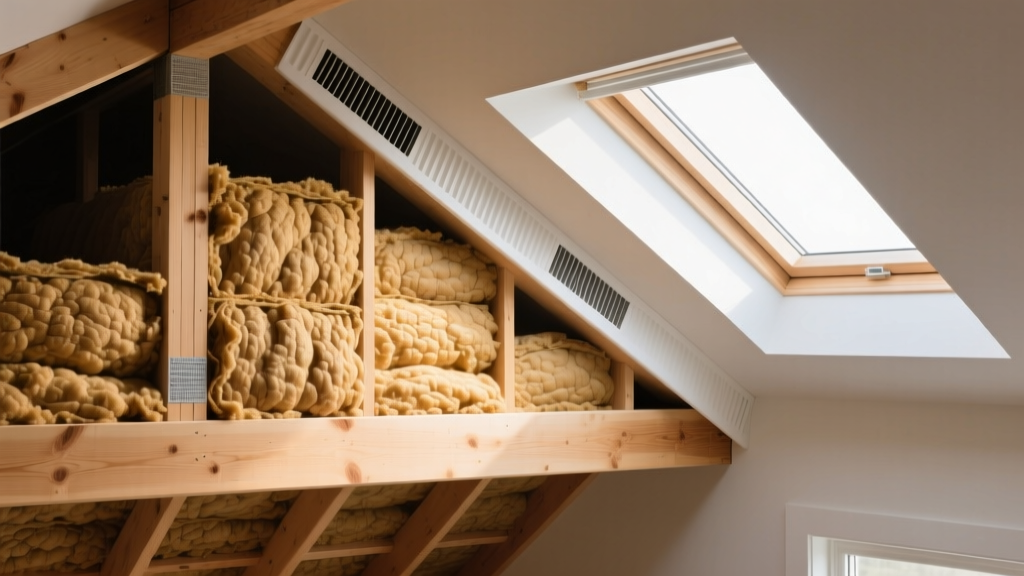
Material Breakdown: Performance, Cost, and Application Matrix
The following comparison matrix evaluates the four dominant attic insulation categories based on 2026 market pricing for a standard 1,500-square-foot attic, targeting an R-49 thermal resistance (the baseline for mixed and cold climates).
| Material Type | Specific Product Example | R-Value per Inch | Density (lb/ft³) | Air Sealing | Installed Cost (R-49) |
|---|---|---|---|---|---|
| Blown Fiberglass | Owens Corning InsulSafe SP | 2.2 - 2.7 | 0.6 - 1.0 | Poor | $2,200 - $3,100 |
| Blown Cellulose | Greenfiber Sanctuary | 3.2 - 3.8 | 1.5 - 2.0 | Good | $2,000 - $2,800 |
| Open-Cell Spray Foam | Icynene Classic Max | 3.6 - 3.9 | 0.4 - 0.5 | Excellent | $4,500 - $6,000 |
| Closed-Cell Spray Foam | Demilec Heatlok XT | 6.0 - 7.0 | 1.7 - 2.0 | Excellent | $7,500 - $10,500 |
Blown-In Cellulose: The High-Performance Standard
For vented attics where insulation is applied at the attic floor, dense-pack blown cellulose is frequently the best attic insulation material for balancing cost and performance. Made from recycled newsprint treated with borate fire retardants, cellulose provides superior acoustic dampening and restricts air movement better than fiberglass due to its higher density. Critical Installation Note: Cellulose settles up to 20% over the first year. Contractors must apply a "settling compensation" formula, installing the material to an initial depth that yields the target R-value after settlement (e.g., installing 16 inches to achieve a settled 13 inches for R-49).
Spray Foam: The Unvented Attic Solution
Spray polyurethane foam (SPF) is mandatory if you are converting to an unvented, conditioned attic assembly (insulating the roofline instead of the floor). Closed-cell foam provides a structural rigidity boost and an inherent vapor retarder, making it ideal for coastal or high-humidity climates (IECC Zones 1-3). Open-cell foam is vapor-permeable and more cost-effective for interior, dry climates, but requires a separate vapor control layer in cold zones.
To achieve the air-sealing benefits of spray foam without the exorbitant cost of a full-depth application, specify a "flash and batt" system. This involves applying 1.5 to 2 inches of closed-cell spray foam directly to the roof deck or top plates to seal all penetrations and act as a vapor barrier, followed by filling the remaining cavity depth with blown fiberglass or cellulose. This hybrid approach cuts material costs by 30% while retaining 90% of the thermal and air-sealing performance.
Climate Zone Decision Framework
The Pacific Northwest National Laboratory's Building America Solution Center emphasizes that the best material is entirely dependent on your International Energy Conservation Code (IECC) climate zone and whether your attic is vented or unvented.
- Zones 1-3 (Hot-Humid & Hot-Dry): Prioritize radiant heat rejection. Use a vented attic with R-38 to R-49 blown fiberglass or cellulose at the floor, combined with a radiant barrier (like LP TechShield) on the roof deck. If using spray foam, open-cell is preferred at the roofline to allow the roof structure to dry inward, preventing rot from driven rain or condensation.
- Zones 4-5 (Mixed-Humid & Mixed-Dry): The transition zones require robust air sealing. R-49 to R-60 blown cellulose at the attic floor is optimal. The dense packing naturally limits convective loops. Meticulous air sealing of top plates, wire penetrations, and HVAC chases with canned foam or mastic is mandatory before blowing the insulation.
- Zones 6-8 (Cold & Very Cold): Ice damming is the primary threat. You need R-49 to R-60 at the floor. If the roof geometry is complex (valleys, dormers) making proper soffit ventilation difficult, transition to an unvented roofline assembly using R-40+ of closed-cell spray foam directly beneath the roof deck to keep the sheathing above the dew point.
Hidden Failure Modes: What Contractors Won't Tell You
Even the best attic insulation material will fail catastrophically if edge cases and physical limitations are ignored during installation.
1. Wind Washing at the Eaves
In vented attics, cold air entering through soffit vents can strip heat from the first 3-4 feet of insulation near the eaves—a phenomenon known as wind washing. This drops the effective R-value in that zone to near zero, causing interior ceiling condensation and ice dams. The Fix: You must install rigid foam or heavy cardboard ventilation baffles (like AccuVent) that extend from the soffit past the exterior top plate, ensuring the insulation does not block airflow while protecting the thermal boundary from wind intrusion.
2. Compression of Fiberglass Batts
Fiberglass relies on trapped, still air within its glass matrix for its R-value. If a contractor forces an R-38 batt (designed for 12 inches of thickness) into a 10-inch joist cavity, the R-value does not remain 38. It drops to roughly R-30 or lower due to increased thermal conductivity from the compressed glass fibers. Always match the batt thickness to the cavity depth, or switch to blown-in materials that conform without compression.
3. Recessed Lighting (Can Light) Hazards
Non-IC (Insulation Contact) rated recessed light fixtures require a 3-inch clearance from all combustible materials, including cellulose and fiberglass. Covering them causes overheating and fire risks. Building an airtight drywall box around every non-IC fixture is labor-intensive and prone to leakage. The Fix: Upgrade all attic-penetrating fixtures to IC-rated, airtight LED wafer lights before insulation is installed, allowing the material to be buried directly over the fixture safely.
Step-by-Step: Calculating Your Required Depth
To determine exactly how much material to order or specify in a contract, use the following calculation based on your target R-value and the specific product's R-value per inch.
- Identify Target R-Value: Check the DOE Zip-Code Insulation Program for your specific mandate (typically R-38 for Southern zones, R-49 for Central, R-60 for Northern).
- Measure Existing Insulation: If adding to existing material, measure the current depth and multiply by its R-value per inch. (e.g., 5 inches of existing fiberglass at R-2.5 = R-12.5).
- Calculate the Delta: Subtract existing R-value from the target. (e.g., R-49 target - R-12.5 existing = R-36.5 needed).
- Determine Required Depth: Divide the Delta by the new material's R-value per inch. If adding cellulose (R-3.5/inch): 36.5 / 3.5 = 10.4 inches.
- Apply Settling Compensation: If using cellulose, multiply the required depth by 1.20. You must install 12.5 inches of fresh cellulose to ensure it settles to the required 10.4 inches.
Frequently Asked Questions
Can I mix different types of insulation in the attic?
Yes, but with strict rules. You can safely blow cellulose or fiberglass over existing fiberglass batts. However, you must never install a vapor-impermeable material (like closed-cell spray foam or faced batts) over a vapor-permeable material in a way that traps moisture. If you have existing cellulose, do not spray closed-cell foam over it; the cellulose will hold moisture against the roof deck, causing rapid wood rot.
Is spray foam insulation worth the high cost for an existing home?
For retrofitting existing homes with complex rooflines, cathedral ceilings, or severe ice dam histories, closed-cell spray foam applied to the roofline (creating an unvented conditioned attic) is often the only viable solution. While it costs 2 to 3 times more than blown cellulose, it reclaims the attic space for HVAC ductwork (preventing 20% duct energy losses) and eliminates the need for soffit/ridge ventilation maintenance, yielding a faster ROI in extreme climates.
Does insulation block sound from heavy rain or hail?
Yes, but material density matters. Open-cell spray foam and dense-pack cellulose (at 2.0+ lb/ft³) offer excellent Sound Transmission Class (STC) ratings, significantly dampening the acoustic impact of rain and hail on metal or asphalt roofs. Standard blown fiberglass, being highly porous and low-density, provides negligible acoustic attenuation.
Written by
Elena RodriguezElena Rodriguez is a civil engineer and technical writer specializing in concrete technology, masonry systems, and ASTM/ACI compliance. She earned her B.S. in Civil Engineering from Texas A&M University and spent a decade at a materials testing laboratory, performing over 2,000 concrete compressive strength tests and masonry prism evaluations. Elena is an ACI-certified Field Testing Technician (Grade I) and a member of ASTM Committee C12 on Natural Building Stone. She currently consults on forensic engineering cases involving concrete failures and moisture intrusion. Based in San Antonio, TX, Elena is a proud member of the Society of Women Engineers (SWE) and coaches her daughter's FIRST Robotics team.
More from Elena Rodriguez
View all
Walls & Panels
Cost Analysis: Light Gauge Steel Framing Advantages and Disadvantages
Evaluate light gauge steel framing advantages and disadvantages through a strict cost analysis lens, comparing material, labor, and lifecycle expenses.
Aug 4, 2026

Walls & Panels
Gypsum Board Types: Exact Specifications, Thickness & Dimensions
Compare standard, Type X, and moisture-resistant gypsum board types. Get exact specifications, thicknesses, dimensions, and ASTM standards for your project.
Aug 4, 2026

Fire Resistance
Best Fire-Resistant Outdoor Decking Materials: 2026 Buyer Guide
Discover the best fire-resistant outdoor decking materials for 2026. Compare Class A PVC, aluminum, and hardwood options for WUI compliance and safety.
Aug 4, 2026