2026 Ductwork Insulation Materials Cost & ROI Analysis
Compare 2026 costs for ductwork insulation materials. Analyze fiberglass, elastomeric, and phenolic foam pricing, installation labor, and energy ROI.
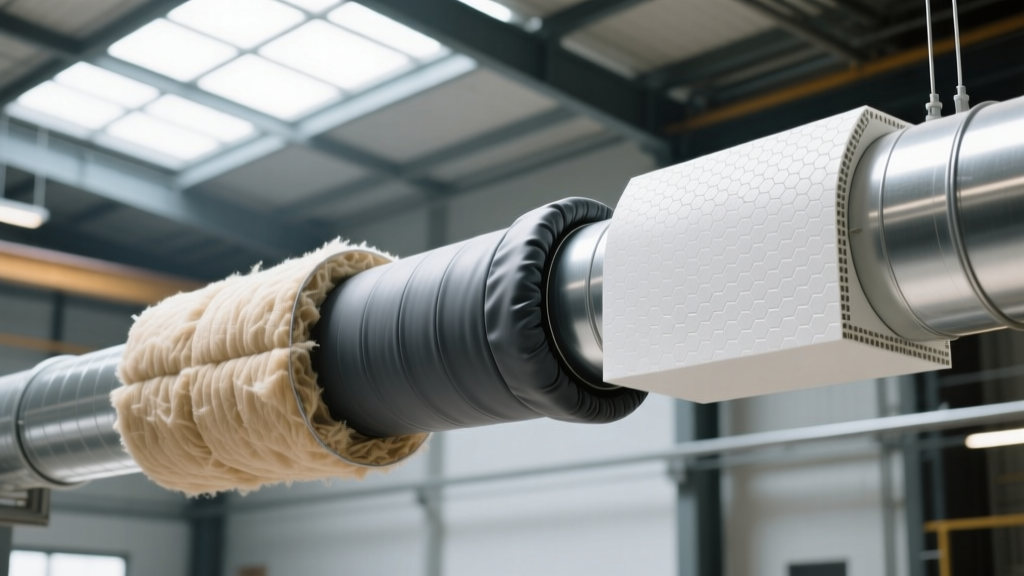
The 2026 Ductwork Insulation Materials Cost Landscape
Uninsulated or poorly insulated HVAC ducts traversing unconditioned spaces are among the largest sources of energy waste in modern buildings. According to the U.S. Department of Energy, typical duct systems lose 20% to 30% of conditioned air through leaks, conduction, and thermal transfer. Selecting the right ductwork insulation materials is no longer just a code compliance exercise; it is a critical capital allocation decision that directly impacts operational expenditure (OpEx) and indoor air quality.
As of 2026, the pricing landscape for ductwork insulation materials has stabilized following the supply chain volatility of the early 2020s, but material science advancements have shifted the value proposition. Closed-cell elastomeric foams and rigid phenolic boards now offer superior moisture resistance and higher R-values per inch, challenging the historical dominance of traditional fiberglass duct wrap. This cost analysis breaks down material pricing, labor variables, hidden failure costs, and the precise return on investment (ROI) for commercial and residential applications.
Material & Labor Cost Matrix
The following table outlines the baseline 2026 market rates for the three primary categories of ductwork insulation materials. Costs are based on standard residential and light-commercial supply chain pricing and do not include regional labor multipliers or complex scaffolding requirements.
| Material Type | Specific Product Example | Material Cost (per sq. ft.) | R-Value (per inch) | Avg. Labor Cost (per sq. ft.) | Total Installed Cost (per sq. ft.) |
|---|---|---|---|---|---|
| Fiberglass Duct Wrap | Johns Manville Microlite® L | $0.85 - $1.20 | R-4.2 | $1.50 - $2.25 | $2.35 - $3.45 |
| Elastomeric Closed-Cell | Armacell ArmaFlex® | $2.60 - $3.90 | R-4.0 to R-5.0 | $2.00 - $3.50 | $4.60 - $7.40 |
| Phenolic Foam Board | Kingspan KoolDuct® | $4.50 - $6.20 | R-6.0 | $2.50 - $4.00 | $7.00 - $10.20 |
| Double-Bubble Reflective | Reflectix® Foil Insulation | $0.45 - $0.65 | R-1.1 (Conductive) | $1.00 - $1.50 | $1.45 - $2.15 |
Deep Dive: Performance vs. Price by Material Type
Fiberglass Duct Wrap (The Budget Standard)
Fiberglass remains the most cost-effective ductwork insulation material for standard residential and light-commercial projects. Products like Johns Manville Microlite® L or Knauf EcoBatt® Duct Wrap are typically manufactured at 1.5 to 2 inches thick, yielding an installed R-value between R-6 and R-8. The primary advantage is the low upfront material cost and the ease of cutting the material around hangers and dampers.
The Hidden Cost: Fiberglass relies entirely on its loft (thickness) to achieve its rated R-value. If installers use standard nylon zip-ties and overtighten them, or if the duct wrap is compressed by tight joist bays, the R-value plummets. A 2-inch R-8 wrap compressed to 1 inch performs closer to R-4. Furthermore, fiberglass is highly permeable. If the foil-facing (FSK) is punctured or the seams are not sealed with UL 181A-P mastic, ambient moisture will infiltrate the glass matrix, destroying its thermal resistance and promoting mold growth.
Elastomeric Closed-Cell Foam (The Moisture Defender)
Elastomeric foam, predominantly represented by Armacell's ArmaFlex® line, is a closed-cell rubber insulation that inherently resists water vapor transmission. Unlike fiberglass, it does not require a separate foil vapor retarder. This makes it the mandatory choice for cold-water lines and chilled-water ductwork where condensation is a severe risk.
The Hidden Cost: The material itself is expensive, but the true cost driver is the adhesive and labor. Elastomeric seams must be sealed using specialized contact adhesives (such as ArmaFlex 520). Standard construction adhesives will degrade the rubber over time. Additionally, applying the adhesive, waiting for the flash-off period, and pressing the seams together increases labor time by roughly 30% compared to taping fiberglass seams.
Phenolic Foam Board (The High-Efficiency Premium)
Rigid phenolic boards, such as Kingspan KoolDuct®, offer the highest thermal resistance per inch (R-6.0) of any commercially viable duct insulation. They are typically applied to the exterior of rectangular ductwork using mechanical fasteners and specialized mastic. Because they are rigid, they protect the ductwork from physical impact and maintain their exact R-value regardless of installation pressure.
The Hidden Cost: Phenolic board is difficult to retrofit onto existing, tightly packed duct runs. It is best specified for new construction where the ductwork is accessible. Fabricating the board around complex transitions, tees, and offsets requires skilled tinners and generates material off-cuts (waste) that can exceed 15% on complex layouts.
⚠️ Warning: The True Cost of Improper Duct Sealing
Insulation only works if the air stays inside the duct. The Environmental Protection Agency (EPA) emphasizes that sealing ducts is a prerequisite to insulating them. Using standard cloth-backed duct tape (which dries out and fails within 18 months) will result in massive energy losses that negate your insulation investment. Always specify UL 181A-P listed mastic paste applied with glass-fiber mesh tape for all longitudinal seams and transverse joints before wrapping the insulation. Budget an additional $0.35 to $0.50 per square foot for proper mastic sealing.
Calculating Your Energy ROI & Payback Period
To justify the premium cost of high-performance ductwork insulation materials, facility managers and homeowners must calculate the payback period. The formula relies on the temperature differential (ΔT) between the conditioned air inside the duct and the unconditioned space outside it, combined with the local cost of energy.
Baseline Assumption: A 2,500 sq. ft. commercial building in Climate Zone 4 (e.g., Washington D.C.) with 150 linear feet of exposed rectangular supply ductwork in an unconditioned attic. Total duct surface area: ~600 sq. ft.
Scenario A: Upgrading from Uninsulated to R-8 Fiberglass
- Total Installed Cost: 600 sq. ft. × $2.90 (avg) = $1,740
- Annual HVAC Energy Cost: $4,200
- Estimated Duct Loss Reduction: 22% (moving from uninsulated to R-8)
- Annual Savings: $924
- Simple Payback Period: 1.88 Years
Scenario B: Upgrading from R-8 Fiberglass to R-12 Phenolic Board
- Cost Differential (Upgrade): 600 sq. ft. × ($8.60 - $2.90) = $3,420 additional investment
- Additional Loss Reduction: 4% (marginal gain from R-8 to R-12)
- Additional Annual Savings: $168
- Marginal Payback Period: 20.3 Years
Analysis: While phenolic board offers superior thermal metrics, the law of diminishing returns applies heavily to duct insulation. Moving from zero insulation to R-6 or R-8 yields massive financial returns. Pushing beyond R-8 in standard residential or light-commercial applications rarely achieves a payback period that aligns with standard capitalization rates, unless the ducts are located in extreme climate zones (e.g., Zone 7 or 8) or are carrying heavily chilled air (55°F) through high-humidity environments where condensation drip damage poses a secondary financial risk.
Scenario-Based Selection Framework
Selecting the correct ductwork insulation materials requires matching the material properties to the specific environmental and structural constraints of the building. Use this decision matrix to guide your 2026 specifications:
- Unconditioned, Dry Attics (Residential): Specify Fiberglass Duct Wrap (R-8). It is cost-effective, easy to install over existing flex or rigid ducts, and moisture is rarely an issue. Ensure FSK facing is sealed with UL 181A-F foil tape.
- Humid Crawlspaces & Coastal Regions: Specify Elastomeric Closed-Cell Foam. The closed-cell structure prevents ambient humidity from migrating through the insulation and condensing on the cold metal duct surface, which causes rust and ceiling stains.
- Exposed Commercial Ceilings (Aesthetic Applications): Specify Pre-insulated Phenolic Duct Systems or exterior-wrapped rigid boards finished with a PVC or metal jacketing. This provides a clean, architectural look while meeting ASHRAE Standard 90.1 fire and thermal requirements.
- Tight Joist Bays & Retrofit Constraints: Specify Aerogel Blankets (e.g., Spaceloft®). While exceptionally expensive ($12+ per sq. ft.), aerogel provides R-10 per inch, allowing contractors to insulate ducts squeezed into 2x8 floor cavities where standard fiberglass would be completely compressed and rendered useless.
Commercial Labor Variables: Access and Equipment
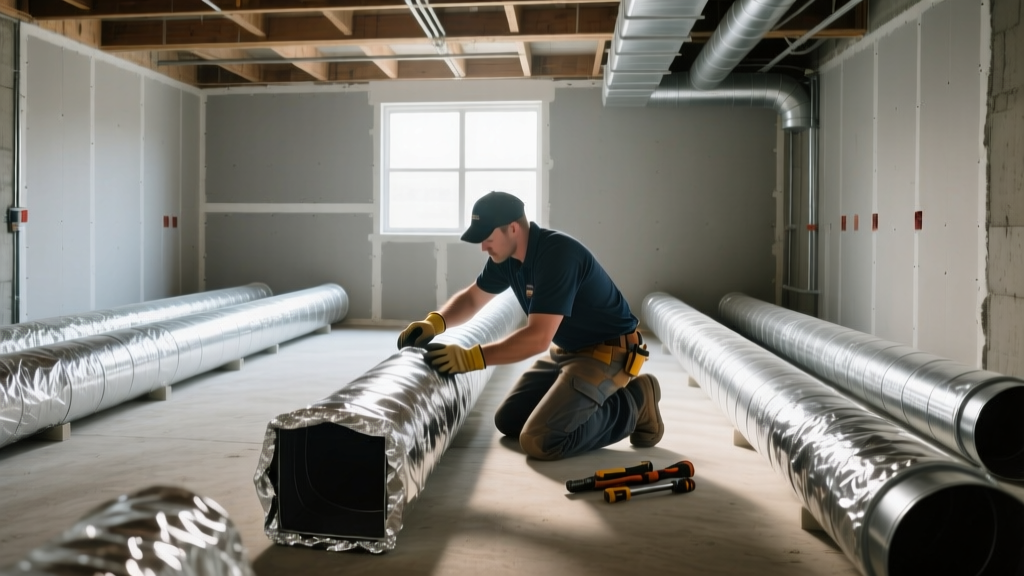
When budgeting for commercial ductwork insulation materials, material costs are often secondary to access logistics. Insulating ductwork located 20 feet in the air in a warehouse or big-box retail environment requires specialized equipment.
Scissor lift rentals average $300 to $450 per day in 2026. If an insulation crew can only cover 400 square feet per day due to maneuvering the lift around structural steel and sprinkler lines, the equipment and labor overhead adds roughly $1.15 to $1.50 per square foot to the total installed cost. In these scenarios, specifying pre-insulated rigid ductwork (where the duct and insulation are fabricated as a single unit off-site) can reduce on-site labor time by up to 40%, offsetting the higher material cost of the phenolic board system.
References & Industry Standards
When drafting specifications or pulling permits, ensure your ductwork insulation materials and installation methods comply with current building codes. Key governing standards include:
- IECC (International Energy Conservation Code): Mandates minimum R-values based on climate zone and duct location (e.g., R-8 for unconditioned spaces in most moderate zones).
- SMACNA (Sheet Metal and Air Conditioning Contractors' National Association): Provides the definitive guidelines for duct construction, including the mechanical fastening schedules required when applying rigid board insulation to sheet metal.
- UL 181 (Underwriters Laboratories): Dictates the fire safety and adhesion standards for all closure systems (tapes and mastics) used on duct insulation vapor retarders.
Written by
Sarah WhitfieldSarah Whitfield is a chartered quantity surveyor (MRICS) and construction cost analyst with 15 years of experience in material pricing, procurement strategy, and project budgeting. She earned her degree in Construction Management from the University of Reading (UK) and has worked on projects ranging from $2M custom homes to $180M mixed-use developments across North America and Europe. Sarah currently leads cost estimating for BuildMat Insight, maintaining a proprietary database of 4,000+ material price points updated quarterly. She is a frequent contributor to RSMeans cost data panels and has presented at the International Cost Engineering Council (ICEC) congress. Based in Denver, CO, Sarah is an avid trail runner and volunteer mentor for Women in Construction.
More from Sarah Whitfield
View all
Wood & Lumber
What Are the Different Types of Wood? A Builder's Guide
Compare structural softwoods, finish hardwoods, and engineered lumber. Analyze Janka ratings, MOE values, and 2026 pricing for construction.
Aug 4, 2026

Walls & Panels
Steel Framing vs Wood Framing: Corrosion and Moisture Defense
Compare steel framing vs wood framing for moisture resistance. Learn about galvanized coatings, condensation risks, and corrosion protection strategies.
Jul 21, 2026

Stone & Masonry
How to Cut Stone Veneer: Wet Saw vs Grinder Comparison
Compare the best tools for cutting stone veneer. We review wet saws, angle grinders, and chop saws to help you achieve clean, chip-free cuts.
Jul 21, 2026