Insulating Fabric Material Cost Analysis: 2026 Pricing Guide
Detailed 2026 cost analysis of insulating fabric material. Compare fiberglass, silica, and ceramic cloth pricing, fabrication costs, and ROI.

The Economics of Insulating Fabric Material in 2026
When specifying thermal management solutions for complex geometries, removable insulation jackets, welding curtains, and high-temperature expansion joints, insulating fabric material is the industry standard. Unlike rigid board or spray foam, textile-based insulation offers flexibility, reusability, and custom fitment. However, budgeting for these projects requires looking beyond the raw cost per square yard. The true financial footprint includes substrate coatings, high-temperature sewing threads, closure hardware, and lifecycle degradation rates.
This cost analysis breaks down the 2026 market pricing for primary insulating fabrics, fabrication overhead, and the return on investment (ROI) for industrial applications, providing a concrete framework for procurement managers and mechanical contractors.
Raw Material Pricing: Fabric Types and Cost Per Square Foot
The base cost of insulating fabric material is dictated by its mineral composition, weave density (measured in ounces per square yard), and maximum continuous temperature rating. Below is the current wholesale pricing structure for standard 60-inch wide rolls.
| Fabric Type | Max Continuous Temp | Base Cost (Uncoated) | Coated Cost (Silicone/PTFE) | Primary Application |
|---|---|---|---|---|
| E-Glass Fiberglass | 1,000°F (540°C) | $1.40 - $2.20 / sq ft | $2.80 - $4.50 / sq ft | HVAC wraps, removable jackets, welding curtains |
| High-Silica (96% SiO2) | 2,000°F (1,093°C) | $7.50 - $11.00 / sq ft | $12.00 - $16.50 / sq ft | Turbine wraps, exhaust manifolds, fire barriers |
| Ceramic Fiber (Inconel Wire) | 2,300°F (1,260°C) | $16.00 - $24.00 / sq ft | N/A (Rarely coated) | Kiln seals, furnace curtains, extreme heat shields |
| Aramid Blends (Nomex/Kevlar) | 800°F (426°C) | $9.00 - $14.50 / sq ft | $13.00 - $18.00 / sq ft | Abrasion-resistant jackets, flexible expansion joints |
Note: Pricing reflects 2026 bulk roll purchases (minimum 50-100 linear yards). Cut-to-size retail pricing typically carries a 40% to 60% markup.
Fabrication and Hardware: The Hidden Costs
Procuring the raw insulating fabric material is only the first step. Transforming flat goods into functional, removable insulation covers requires specialized fabrication. Standard cotton or polyester threads will incinerate at operational temperatures, necessitating expensive alternatives.
Thread and Sewing Overhead
- PTFE-Coated Fiberglass Thread: The baseline for standard jackets. Costs approximately $45 per 2-pound spool. Adds roughly $0.30 per linear foot of sewing.
- Kevlar/Aramid Thread: Required for high-abrasion seams and silica fabrics. Costs $85 to $110 per spool. Increases sewing labor costs by 15% due to higher needle-breakage rates and slower machine speeds.
- Stainless Steel Wire (Inconel): Used for ceramic fiber blankets. Requires specialized heavy-duty sewing heads, adding a 25% fabrication surcharge.
Closure Hardware and Fasteners
The mechanism used to secure the fabric jacket to the pipe or valve drastically impacts the final unit cost.
- 304 Stainless Steel Lacing Hooks & Wire: The most economical and secure method. Hardware costs $0.15 per hook; lacing wire is $0.05 per foot. Total hardware cost for a standard valve jacket: $4.50 - $6.00.
- High-Temp Velcro (Hook & Loop): Faster installation but degrades under continuous heat cycling. Material cost: $1.20 per linear foot.
- Stainless Steel D-Rings and Straps: Used for heavy turbine blankets. Adds $8.00 - $12.00 per jacket in hardware and reinforcement patching.
ROI Framework: The Bare Valve Penalty
According to the U.S. Department of Energy's Advanced Manufacturing Office, an uninsulated 6-inch gate valve on a 250°F steam line loses approximately 115,000 Btu per hour. At current natural gas rates, this single bare valve wastes $280 to $340 annually in energy.
The Math: A custom-fabricated silicone-coated fiberglass insulating fabric jacket for a 6-inch valve requires roughly 8 square feet of material ($32), plus $15 in fabrication labor and $5 in hardware. Total Cost: $52.
Payback Period: At $300 in annual savings, the jacket pays for itself in 2.1 months. The 5-year ROI on a single valve jacket exceeds 2,700%.
Lifecycle Cost Analysis: Coated vs. Uncoated Fabrics
A common purchasing mistake is selecting uncoated fiberglass to save $1.50 per square foot upfront, only to face premature replacement costs. The Whole Building Design Guide (WBDG) emphasizes that environmental exposure dictates insulation lifecycle.
Edge Case: Moisture and Particulate Intrusion
Uncoated insulating fabric material is highly porous. In washdown environments (food and beverage, pharmaceuticals) or outdoor applications, moisture wicks into the fabric and reaches the underlying mineral wool or fiberglass batting. This causes two catastrophic failures:
- Corrosion Under Insulation (CUI): Trapped water against carbon steel pipes accelerates rust, leading to pipe failure.
- Thermal Bridging: Wet insulation loses up to 70% of its R-value, rendering the jacket thermally useless.
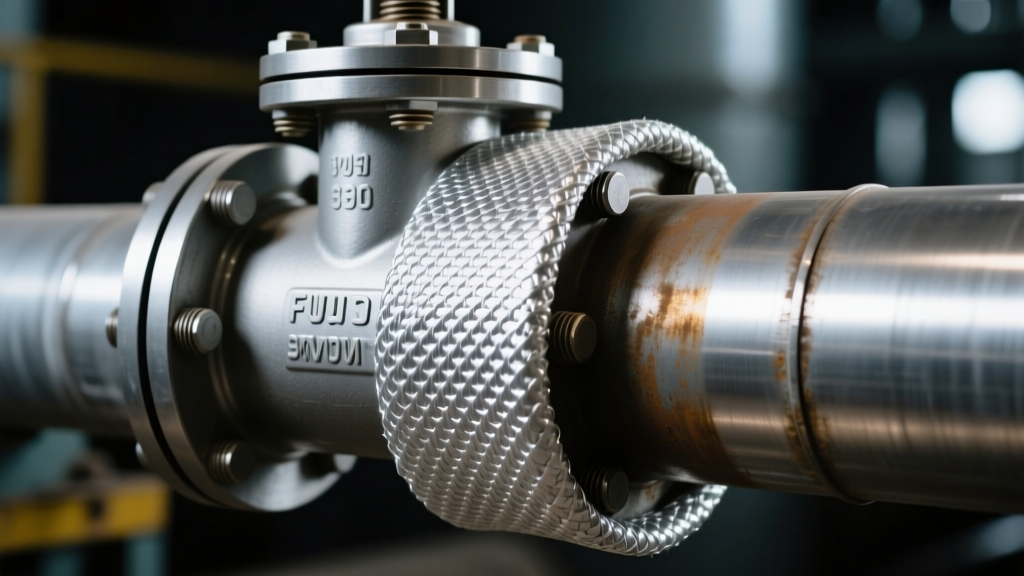
The Verdict: Applying a 15-mil silicone or PTFE (Teflon) coating to the outer layer of the fabric adds $1.50 to $2.50 per square foot, but extends the usable lifespan of the jacket from 18 months to 7+ years in harsh environments. The lifecycle cost of coated fabric is 60% lower than uncoated alternatives when factoring in replacement labor and material.
Strategic Purchasing Framework for 2026
To optimize your insulation budget, follow this decision matrix based on your specific operational parameters:
- Scenario A: Indoor HVAC & Low-Temp Steam (< 400°F)
Action: Specify 17 oz. plain-weave E-glass with a one-sided acrylic or PU coating. Avoid expensive silicone or PTFE. Target budget: $2.50/sq ft fully fabricated. - Scenario B: High-Vibration Exhaust & Turbines (800°F - 1,200°F)
Action: Use a composite approach. Inner layer of uncoated high-silica (handles the heat), outer layer of silicone-coated fiberglass (handles the oil and abrasion). This hybrid approach cuts material costs by 35% compared to using pure silica for the entire jacket thickness. - Scenario C: Extreme Heat & Kiln Seals (> 1,800°F)
Action: Ceramic fiber cloth with Inconel wire insert is mandatory. Do not attempt to coat ceramic fiber; instead, use mechanical clamping and high-temp mastic seals at the edges to prevent fiber shedding.
Frequently Asked Questions
Does the weave pattern affect the fabrication cost?
Yes. Plain weave fabrics are dimensionally stable and easier to sew, keeping fabrication labor low. Satin weave fabrics (like 3732 or 7628 styles) offer superior drape and flexibility for wrapping complex valve geometries, but they fray easily during cutting. Fabricators typically charge a 10% to 15% premium for working with satin weaves due to the need for edge-sealing or hot-knife cutting to prevent unraveling.
Are there off-the-shelf insulating fabric jackets, or is everything custom?
While the National Insulation Association promotes custom-fitted covers for maximum thermal efficiency, standard 'drop-on' jackets for common fittings (e.g., 2-inch to 8-inch standard flanges and Y-strainers) are available off-the-shelf. Off-the-shelf units cost roughly 30% less than custom-tailored jackets because they utilize standardized patterns and bulk sewing runs, though they may leave minor gaps on non-standard valve bodies.
How do I account for thermal expansion in the fabric cost?
Pipes expand when heated. If a fabric jacket is sewn too tightly, the thermal expansion will tear the seams or rip the grommets. Specifying an expansion gusset (a pleated section of fabric) adds roughly 1.5 square feet of material and 15 minutes of extra sewing time per jacket, increasing the unit cost by approximately $12.00 to $18.00. Always include gussets for steam lines operating above 300°F.
Written by
Elena RodriguezElena Rodriguez is a civil engineer and technical writer specializing in concrete technology, masonry systems, and ASTM/ACI compliance. She earned her B.S. in Civil Engineering from Texas A&M University and spent a decade at a materials testing laboratory, performing over 2,000 concrete compressive strength tests and masonry prism evaluations. Elena is an ACI-certified Field Testing Technician (Grade I) and a member of ASTM Committee C12 on Natural Building Stone. She currently consults on forensic engineering cases involving concrete failures and moisture intrusion. Based in San Antonio, TX, Elena is a proud member of the Society of Women Engineers (SWE) and coaches her daughter's FIRST Robotics team.
More from Elena Rodriguez
View all
Walls & Panels
Cost Analysis: Light Gauge Steel Framing Advantages and Disadvantages
Evaluate light gauge steel framing advantages and disadvantages through a strict cost analysis lens, comparing material, labor, and lifecycle expenses.
Aug 4, 2026

Walls & Panels
Gypsum Board Types: Exact Specifications, Thickness & Dimensions
Compare standard, Type X, and moisture-resistant gypsum board types. Get exact specifications, thicknesses, dimensions, and ASTM standards for your project.
Aug 4, 2026

Fire Resistance
Best Fire-Resistant Outdoor Decking Materials: 2026 Buyer Guide
Discover the best fire-resistant outdoor decking materials for 2026. Compare Class A PVC, aluminum, and hardwood options for WUI compliance and safety.
Aug 4, 2026