Veneer Stone NJ Maintenance: Protecting Exteriors from Freeze-Thaw Cycles
Discover essential maintenance strategies for veneer stone in NJ. Learn how to combat freeze-thaw spalling, coastal salt, and efflorescence with expert care.

The New Jersey Climate Threat Matrix for Masonry Veneer
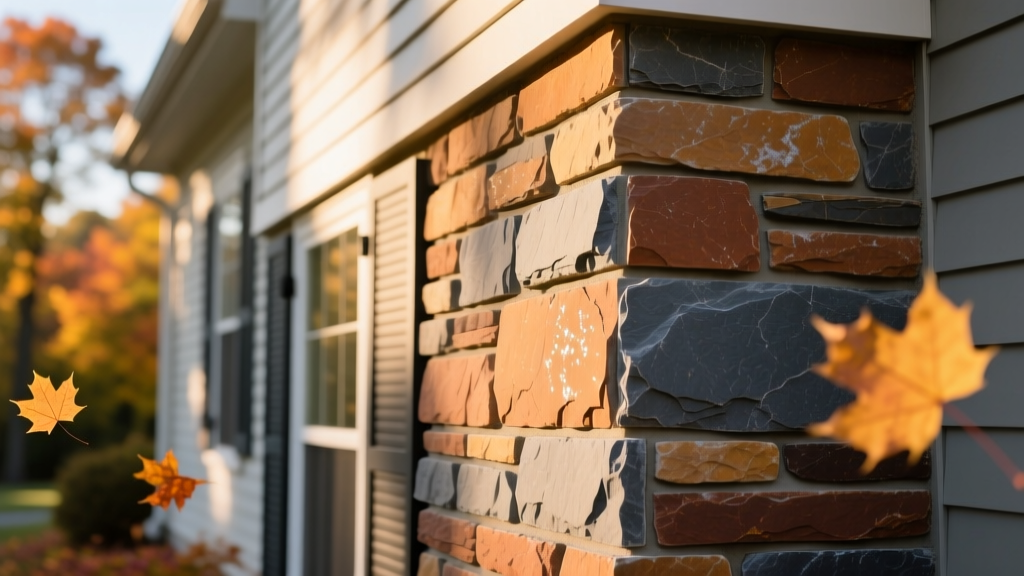
Maintaining exterior veneer stone in New Jersey requires a highly localized approach. The state’s diverse microclimates—from the freezing, wind-driven winters of the Sussex County highlands to the salt-laden, humid coastal air of the Jersey Shore—create distinct failure modes for masonry. Generic maintenance advice often leads to trapped moisture, efflorescence, and catastrophic freeze-thaw spalling. To protect your investment, you must align your maintenance protocol with your specific regional exposure.
| NJ Region | Primary Environmental Threat | Veneer Vulnerability & Failure Mode |
|---|---|---|
| North NJ / Highlands | Severe freeze-thaw cycles (50+ cycles/year) | Water infiltration in micro-cracks expands upon freezing, causing stone face spalling and mortar joint crumbling. |
| Central NJ / Piedmont | High summer humidity & dense shade | Biological growth (algae, lichen) roots into porous stone and mortar, retaining moisture and accelerating degradation. |
| Jersey Shore / Coastal | Wind-driven salt spray & nor'easters | Salt crystallization within the masonry pores creates internal pressure, leading to surface pitting and efflorescence. |
Seasonal Maintenance Calendar for NJ Homeowners
Rather than relying on an arbitrary cleaning schedule, veneer stone maintenance in New Jersey should be tied to the seasonal shifts that dictate moisture movement through the wall assembly.
Spring: Efflorescence and Biological Eradication
As the ground thaws and spring rains saturate the soil, capillary action draws moisture up through the foundation and into the bottom courses of your veneer. This is when efflorescence (white, powdery salt deposits) peaks. Action: Dry-brush efflorescence with a stiff natural-bristle brush. Never use wire brushes, which leave behind iron particles that will rust and stain the stone. For biological growth in shaded Central NJ properties, apply a dedicated masonry biocide rather than household bleach, which can alter the pH of the mortar and degrade the Portland cement binder.
Summer: Sealant Inspection and Mortar Curing
Summer is the only reliable window for applying penetrating sealants or repointing mortar in New Jersey. The ambient temperatures (consistently between 60°F and 85°F) allow for proper chemical curing. Action: Perform a water-drop test on your sealed stone. If water no longer beads up and instead darkens the stone within 60 seconds, the siloxane barrier has degraded and requires reapplication.
Fall: Pre-Winter Moisture Audits
Before the first hard freeze, the goal is to eliminate any trapped water. Action: Inspect all horizontal transitions, particularly where the veneer meets roofing, decks, or window sills. Ensure weep holes at the base of the veneer cavity are completely clear of mulch, soil, and debris. Blocked weep holes are the leading cause of winter freeze-thaw damage in NJ, as trapped cavity water has nowhere to escape.
Winter: De-icer Management
The bottom 18 inches of exterior veneer are highly susceptible to chemical attack from walkway de-icers. Action: Never use calcium chloride or rock salt (sodium chloride) near veneer stone. These salts aggressively attack the calcium compounds in mortar. Use magnesium chloride or clean sand for traction, and shovel snow promptly to prevent meltwater from splashing onto the stone base.
Chemical Cleaning: What to Use and What to Avoid
When washing veneer stone, the National Park Service preservation guidelines strongly advise against harsh acids that can dissolve the calcium carbonate binders in natural stone and manufactured veneer alike.
⚠️ Warning: The Power Washing Trap
Never use high-pressure water on veneer stone. Pressures exceeding 1,200 PSI will erode the mortar joints and drive water deep into the wall cavity, bypassing the weather-resistive barrier. Always use a garden hose with a spray nozzle, or if pressure washing is strictly necessary, maintain a maximum of 800 PSI with a 40-degree fan tip, keeping the wand at least 18 inches from the surface.
For heavy soiling, bird droppings, or urban pollution common in North NJ, use a specialized, pH-neutral or mildly alkaline cleaner. PROSOCO Sure Klean Limestone & Masonry Cleaner is an industry-standard formulation that removes atmospheric dirt without etching the stone face or degrading the mortar. Always pre-wet the masonry with clean water before applying any chemical; this prevents the stone from absorbing the cleaning solution too deeply, which can cause secondary staining.
Sealant Selection: The Silane/Siloxane Mandate
The most critical maintenance decision for NJ veneer stone is the choice of water repellent. The state's extreme temperature swings demand a breathable, penetrating sealer.
- Silane/Siloxane Penetrating Sealers (Recommended): These chemicals react with the silica in the stone and mortar to form a hydrophobic resin deep within the pores. Crucially, they do not form a surface film. This allows liquid water from rain to be repelled while permitting water vapor from inside the wall cavity to escape. This breathability is non-negotiable for surviving NJ winters.
- Acrylic and Urethane Film-Formers (Avoid): These products create a plastic-like shell on the surface. While they look glossy and attractive initially, they trap moisture inside the masonry. When NJ temperatures plummet below freezing, that trapped moisture expands, causing the stone face to pop off (spall) and the mortar to turn to dust.
Troubleshooting Common NJ Veneer Failures
Even with meticulous care, localized failures can occur. According to NPS guidelines on repointing mortar joints, addressing minor defects immediately prevents systemic wall failure.
- Crumbly Mortar Joints: If mortar can be scraped away with a screwdriver, it has failed. In New Jersey, replacement mortar must be Type N (1 part Portland cement, 1 part hydrated lime, 6 parts sand). Type N is softer and more flexible than the stone, ensuring that during thermal expansion and contraction, the mortar sacrifices itself rather than cracking the stone.
- White Staining (Efflorescence): If efflorescence returns immediately after cleaning, you have an active water intrusion issue. The source is rarely the stone face itself; look for failed flashing above the veneer, clogged gutters overflowing onto the wall, or missing weep vents at the base course.
- Stone Delamination: If the face of manufactured veneer is peeling off in thin layers, the stone was likely sealed with a non-breathable acrylic product, or the installer failed to properly hydrate the stones before setting them in mortar, causing a weak mechanical bond.
By respecting the specific environmental demands of the New Jersey climate and utilizing breathable, masonry-specific materials, your veneer stone exterior will maintain its structural integrity and aesthetic appeal for decades, easily outlasting the harsh freeze-thaw cycles of the Northeast.
Written by
Sarah WhitfieldSarah Whitfield is a chartered quantity surveyor (MRICS) and construction cost analyst with 15 years of experience in material pricing, procurement strategy, and project budgeting. She earned her degree in Construction Management from the University of Reading (UK) and has worked on projects ranging from $2M custom homes to $180M mixed-use developments across North America and Europe. Sarah currently leads cost estimating for BuildMat Insight, maintaining a proprietary database of 4,000+ material price points updated quarterly. She is a frequent contributor to RSMeans cost data panels and has presented at the International Cost Engineering Council (ICEC) congress. Based in Denver, CO, Sarah is an avid trail runner and volunteer mentor for Women in Construction.
More from Sarah Whitfield
View all
Wood & Lumber
What Are the Different Types of Wood? A Builder's Guide
Compare structural softwoods, finish hardwoods, and engineered lumber. Analyze Janka ratings, MOE values, and 2026 pricing for construction.
Aug 4, 2026

Walls & Panels
Steel Framing vs Wood Framing: Corrosion and Moisture Defense
Compare steel framing vs wood framing for moisture resistance. Learn about galvanized coatings, condensation risks, and corrosion protection strategies.
Jul 21, 2026

Stone & Masonry
How to Cut Stone Veneer: Wet Saw vs Grinder Comparison
Compare the best tools for cutting stone veneer. We review wet saws, angle grinders, and chop saws to help you achieve clean, chip-free cuts.
Jul 21, 2026