Vinyl Siding Material Cost Breakdown and Pricing Guide 2026
Discover the true vinyl siding material cost breakdown for 2026. Compare prices for insulated, standard, and premium panels plus hidden accessory costs.
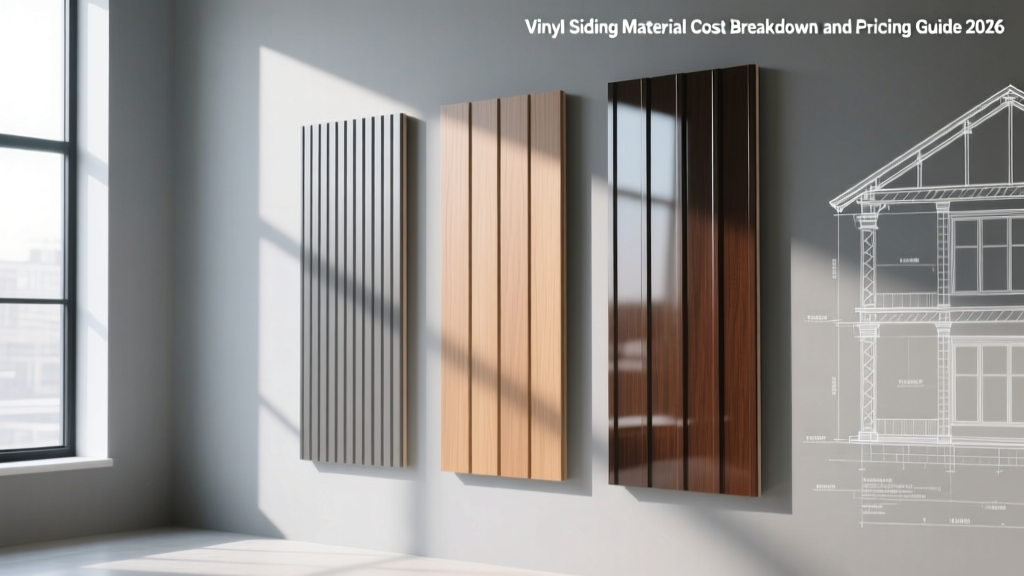
Base Material Pricing by Profile and Grade
Calculating the exact cost of vinyl siding material requires moving beyond generic square-foot averages. In 2026, pricing is heavily stratified by profile complexity, panel thickness (measured in mils), and structural backing. While basic contractor-grade horizontal lap remains the most economical cladding option on the market, architectural profiles and insulated systems command significant premiums. The Vinyl Siding Institute notes that material thickness directly correlates with wind-load resistance and impact durability; a 0.040-inch panel will behave entirely differently under thermal stress than a 0.050-inch premium panel.
Below is the current material-only cost breakdown per square foot (1 square = 100 square feet) for the primary profile categories available this year.
| Profile Type | Nominal Thickness | Material Cost (per sq. ft.) | Primary Application |
|---|---|---|---|
| Standard Horizontal (Clapboard) | 0.040" - 0.044" | $2.50 - $3.80 | Budget-friendly residential facades, rental properties |
| Dutch Lap | 0.042" - 0.046" | $2.80 - $4.20 | Traditional, colonial, and craftsman architecture |
| Board and Batten (Vertical) | 0.044" - 0.050" | $3.50 - $5.50 | Modern farmhouse builds and commercial accent walls |
| Insulated Vinyl (Contoured Foam) | 0.046" + R-2 to R-5 foam | $4.50 - $7.50 | Energy code retrofits, uneven sheathing correction |
| Premium Shakes & Shingles | 0.050" - 0.060" | $6.00 - $9.50 | Gable accents, historic replication, high-end custom |
Premium vs. Economy: Brand and Product Line Pricing
Not all vinyl siding material is manufactured equally. The extrusion process, the quality of the titanium dioxide (TiO2) used for UV protection, and the locking mechanism design dictate both the price and the lifespan of the product. When sourcing material, you must evaluate specific product lines rather than just the parent brand.
- CertainTeed MainStreet (Economy Tier): Priced around $2.60 to $3.10 per square foot. This 0.042-inch panel is a staple for budget-conscious flips and entry-level housing. It features a basic rolled nail hem and standard single-course exposure. While cost-effective, it is more prone to oil-canning (visible rippling) on long, sun-exposed southern walls.
- Mastic Quest (Mid-to-Premium Tier): Priced at $3.80 to $4.50 per square foot. At 0.046 inches thick, Quest offers a 160-mph wind-load rating (ASTM D3679). The deeper 3/4-inch projection and full-roll nail hem provide superior rigidity, making it the preferred choice for coastal or high-wind zones where structural integrity is non-negotiable.
- Alside Charter Oak (Premium Tier): Priced at $4.10 to $4.90 per square foot. This line utilizes a proprietary DuraLock post-formed locking mechanism, which secures panels tightly while still allowing for lateral thermal expansion. The 1-1/8-inch projection creates deep shadow lines that closely mimic the depth of real wood clapboard.
Insulated Vinyl Siding: Energy Code Compliance and R-Value Premiums
As residential energy codes (like the IECC) become stricter, insulated vinyl siding material has transitioned from a luxury upgrade to a code-compliance tool in several climate zones. The contoured EPS (expanded polystyrene) foam backing not only provides an R-value between 2.0 and 5.0, but it also locks the vinyl panel to the wall, virtually eliminating the hollow sound and impact vulnerability of traditional hollow-back vinyl.
According to the U.S. Department of Energy, continuous exterior insulation is critical for reducing thermal bridging through wall studs. Insulated vinyl acts as a dual-purpose material, fulfilling both the cladding and continuous insulation (ci) requirements in a single installation step. Expect to pay a 40% to 60% premium over standard hollow-back material for insulated lines like CertainTeed Cedar Impressions Insulated or Prodigy by Alside. However, this material cost is partially offset by the elimination of separate rigid foam board purchases and the associated labor to install it.
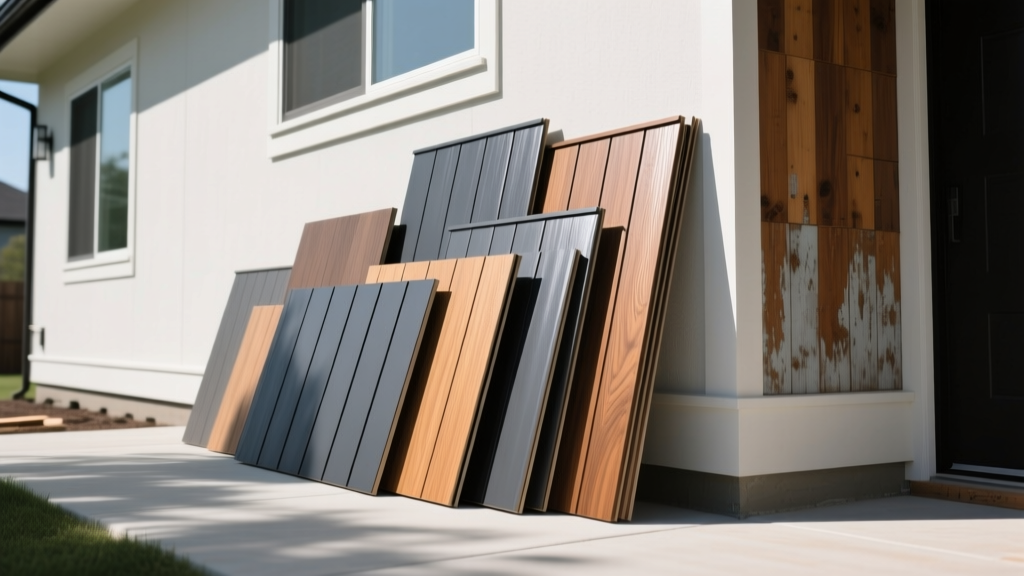
The Hidden Material Costs: Trim, J-Channels, and Accessories
The most common budgeting error in cladding projects is calculating only the field panels. The vinyl siding material ecosystem requires a comprehensive suite of extruded accessories to manage water intrusion, terminate edges, and accommodate structural movement. These lineal and unit components can account for 15% to 25% of your total material invoice.
Essential Accessory Pricing Matrix
- Starter Strip: $0.60 - $0.90 per linear foot. Required at the base of all horizontal applications to lock the first course and provide a drip edge.
- J-Channel (5/8" to 3/4"): $0.75 - $1.20 per linear foot. Used to terminate siding around windows, doors, and rooflines. Never substitute J-channel with flat trim; the channel is required to catch and redirect water.
- Outside Corner Posts (5" wide): $2.50 - $4.50 per linear foot. These are highly visible and structurally critical. Opt for co-extruded corners with integrated color caps to prevent fading mismatches over time.
- Utility Blocks (Mounting Blocks): $4.00 - $9.00 each. Mandatory for mounting exterior light fixtures, hose bibs, and electrical outlets over vinyl siding to ensure a watertight seal and prevent panel binding.
- Undersill Trim: $0.50 - $0.80 per linear foot. Used under windows and at soffit transitions to secure cut panels where the top lock has been removed.
Calculating Overage and the Waste Factor
Vinyl siding material is sold by the "square" (100 square feet). Because panels must be cut to fit around fenestrations, gables, and corners, you must apply a waste factor to your gross wall area. Under-ordering results in delayed project timelines and potential dye-lot color mismatches if supplemental material is ordered later.
The Waste Factor Framework:
- Simple Ranch / Box Geometry (7% - 10% waste): Homes with minimal dormers, standard gable ends, and few exterior corners. Calculation: Gross Wall Sq. Ft. x 1.10 / 100 = Total Squares.
- Complex Traditional (12% - 15% waste): Homes featuring multiple intersecting rooflines, bay windows, and standard dormers. The increased number of J-channel terminations and off-cuts drives waste higher.
- Historic / High-Complexity (15% - 20% waste): Victorians, homes with turrets, or projects utilizing premium shake/shingle profiles on intricate gable ends. Shakes require meticulous staggered coursing, generating significant off-cuts.
Pro-Tip: Always retain 2-3 full bundles of field panels and a box of matching accessories in the attic or garage. If a panel is damaged by a hail strike or landscaping equipment five years from now, having material from the exact original manufacturing dye-lot is the only way to achieve an invisible repair.
Long-Term Value and Maintenance Cost Avoidance
When evaluating the cost of vinyl siding material, it is critical to calculate the Total Cost of Ownership (TCO) over a 30-year lifecycle. While fiber cement (like James Hardie) or engineered wood (like LP SmartSide) may offer superior impact resistance and a more authentic wood-grain texture, they require periodic maintenance. Fiber cement must be repainted every 10 to 15 years, and engineered wood requires strict caulking and paint maintenance to prevent moisture intrusion and fungal decay.
Vinyl siding material features co-extruded color throughout the entire thickness of the panel (or a specialized cap stock), meaning it never requires painting, scraping, or sealing. Washing with a low-pressure garden hose every two years is the only required maintenance. When amortizing the initial material and installation costs against the zero-maintenance lifecycle and the avoidance of $4,000 to $8,000 exterior repainting jobs every decade, premium vinyl frequently yields the lowest cost-per-year of service among all major cladding categories. This predictable lifecycle cost is exactly why vinyl remains the most widely used exterior cladding material in the North American residential market.
Written by
Sarah WhitfieldSarah Whitfield is a chartered quantity surveyor (MRICS) and construction cost analyst with 15 years of experience in material pricing, procurement strategy, and project budgeting. She earned her degree in Construction Management from the University of Reading (UK) and has worked on projects ranging from $2M custom homes to $180M mixed-use developments across North America and Europe. Sarah currently leads cost estimating for BuildMat Insight, maintaining a proprietary database of 4,000+ material price points updated quarterly. She is a frequent contributor to RSMeans cost data panels and has presented at the International Cost Engineering Council (ICEC) congress. Based in Denver, CO, Sarah is an avid trail runner and volunteer mentor for Women in Construction.
More from Sarah Whitfield
View all
Wood & Lumber
What Are the Different Types of Wood? A Builder's Guide
Compare structural softwoods, finish hardwoods, and engineered lumber. Analyze Janka ratings, MOE values, and 2026 pricing for construction.
Aug 4, 2026

Walls & Panels
Steel Framing vs Wood Framing: Corrosion and Moisture Defense
Compare steel framing vs wood framing for moisture resistance. Learn about galvanized coatings, condensation risks, and corrosion protection strategies.
Jul 21, 2026

Stone & Masonry
How to Cut Stone Veneer: Wet Saw vs Grinder Comparison
Compare the best tools for cutting stone veneer. We review wet saws, angle grinders, and chop saws to help you achieve clean, chip-free cuts.
Jul 21, 2026