Gypsum Board for Sale vs. Alternatives: Which Wall Panel Wins?
Evaluating gypsum board for sale against cement board, plywood, and WPC. Compare 2026 costs, fire ratings, and moisture resistance to choose the right panel.

The Core Dilemma: Standard Drywall vs. The Competition
When browsing inventory for gypsum board for sale, it is easy to default to standard drywall for every interior partition. Gypsum board dominates the North American commercial and residential markets due to its low cost, rapid installation, and inherent fire resistance. However, treating it as a universal solution leads to catastrophic failures in high-moisture, high-impact, or structural shear zones. To make an informed procurement decision, buyers must evaluate gypsum against alternatives like cement board, structural plywood, and emerging Wood-Plastic Composite (WPC) panels based on strict performance metrics rather than just upfront material costs.
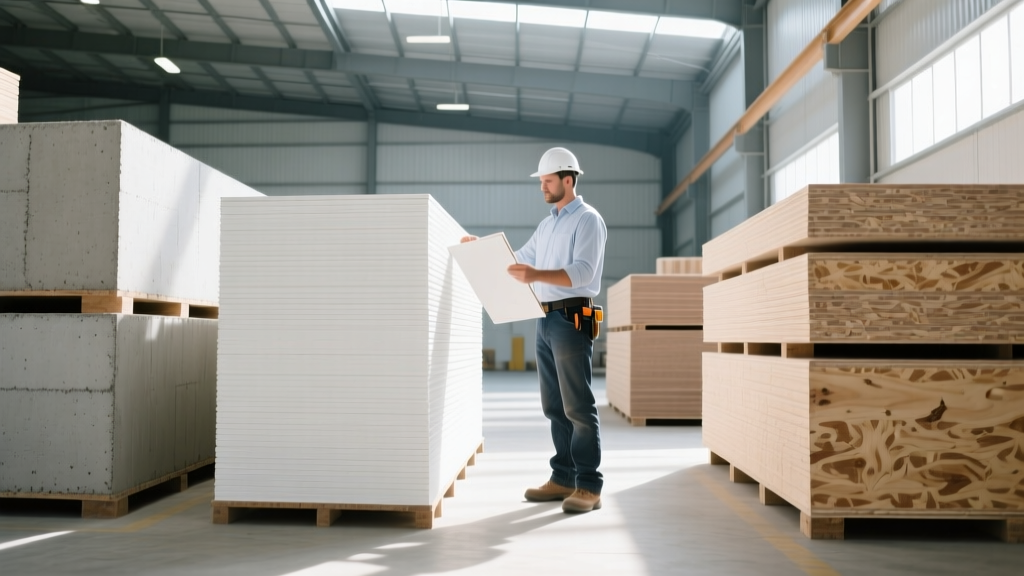
Material Showdown: Gypsum Board vs. Top Alternatives
The following matrix contrasts standard and specialized gypsum boards against the three most common alternative wall paneling materials. Data reflects 2026 market averages for 1/2-inch thick, 4x8-foot sheets.
| Material Type | Avg Material Cost (per sq ft) | Fire Rating (ASTM E119) | Moisture Tolerance | Weight (4x8 Sheet) | Primary Application |
|---|---|---|---|---|---|
| Standard Gypsum (1/2') | $0.45 - $0.60 | Non-rated (combustible facing) | Low (Paper facing degrades) | 41 - 54 lbs | Standard interior walls/ceilings |
| Type X Fire-Rated Gypsum (5/8') | $0.75 - $0.95 | 1-Hour (single layer) | Low to Moderate | 67 - 74 lbs | Firewalls, stairwells, mechanical shafts |
| Fiberglass-Mat Gypsum | $0.90 - $1.20 | Varies by core | High (ASTM D3273 compliant) | 45 - 52 lbs | Bathrooms, basements, exterior sheathing |
| Cement Board (1/2') | $1.30 - $1.65 | Non-combustible core | Impervious | 75 - 90 lbs | Tile backer, wet rooms, exterior soffits |
| CDX Plywood (1/2') | $1.10 - $1.40 | Combustible (Flame spread >150) | Moderate (Exterior glue) | 48 - 55 lbs | Shear walls, impact zones, structural backing |
| WPC Fluted Panels | $3.50 - $5.50 | Combustible (Requires intumescent paint) | Impervious | 30 - 40 lbs | Decorative interior accents, lobbies |
Deep Dive: When to Buy Gypsum Board (and Specific Grades)
Gypsum board, manufactured to ASTM C1396 specifications, relies on a calcium sulfate dihydrate core that naturally contains chemically bound water. When exposed to fire, this water calcines, releasing steam and actively delaying heat transmission to the structural framing.
Standard and UltraLight Formulations
For standard residential and commercial partitions, ultra-light formulations have largely replaced legacy heavy boards. Products like USG Sheetrock Brand UltraLight Panels weigh approximately 41 pounds per 4x8 sheet (1/2-inch thick), reducing installer fatigue and minimizing ceiling sag. These are ideal for dry, climate-controlled environments where impact resistance is not a primary concern.
Type X and Firecode Systems
When building codes mandate a 1-hour or 2-hour fire-resistance rating, you must source Type X gypsum board. This 5/8-inch thick variant incorporates glass fibers directly into the gypsum core to maintain structural integrity after the calcination process. For commercial shaft walls and garage-to-living-space separations, Type X is non-negotiable. A single layer of 5/8-inch Type X on each side of a wood stud wall typically achieves a 1-hour rating per UL Design U305.
Moisture and Mold Resistance
Traditional green-board (moisture-resistant paper-faced gypsum) is largely obsolete for high-wetness areas. Modern procurement should target fiberglass-mat faced panels, such as Georgia-Pacific DensArmor Plus. By eliminating the organic paper facing, these panels score a perfect 10 on the ASTM D3273 mold resistance test, making them mandatory for commercial bathroom stalls, indoor pool enclosures, and basement renovations.
When to Skip Gypsum and Choose Alternatives
While gypsum is the undisputed king of cost-effective interior partitioning, building science principles dictate that alternative materials must be deployed when environmental or structural loads exceed the physical limits of a gypsum core.
Cement Board for Direct Water and Tile Loads
In shower surrounds and commercial kitchens, cement board (e.g., James Hardie HardieBacker 500) is required. Unlike gypsum, which will turn to mush when saturated, cement board utilizes a Portland cement and silica sand matrix. It provides a rigid, dimensionally stable substrate for heavy stone or porcelain tile. However, cement board is heavy, difficult to score and snap, and offers poor acoustic dampening compared to dense gypsum.
Plywood for Shear and Impact Resistance
Gypsum board offers virtually zero structural shear strength and is easily punctured by doorknobs, hospital beds, or shopping carts. In corridors, elevator lobbies, and garage walls, 1/2-inch or 5/8-inch CDX plywood or Oriented Strand Board (OSB) must be installed behind or instead of gypsum. Plywood provides the lateral bracing required to resist wind and seismic loads, and it can absorb blunt impacts without shattering.
Wood-Plastic Composite (WPC) for Decorative Durability
WPC fluted wall panels have surged in commercial lobby and hospitality design. While they cost up to ten times more than standard drywall, they require no taping, mudding, or painting. They are entirely impervious to water and can be wiped down with industrial cleaners. They are strictly a finish material, however, and cannot be used to enclose fire-rated shafts or structural elements.
2026 Installed Cost Breakdown: The Hidden Labor Factor
Evaluating the cost of gypsum board for sale requires looking beyond the material price per sheet. The true cost of a wall system includes fasteners, joint treatment, finishing labor, and disposal.
| Wall System | Material Cost (per sq ft) | Installation & Finishing Labor (per sq ft) | Total Installed Cost (per sq ft) | Time to Occupancy |
|---|---|---|---|---|
| Standard Gypsum (Level 4 Finish) | $0.50 | $1.80 - $2.50 | $2.30 - $3.00 | 3-5 days (includes drying time for mud) |
| Cement Board (Taped for Tile) | $1.45 | $1.20 - $1.60 | $2.65 - $3.05 | 1 day (no drying time required) |
| Plywood (Unfinished/Sealed) | $1.25 | $0.90 - $1.30 | $2.15 - $2.55 | 1 day |
| WPC Interlocking Panels | $4.50 | $1.50 - $2.00 | $6.00 - $6.50 | 1-2 days |
As the data illustrates, while plywood and cement board have higher upfront material costs, the elimination of multi-day taping, mudding, and sanding cycles can make their total installed costs highly competitive with Level 4 finished drywall, especially in commercial projects where time-to-occupancy directly impacts revenue.
Procurement Checklist: What to Look for When Browsing Inventory
When reviewing a supplier's catalog for gypsum board for sale, verify the following specifications to ensure the product matches your architectural plans:
- Edge Profile: Ensure you are ordering tapered-edge (TE) boards for standard wall seams. Square-edge (SE) boards are intended for veneer plaster systems or hidden structural layers and will result in visible, un-tapeable ridges if used for standard finishing.
- Core Density: For ceilings, specifically order ceiling-grade or ultra-light boards. Standard high-density boards will sag over time when installed on 24-inch on-center joist spacing.
- Facing Material: Visually inspect the facing. Blue or green paper indicates legacy moisture resistance; yellow or white fiberglass mat indicates modern mold-resistant technology.
- Thickness Tolerances: For retrofit projects where new drywall must sit flush with existing plaster, verify the exact caliper thickness. A nominal 1/2-inch board can vary between 0.46 and 0.50 inches depending on the manufacturer.
Expert Verdict: Matching Material to Application
Gypsum board remains the most economical and fire-resistant choice for 85% of interior wall and ceiling applications. Buy standard ultra-light gypsum for dry living spaces, Type X for fire separations, and fiberglass-mat gypsum for damp zones. Pivot to cement board exclusively for direct-tile wet areas, and utilize plywood when structural shear or heavy impact resistance is required by the structural engineer. Never compromise on the core specification to save pennies on the sheet price.
Written by
Sarah WhitfieldSarah Whitfield is a chartered quantity surveyor (MRICS) and construction cost analyst with 15 years of experience in material pricing, procurement strategy, and project budgeting. She earned her degree in Construction Management from the University of Reading (UK) and has worked on projects ranging from $2M custom homes to $180M mixed-use developments across North America and Europe. Sarah currently leads cost estimating for BuildMat Insight, maintaining a proprietary database of 4,000+ material price points updated quarterly. She is a frequent contributor to RSMeans cost data panels and has presented at the International Cost Engineering Council (ICEC) congress. Based in Denver, CO, Sarah is an avid trail runner and volunteer mentor for Women in Construction.
More from Sarah Whitfield
View all
Wood & Lumber
What Are the Different Types of Wood? A Builder's Guide
Compare structural softwoods, finish hardwoods, and engineered lumber. Analyze Janka ratings, MOE values, and 2026 pricing for construction.
Aug 4, 2026

Walls & Panels
Steel Framing vs Wood Framing: Corrosion and Moisture Defense
Compare steel framing vs wood framing for moisture resistance. Learn about galvanized coatings, condensation risks, and corrosion protection strategies.
Jul 21, 2026

Stone & Masonry
How to Cut Stone Veneer: Wet Saw vs Grinder Comparison
Compare the best tools for cutting stone veneer. We review wet saws, angle grinders, and chop saws to help you achieve clean, chip-free cuts.
Jul 21, 2026