2026 Cost Analysis: How Gypsum Board Producers Price Drywall
Analyze how top gypsum board producers structure wholesale pricing in 2026. Discover manufacturing cost drivers, freight variables, and procurement strategies.
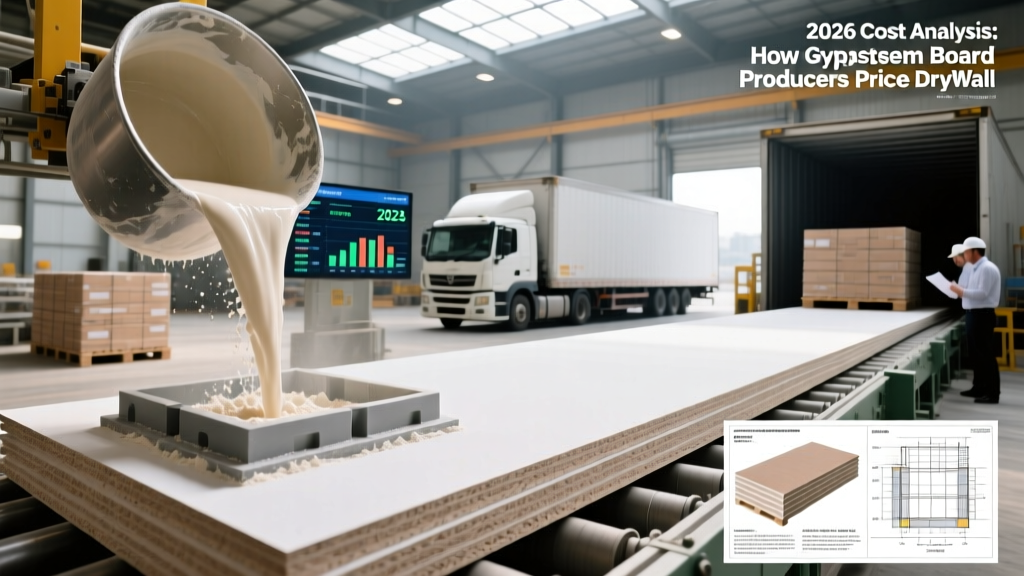
The Anatomy of Producer Manufacturing Costs
Understanding the wholesale pricing of drywall requires deconstructing the cost of goods sold (COGS) at the plant level. Gypsum board producers operate highly automated, continuous-flow manufacturing facilities, but the process remains intensely energy- and material-dependent. The core manufacturing process involves calcining raw or synthetic gypsum—crushing it and heating it to approximately 350°F (177°C) to drive off 75% of its chemically combined water, creating calcium sulfate hemihydrate (stucco).
This calcination step is the primary energy sink for producers. According to the U.S. Energy Information Administration, the industrial sector's energy consumption is heavily tied to thermal processes like calcination, making natural gas prices a direct input variable for drywall manufacturing costs.
| Cost Component | Percentage of COGS | Primary Market Variables |
|---|---|---|
| Gypsum Core (Mined or FGD) | 25% - 35% | Mining permits, coal plant retirements (FGD), rail freight |
| Facing Paper (Kraft/Recycled) | 15% - 20% | Recycled newsprint indices, virgin pulp costs |
| Energy (Natural Gas/Electric) | 20% - 25% | Regional utility rates, pipeline constraints |
| Additives (Starch, Fiberglass) | 5% - 10% | Agricultural yields (starch), global glass fiber supply |
| Labor & Plant Overhead | 10% - 15% | Union contracts, automation CapEx amortization |
Comparative Pricing Strategies of Major Gypsum Board Producers
The North American gypsum board market is an oligopoly dominated by a few major players. Because the base product (standard 1/2-inch regular board) is largely commoditized, producers differentiate their cost structures through supply chain integration and geographic plant placement.
USG (Knauf)
Following its acquisition by Knauf, USG leverages massive economies of scale. Their cost advantage lies in long-term synthetic gypsum (FGD) contracts and a dense network of plants in the Midwest and East Coast. However, their heavy reliance on synthetic gypsum makes them vulnerable to the 2026 supply deficits caused by coal plant retirements.
Georgia-Pacific (Koch Industries)
GP possesses a unique structural cost advantage: vertical integration in paper. Backed by Koch Industries and their extensive paper milling operations, GP faces less volatility in facing paper costs compared to competitors who must buy kraft and recycled paper on the open market. This allows them to maintain aggressive pricing on standard panels while protecting margins.
National Gypsum (Gold Bond)
As a privately held company, National Gypsum operates with a lean overhead structure and frequently acts as the market's price aggressor. They utilize a balanced mix of mined and synthetic gypsum, allowing them to pivot sourcing based on regional spot prices. Their "ProForm" and "Gold Bond" lines are often priced 3% to 7% below market leaders to capture high-volume commercial bids.
CertainTeed (Saint-Gobain)
CertainTeed focuses on margin over volume. While they produce standard boards, their cost analysis strategy centers on high-margin specialty products: Type X fire-rated boards, acoustic panels, and glass-mat exterior sheathing. They absorb higher manufacturing costs by targeting specifications where architects demand premium performance, effectively bypassing the race-to-the-bottom pricing of commodity drywall.
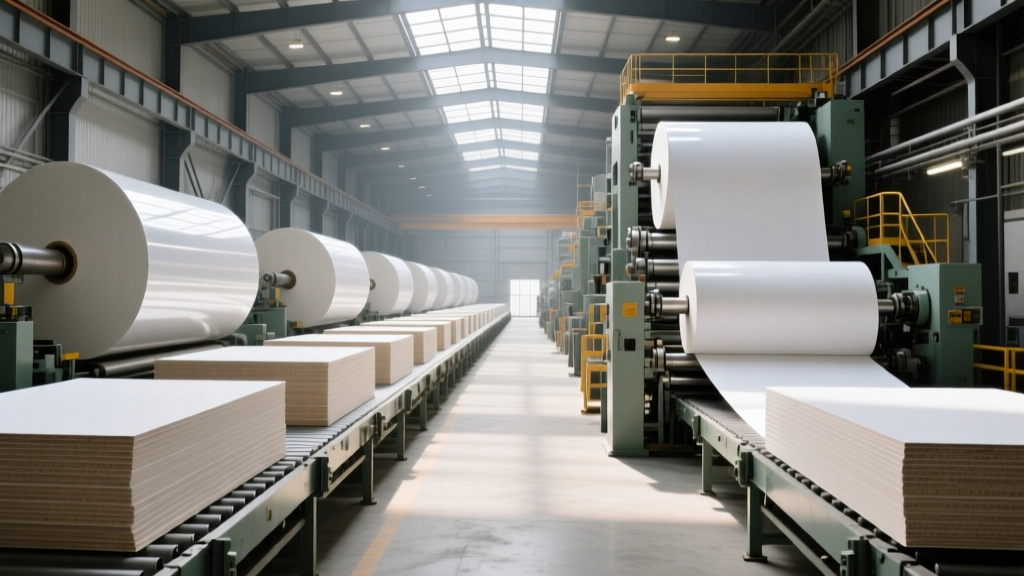
The Freight Penalty: Why Geography Dictates Drywall Pricing
The most critical factor in a producer's pricing model is freight. Drywall is a "weight-out" commodity. A standard 53-foot dry van trailer has a maximum legal payload of roughly 45,000 pounds. Because 5/8-inch Type X gypsum board weighs approximately 2.2 pounds per square foot, a fully loaded truck maxes out at weight capacity long before it runs out of physical space (cubing out), carrying only about 20,000 square feet per load.
Because shipping air and heavy rock is economically inefficient, freight costs consume roughly $0.10 to $0.15 per square foot for every 100 miles transported. Once a shipment exceeds a 300 to 400-mile radius from the manufacturing plant, the freight cost eclipses the manufacturing margin. This is why producers utilize strict Zone Pricing models, refusing to quote competitive rates outside their plant's immediate logistical footprint unless utilizing rail-served distribution terminals.
2026 Supply Shock: The Synthetic Gypsum Deficit
Any cost analysis of gypsum board producers in 2026 must address the structural shift in raw material availability. For the past two decades, producers have relied heavily on Flue-Gas Desulfurization (FGD) gypsum—a high-purity synthetic byproduct of coal-fired power plant scrubbers. FGD gypsum is cheaper to process than mined rock because it requires less crushing and washing.
However, the accelerated retirement of coal-fired power plants across the U.S. has severely constrained FGD supply. According to the U.S. Geological Survey Mineral Commodity Summaries, the shift back to mined natural gypsum forces producers to incur higher extraction and rail-transport costs. Producers without captive rail access to natural gypsum mines in states like Oklahoma, Texas, and Nevada are facing a 5% to 9% increase in core material costs, which are being passed down to distributors via annual price escalators.
Strategic Procurement: Negotiating with Producers and Distributors
General contractors and large-scale drywall subcontractors can leverage this cost architecture to negotiate better procurement terms. Buying drywall is not just about asking for a lower price per sheet; it is about aligning your purchasing behavior with the producer's cost-saving mechanisms.
- Leverage Freight Equalization: If your job site is located near a competitor's plant but you prefer a specific brand, ask the producer for "freight equalization." Producers will sometimes absorb the extra freight cost to match a local competitor's delivered price, provided the total volume justifies the margin hit.
- Commit to Annual Volume Tiers: Producers prioritize plant utilization rates. Running a continuous board line at 95% capacity is vastly more profitable than stopping and starting. By signing an annual volume commitment (e.g., 5 million square feet), you move from the "spot market" pricing tier to the "contract tier," typically yielding an 8% to 12% discount off the published list price.
- Optimize Load Configurations: Work with your distributor to order in exact truckload quantities (e.g., 20,000 sq ft of 5/8-inch board). Less-than-truckload (LTL) shipments incur severe premium freight surcharges that destroy your material budget.
- Specify High-Margin Alternatives for Leverage: If you are bidding a project that requires high-margin specialty boards (like glass-mat sheathing or sound-damping panels), use those specifications as leverage. Producers will often discount the commodity standard boards on the same project just to secure the high-margin specialty board sale.
For further technical specifications on board compositions and manufacturing standards, procurement teams should consult the Gypsum Association's technical resources to ensure specified products align with current ASTM C1396 standards.
Ultimately, winning the material cost battle in 2026 requires looking past the sticker price of a single sheet of drywall. By understanding the energy inputs, the synthetic gypsum deficit, and the brutal mathematics of heavy-haul freight, procurement professionals can structure contracts that align with how gypsum board producers actually generate and protect their margins.
Written by
Sarah WhitfieldSarah Whitfield is a chartered quantity surveyor (MRICS) and construction cost analyst with 15 years of experience in material pricing, procurement strategy, and project budgeting. She earned her degree in Construction Management from the University of Reading (UK) and has worked on projects ranging from $2M custom homes to $180M mixed-use developments across North America and Europe. Sarah currently leads cost estimating for BuildMat Insight, maintaining a proprietary database of 4,000+ material price points updated quarterly. She is a frequent contributor to RSMeans cost data panels and has presented at the International Cost Engineering Council (ICEC) congress. Based in Denver, CO, Sarah is an avid trail runner and volunteer mentor for Women in Construction.
More from Sarah Whitfield
View all
Wood & Lumber
What Are the Different Types of Wood? A Builder's Guide
Compare structural softwoods, finish hardwoods, and engineered lumber. Analyze Janka ratings, MOE values, and 2026 pricing for construction.
Aug 4, 2026

Walls & Panels
Steel Framing vs Wood Framing: Corrosion and Moisture Defense
Compare steel framing vs wood framing for moisture resistance. Learn about galvanized coatings, condensation risks, and corrosion protection strategies.
Jul 21, 2026

Stone & Masonry
How to Cut Stone Veneer: Wet Saw vs Grinder Comparison
Compare the best tools for cutting stone veneer. We review wet saws, angle grinders, and chop saws to help you achieve clean, chip-free cuts.
Jul 21, 2026