Cold Formed Steel Framing Details for Corrosion Protection
Master cold formed steel framing details to prevent corrosion. Learn G90 coatings, galvanic isolation, and moisture management for durable builds.
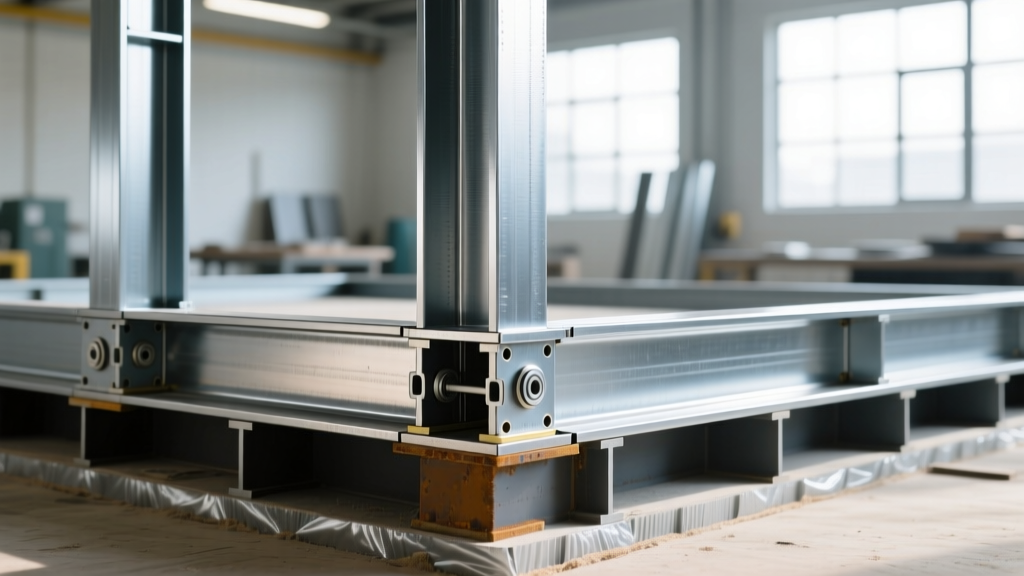
The Hidden Cost of Ignoring CFS Moisture Management
Cold-formed steel (CFS) framing dominates commercial and multi-family residential construction due to its high strength-to-weight ratio, dimensional stability, and non-combustible nature. However, steel's primary vulnerability remains oxidation. When architectural detailing fails to manage bulk water and vapor drive, localized corrosion can compromise structural connections, degrade sheathing attachments, and trigger cascading envelope failures. According to the Steel Framing Industry Association (SFIA), the vast majority of CFS corrosion issues in the field stem not from inadequate base metal coatings, but from improper cold formed steel framing details at transitions, penetrations, and dissimilar material interfaces.
Designing for corrosion protection requires moving beyond basic material selection and focusing on micro-level moisture management. This guide breaks down the exact galvanization standards, connection details, and climate-specific assemblies required to ensure CFS framing survives the 50-to-100-year service life expected of modern commercial structures.
Galvanization Standards: Decoding G60, G90, and AZ55
The first line of defense is the metallic coating applied to the base steel via the hot-dip process. Specifying the wrong coating weight for a specific exposure environment guarantees premature failure. The American Iron and Steel Institute (AISI) mandates specific minimums based on whether the framing is interior, exterior, or exposed to high-humidity environments.
| Designation | Coating Type | Total Weight (oz/ft²) | Approx. Thickness | Recommended Application |
|---|---|---|---|---|
| G60 | Galvanized (Zinc) | 0.60 | 0.50 mils | Interior partitions, dry climates, concealed ceilings |
| G90 | Galvanized (Zinc) | 0.90 | 0.75 mils | Exterior load-bearing walls, humid interiors (pools) |
| AZ55 | Galvalume (Zn/Al) | 0.55 | 0.80 mils | Coastal zones, high-corrosion industrial, parapets |
Expert Insight: While AZ55 (Galvalume) offers superior cut-edge protection and thermal resistance compared to pure zinc, it is highly susceptible to alkaline corrosion. If AZ55 studs are embedded directly in wet concrete or exposed to highly alkaline masonry mortars without a physical barrier, the aluminum in the coating will rapidly degrade. Always isolate Galvalume from alkaline substrates.
Critical Cold Formed Steel Framing Details for Corrosion Control
Corrosion rarely initiates in the middle of a perfectly straight, undisturbed stud. It begins at the intersections where water pools, capillary action draws moisture inward, or dissimilar metals create galvanic cells.
Base Track and Slab Interfaces
Concrete slabs act as massive moisture reservoirs. If a CFS base track sits directly on a slab-on-grade or a balcony deck, capillary suction will wick water into the track web, leading to severe bottom-up corrosion.
- The Capillary Break: Install a minimum 15-lb asphalt-saturated felt or a fluid-applied elastomeric membrane (e.g., Prosoco R-Guard or Tremco ExoAir) beneath the track.
- Elevation Details: For exterior walls, the base track must be elevated above the finished walking surface. Use a structural weep screed (minimum 1-inch clearance to soil, 2-inch to paved surfaces per IBC Section 2509.2) to allow incidental water inside the wall cavity to drain freely without pooling against the steel track.
- Anchor Isolation: Powder-actuated fasteners or wedge anchors driven through the track into concrete create a direct moisture conduit. Seal the top of the anchor head with a dollop of polyurethane sealant after installation.
Dissimilar Metal Connections (Galvanic Isolation)
When aluminum window flanges, copper flashings, or untreated carbon steel brackets come into direct contact with galvanized CFS studs in the presence of an electrolyte (rainwater or condensation), a galvanic cell forms. Because zinc is anodic to both aluminum and copper, the galvanized coating will sacrifice itself at an accelerated rate, leading to localized red rust and eventual structural compromise.
Field Rule of Thumb: Never allow aluminum flashing to touch bare or galvanized steel framing. Always separate them using a self-adhered butyl or modified-bitumen flashing tape (minimum 40 mils thick), or specify factory-coated aluminum flashings with a baked-on polymer finish on the contact side.
Exterior Sheathing and Cladding Cavities
Building Science Corporation (BSC) consistently demonstrates that drained and vented rainscreens are non-negotiable for CFS exterior assemblies. When rigid insulation or structural sheathing is strapped directly to the CFS studs without a drainage gap, any bulk water penetrating the cladding is trapped against the steel.
The Detail: Install vertical furring strips (either 1/4-inch corrugated plastic drainage mats or treated wood/metal furring channels) over the weather-resistive barrier (WRB). This creates a capillary break and a drainage plane, ensuring that water drops down and out through the weep screed rather than resting against the G90 stud flanges.
Fastener Selection and Coating Compatibility
A common and catastrophic field error is using standard interior drywall screws or basic zinc-plated (clear/yellow zinc) fasteners to attach exterior sheathing or cladding to CFS framing. The rule of bimetallic compatibility dictates that the fastener coating must be equal to or more noble than the base metal coating.
- Structural Sheathing: Use #8 or #10 pan-head framing screws with a minimum G90 equivalent coating. Look for ceramic-coated or zinc-aluminum flake coatings (e.g., Simpson Strong-Drive or Hilti X-HSB series) which provide salt-spray resistance exceeding 1,000 hours.
- Cladding Attachments: When attaching metal panels or terracotta rainscreens to CFS, specify 304 or 316 stainless steel fasteners. While stainless steel is cathodic to zinc, the surface area ratio (tiny fastener vs. massive steel wall) minimizes the galvanic impact on the overall structure, provided the fastener holes are properly gasketed or sealed.
Decision Matrix: Selecting Protection by IECC Climate Zone
Corrosion protection is intrinsically tied to vapor drive and condensation potential. Specifying the wrong vapor retarder can cause interstitial condensation directly on the cold surface of the steel studs, bypassing exterior weatherproofing entirely.
| IECC Climate Zone | Primary Moisture Threat | Required CFS Detailing & Vapor Strategy |
|---|---|---|
| Zones 1-3 (Hot/Humid) | Exterior vapor drive, solar-driven moisture | Class III vapor retarder (latex paint) on interior. Exterior vented rainscreen mandatory. G90 minimum studs. |
| Zone 4 (Mixed) | Bidirectional vapor drive, bulk rain | Class II vapor retarder (e.g., CertainTeed MemBrain). Fluid-applied WRB. G90 studs with isolated base tracks. |
| Zones 5-8 (Cold) | Interior vapor drive, interstitial condensation | Class I or II interior vapor retarder. Exterior continuous rigid insulation to keep stud cavity above dew point. G90 studs. |
| Coastal / Marine | Salt aerosol, high humidity, wind-driven rain | AZ55 Galvalume studs or hot-dip galvanized post-fabrication. 316 SS fasteners. Fully adhered membrane WRB. |
Field Troubleshooting: Red Rust vs. White Rust
Site superintendents and QA/QC managers must be able to differentiate between cosmetic oxidation and active structural corrosion during framing inspections.
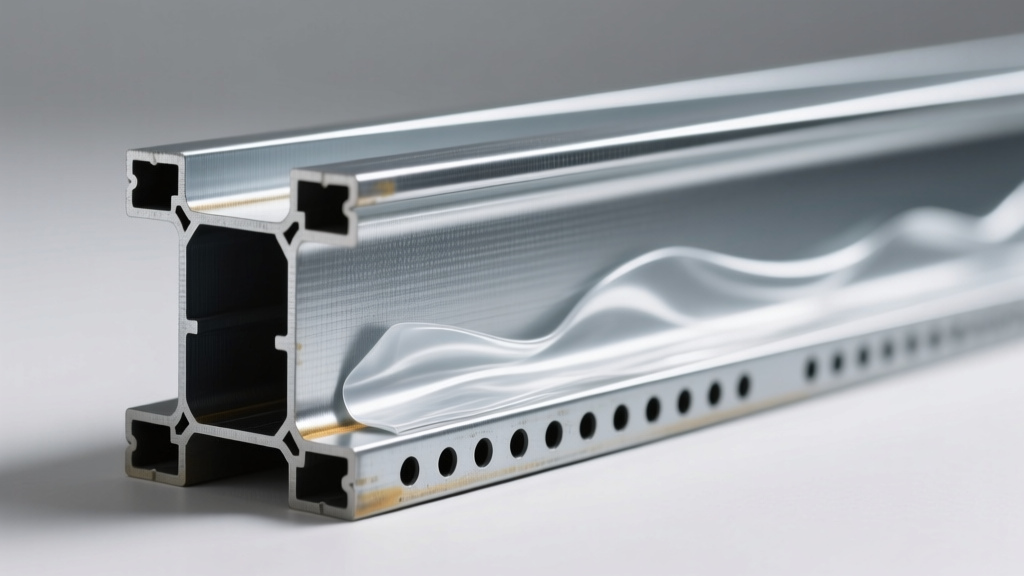
- White Rust (Zinc Carbonate): Appears as a chalky, white, or gray powdery deposit on the surface of newly delivered galvanized studs. This occurs when zinc is exposed to moisture in poorly ventilated storage areas. Action: Wipe it off. It is superficial and does not compromise the underlying zinc layer or the steel. Improve site storage ventilation and elevate bundles off muddy ground.
- Red Rust (Iron Oxide): Appears as orange/brown flaking. This indicates the zinc sacrificial layer has been fully consumed or physically scraped away, and the base carbon steel is actively oxidizing. Action: If localized (e.g., at a scratched cut end), wire-brush the area to bare metal and apply a cold-galvanizing compound (zinc-rich paint, minimum 93% zinc dust in dry film) per ASTM A780. If red rust is widespread or scaling at structural connections, the affected studs must be replaced.
Site Superintendent Inspection Protocol
To ensure cold formed steel framing details are executed correctly before walls are closed in with drywall or exterior sheathing, implement this mandatory hold-point checklist:
- Verify Coating Stamp: Check the ink stamping on the stud webs to confirm G90 or AZ55 is actually installed on exterior walls, not the G60 intended for interior partitions.
- Inspect Base Track Isolation: Confirm dampproofing membrane extends fully under the track and laps up the vertical face of the slab edge.
- Check Cut Ends: Any field-cut CFS members (especially at window bucks or parapet caps) must have their exposed raw edges treated with zinc-rich touch-up paint.
- Audit Fastener Bins: Physically inspect the boxes of screws being used by the framing crew to ensure exterior-rated, corrosion-resistant coatings are being utilized for all sheathing and blocking connections.
- Validate Galvanic Breaks: Ensure self-adhered flashing tapes are installed at all window buck interfaces and where aluminum coping or flashings will eventually bear on the steel framing.
Mastering these micro-details transforms CFS from a vulnerable commodity into an exceptionally durable, multi-generational building skeleton. Corrosion is entirely manageable, provided the detailing respects the physics of moisture and electrochemistry.
Written by
Sarah WhitfieldSarah Whitfield is a chartered quantity surveyor (MRICS) and construction cost analyst with 15 years of experience in material pricing, procurement strategy, and project budgeting. She earned her degree in Construction Management from the University of Reading (UK) and has worked on projects ranging from $2M custom homes to $180M mixed-use developments across North America and Europe. Sarah currently leads cost estimating for BuildMat Insight, maintaining a proprietary database of 4,000+ material price points updated quarterly. She is a frequent contributor to RSMeans cost data panels and has presented at the International Cost Engineering Council (ICEC) congress. Based in Denver, CO, Sarah is an avid trail runner and volunteer mentor for Women in Construction.
More from Sarah Whitfield
View all
Wood & Lumber
What Are the Different Types of Wood? A Builder's Guide
Compare structural softwoods, finish hardwoods, and engineered lumber. Analyze Janka ratings, MOE values, and 2026 pricing for construction.
Aug 4, 2026

Walls & Panels
Steel Framing vs Wood Framing: Corrosion and Moisture Defense
Compare steel framing vs wood framing for moisture resistance. Learn about galvanized coatings, condensation risks, and corrosion protection strategies.
Jul 21, 2026

Stone & Masonry
How to Cut Stone Veneer: Wet Saw vs Grinder Comparison
Compare the best tools for cutting stone veneer. We review wet saws, angle grinders, and chop saws to help you achieve clean, chip-free cuts.
Jul 21, 2026