Protecting Steel Framing Supplies from Corrosion: G60 vs G90
Learn how to protect steel framing supplies from corrosion. Compare G60 vs G90 galvanized coatings, storage tips, and ASTM standards for lasting durability.

The Hidden Threat: Corrosion in Light-Gauge Steel Framing
When procuring steel framing supplies for commercial or residential construction, the gauge (thickness) and yield strength of the metal often dominate the purchasing decision. However, the long-term structural integrity of light-gauge steel framing (LGSF) relies entirely on its corrosion protection system. Unlike structural hot-rolled steel, which is measured in fractions of an inch and can tolerate surface rust, cold-formed steel studs and tracks are typically 20-mil (0.020 inches) or thinner. Even minor corrosion can compromise the cross-sectional area, leading to catastrophic load-bearing failures over time.
Corrosion in steel framing supplies generally manifests in two forms: white rust (zinc oxide), which is a superficial degradation of the protective coating, and red rust (iron oxide), which actively consumes the base steel. Understanding the metallurgy of galvanized coatings and implementing strict on-site handling protocols are non-negotiable requirements for modern construction managers and contractors.
A common failure point in steel framing is not the stud itself, but the fasteners. Using standard phosphate-coated drywall screws to attach exterior sheathing or structural connectors to galvanized steel framing supplies creates a galvanic cell. The zinc coating will sacrificially corrode to protect the uncoated steel screw, rapidly degrading the connection. Always specify zinc-flake coated or hot-dip galvanized fasteners for exterior and high-moisture applications.
Decoding Galvanization: G60 vs. G90 Coatings
The vast majority of steel framing supplies are protected via continuous hot-dip galvanization, governed by ASTM A653. The 'G' designation refers to the total weight of the zinc coating on both sides of the steel sheet, measured in ounces per square foot (oz/ft²).
| Coating Designation | Total Zinc Weight | Approx. Thickness (per side) | Primary Application | Cost Premium |
|---|---|---|---|---|
| G60 | 0.60 oz/ft² | 0.50 mils | Interior, non-load-bearing, dry environments | Baseline |
| G90 | 0.90 oz/ft² | 0.75 mils | Exterior, load-bearing, high-humidity, concrete contact | +5% to 8% |
| ZAC (AZ50) | 0.50 oz/ft² (Zinc-Aluminum) | Variable | Coastal zones, highly corrosive industrial environments | +12% to 15% |
According to technical guidelines published by the Steel Framing Industry Association (SFIA), G60 is the minimum acceptable standard for interior drywall framing. However, for any steel framing supplies utilized in exterior walls, plumbing chases, or bottom tracks contacting concrete, G90 is the mandatory baseline. The 50% increase in zinc mass provides a significantly longer sacrificial lifespan before the base steel is exposed to oxidizing agents.
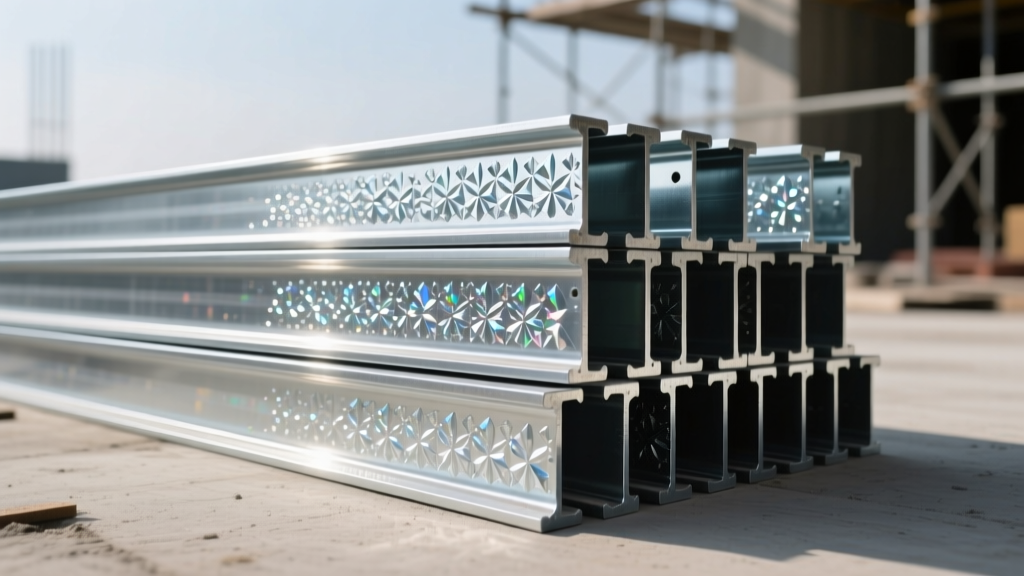
The Cut-Edge Sacrificial Protection Mechanism
A frequent question on job sites is whether cutting G90 studs exposes raw steel that will immediately rust. The answer lies in the electrochemical properties of zinc. Zinc is more anodic (less noble) than steel on the galvanic series. When a stud is cut with aviation snips or a chop saw, the exposed steel edge does not immediately corrode because the adjacent zinc coating acts as a sacrificial anode.
Rules for Cut-Edge Protection
- Minor Cuts (Snips/Saws): The sacrificial protection extends approximately 1/8 inch to 1/4 inch from the cut edge. No secondary treatment is required for standard cross-cuts or web punch-outs.
- Major Cuts (Core Drills/Plasma): For HVAC penetrations or large notches exceeding 1/2 inch of exposed steel, the sacrificial anode effect is insufficient. Contractors must apply a cold galvanizing compound (zinc-rich paint) containing a minimum of 90% zinc dust in the dry film, applied per ASTM A780 standards.
- Avoid Heat Destruction: Using oxy-acetylene torches to cut steel framing supplies vaporizes the zinc coating (which boils at 1,665°F) well beyond the cut line, destroying the galvanic protection and creating a high-risk zone for rapid red rust formation.
Environmental Exposure and Bottom Track Protocols
The most aggressive corrosion environment for steel framing supplies is the bottom track (runner) resting on a concrete slab. Concrete is highly alkaline (pH 12 to 13) and acts as a moisture sponge via capillary action. When G90 steel is embedded in or placed directly against damp concrete, the alkalinity rapidly breaks down the zinc layer, leading to premature failure.
Never place bare G90 steel tracks directly on concrete. Install a continuous physical barrier, such as a 15-mil polyethylene sill sealer, closed-cell foam gasket, or a fluid-applied elastomeric membrane. This breaks the capillary action and isolates the steel from the concrete's alkaline moisture, effectively doubling the lifespan of the bottom track assembly.
For projects located in coastal regions (ISO 9223 Corrosivity Category C4 or C5), standard G90 galvanized steel framing supplies may still degrade within a decade due to chloride ion ingress. In these scenarios, specifiers must utilize ZAC (Zinc-Aluminum-Copper) coated steel or apply a secondary intumescent or epoxy coating system over the completed framing.
On-Site Storage and Handling Protocols
Corrosion protection begins before the steel is ever installed. 'Wet storage stain' (white rust) occurs when galvanized steel framing supplies are bundled tightly, exposed to rain, and left without airflow. The trapped moisture reacts with the zinc to form zinc hydroxide, which can consume up to 10% of the coating mass in a matter of days.
5-Step Site Storage Protocol
- Elevate Bundles: Keep all steel framing supplies a minimum of 4 inches off the ground using untreated timber dunnage. Never store steel directly on soil or fresh concrete.
- Break the Bands: If bundles are exposed to the elements, cut the steel strapping bands to allow moisture to drain and air to circulate between individual studs.
- Angle for Drainage: Stack bundles with a slight 2-degree pitch to prevent water from pooling in the track channels or stud webs.
- Use Breathable Covers: If tarping is necessary, use breathable canvas or specialized construction wraps. Never seal bundles in non-breathable polyethylene plastic, which traps condensation and accelerates white rust formation.
- First-In, First-Out (FIFO): Rotate inventory strictly. Prolonged storage on humid job sites increases the risk of coating degradation, even under ideal conditions.
Frequently Asked Questions
Can I use G60 steel framing supplies for exterior load-bearing walls?
No. Building codes and structural engineering standards, as outlined by the Cold-Formed Steel Engineers Institute (CFSEI), dictate that exterior structural framing must utilize a minimum of G90 galvanization to account for potential moisture ingress through the building envelope. Using G60 in these applications risks structural compromise and will likely fail municipal inspections.
Does welding steel framing destroy the corrosion protection?
Yes. The extreme heat of arc welding vaporizes the zinc coating, leaving the weld zone completely unprotected. If welding is required for structural connections, the burned zinc must be mechanically cleaned (wire brushed) and immediately recoated with an ASTM A780 compliant zinc-rich paint. For this reason, mechanical fastening (screws, bolts, and structural connectors) is heavily preferred in modern LGSF construction.
Is it safe to use copper flashing against galvanized steel tracks?
Absolutely not. Copper is highly cathodic relative to zinc and steel. Direct contact between copper flashing and galvanized steel framing supplies will trigger severe galvanic corrosion, rapidly destroying the steel track. Always separate dissimilar metals using heavy-duty rubberized membranes or neoprene pads.
Written by
Elena RodriguezElena Rodriguez is a civil engineer and technical writer specializing in concrete technology, masonry systems, and ASTM/ACI compliance. She earned her B.S. in Civil Engineering from Texas A&M University and spent a decade at a materials testing laboratory, performing over 2,000 concrete compressive strength tests and masonry prism evaluations. Elena is an ACI-certified Field Testing Technician (Grade I) and a member of ASTM Committee C12 on Natural Building Stone. She currently consults on forensic engineering cases involving concrete failures and moisture intrusion. Based in San Antonio, TX, Elena is a proud member of the Society of Women Engineers (SWE) and coaches her daughter's FIRST Robotics team.
More from Elena Rodriguez
View all
Walls & Panels
Cost Analysis: Light Gauge Steel Framing Advantages and Disadvantages
Evaluate light gauge steel framing advantages and disadvantages through a strict cost analysis lens, comparing material, labor, and lifecycle expenses.
Aug 4, 2026

Walls & Panels
Gypsum Board Types: Exact Specifications, Thickness & Dimensions
Compare standard, Type X, and moisture-resistant gypsum board types. Get exact specifications, thicknesses, dimensions, and ASTM standards for your project.
Aug 4, 2026

Fire Resistance
Best Fire-Resistant Outdoor Decking Materials: 2026 Buyer Guide
Discover the best fire-resistant outdoor decking materials for 2026. Compare Class A PVC, aluminum, and hardwood options for WUI compliance and safety.
Aug 4, 2026