Steel Framing Machine Cost & ROI Analysis Guide 2026
Analyze 2026 steel framing machine costs, from entry-level imports to enterprise systems. Calculate ROI, hidden fees, and break-even volumes.

The Capital Expenditure Reality of Cold-Formed Steel Equipment
Transitioning from purchasing pre-cut cold-formed steel (CFS) studs to manufacturing them in-house requires a precise understanding of capital expenditure (CapEx). A steel framing machine is not a standalone purchase; it is the centerpiece of an integrated roll-forming ecosystem. In 2026, the market has bifurcated, with budget-friendly imports disrupting the lower end while enterprise-grade systems from manufacturers like FRAMECAD and Howick dominate high-volume, BIM-integrated production. According to the American Iron and Steel Institute (AISI), the adoption of CFS in commercial and multi-family residential construction continues to accelerate, making the economics of in-house roll-forming highly relevant for mid-sized contractors.
2026 Equipment Pricing Matrix by Tier
Pricing for steel framing machines varies wildly based on output speed, punching station complexity, and software integration. Below is the current market pricing for complete roll-forming lines (machine, decoiler, and basic software).
| Tier / Brand Examples | Estimated CapEx (USD) | Line Speed | Best Application |
|---|---|---|---|
| Entry-Level (e.g., XHH, Zhongyuan imports) | $65,000 - $110,000 | 15 - 25 m/min | Low-volume custom homes, basic stud tracks |
| Mid-Tier (e.g., Scottsdale SMARTFORMER) | $180,000 - $260,000 | 30 - 40 m/min | Regional prefab facilities, mid-rise framing |
| Enterprise (e.g., FRAMECAD F500i, Howick Pinnacle) | $350,000 - $550,000+ | 45 - 60+ m/min | High-volume panelization, complex BIM integration |
Hidden Operational and Maintenance Costs (OpEx)
Calculating the true cost of a steel framing machine requires factoring in ongoing operational expenses that are rarely included in the manufacturer's initial quote. The Cold-Formed Steel Engineers Institute (CFSEI) emphasizes that precision in CFS manufacturing relies heavily on software and tooling maintenance, both of which carry recurring costs.
Software and Licensing
Enterprise machines require advanced CAD/CAM integration to translate architectural models into machine code. Software suites like Vertex BD, Mitek Sapphire, or proprietary OEM software require annual licensing. Expect to pay between $8,000 and $18,000 annually per seat, plus mandatory OEM machine controller license renewals that can add $3,000 to $5,000 per year.
Tooling Wear and Replacement
The punching and shearing dies that create web holes, service cutouts, and end-cuts degrade over time. For standard 33 mil (20 gauge) and 43 mil (18 gauge) G60 galvanized coil, expect to replace punch and die sets every 350,000 to 500,000 linear feet. A full replacement tooling set for a multi-station machine typically costs between $3,500 and $6,000.
Scrap Rates and Material Yield
- Optimized BIM Software: 2% to 4% scrap rate (nesting algorithms optimize cut lengths).
- Manual / Basic Software: 7% to 12% scrap rate.
- Coil Stock Pricing (2026): G60/G90 galvanized steel coil averages $900 to $1,150 per metric ton. At 3% scrap, you are effectively throwing away $30 per ton in offcuts. Minimizing this via premium software is a direct cost-saver.
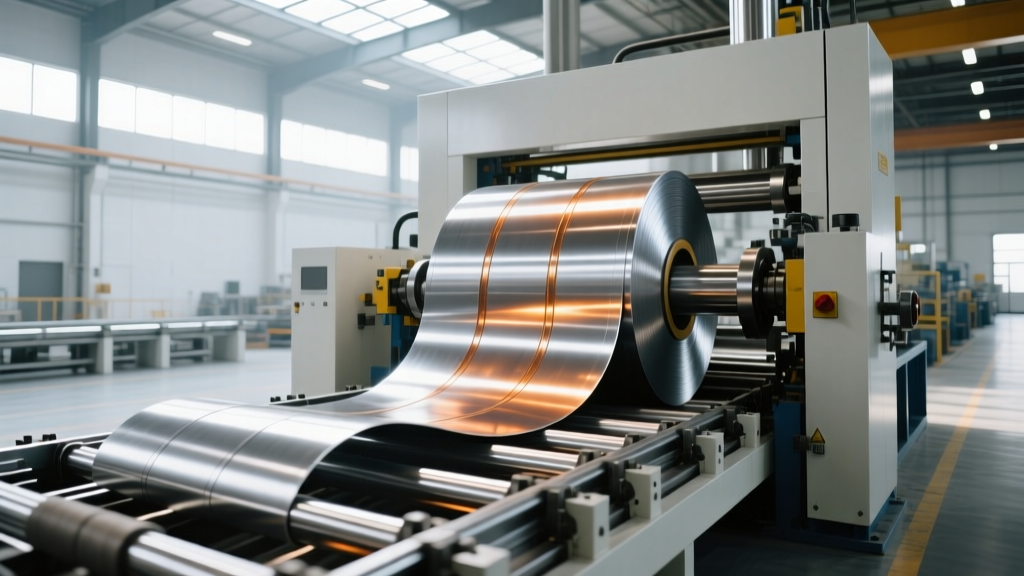
ROI Calculation: In-House Roll-Forming vs. Purchasing Pre-Cut Studs
To determine if a steel framing machine is a viable investment, you must calculate the break-even volume. Let us analyze the production of a standard 3-5/8 inch, 33 mil (20 ga) structural stud.
1. Purchasing Pre-Cut Studs (Delivered): ~$1.25 / LF
2. In-House Production Cost:
- Coil Material (1.15 lbs/ft @ $0.50/lb): $0.575 / LF
- 3% Scrap Allowance: +$0.017 / LF
- Machine OpEx (Power, Wear, Labor allocation): ~$0.08 / LF
Total In-House Cost: ~$0.672 / LF
Gross Margin Advantage: $0.578 per linear foot produced in-house.
The Break-Even Formula
If you purchase a mid-tier machine ecosystem for $220,000, your break-even point is calculated as:
$220,000 / $0.578 = 380,622 linear feet.
If your facility produces 15,000 linear feet per week, you will reach the break-even point in approximately 25.3 weeks (roughly 6 months). After this threshold, every foot produced yields a $0.578 gross advantage over buying from a distributor, not including the logistical savings of eliminating freight delays and damaged bundles.
Leasing vs. Outright Purchase: Financial Decision Framework
Capital preservation is critical for contractors. Most equipment financing in 2026 offers 60 to 84-month terms for roll-forming machinery.
When to Lease or Finance
- Cash Flow Priority: If your company needs to preserve working capital for material purchases and payroll on active job sites.
- Tax Strategy: Utilizing Section 179 deductions or bonus depreciation (consult your CPA for current 2026 IRS limits on manufacturing equipment).
- Technology Risk: If you anticipate needing to upgrade to faster, multi-profile machines within 5 years.
When to Buy Outright
- High Margins & Reserves: You have strong cash reserves and want to avoid paying 8% to 14% in cumulative financing interest over a 5-year term.
- Captive Production: The machine will be used exclusively for a single, multi-year mega-project (e.g., a 500-unit hotel build) where the machine cost is absorbed directly into the project overhead.
Strategic Recommendations for Volume Thresholds
Do not purchase a steel framing machine simply to gain control over your supply chain; the math must justify the CapEx. Based on current 2026 market conditions, here are the strategic volume thresholds:
- Under 500,000 LF Annually: Do not buy. Continue purchasing pre-cut studs or pre-fabricated panels from a regional supplier. The OpEx and software licensing will destroy your margins at this volume.
- 500,000 to 1.5 Million LF Annually: Consider a mid-tier machine or a high-quality used enterprise machine. Focus on standard profiles (3-5/8" and 6") and outsource complex truss manufacturing.
- Over 1.5 Million LF Annually: Invest in an enterprise-grade, dual-coil system (like the FRAMECAD F500i) capable of running multiple gauges and widths without manual changeovers. At this volume, the labor savings from automated, zero-changeover production and direct BIM integration will yield an ROI in under 14 months.
Ultimately, a steel framing machine is a margin-multiplication tool, not just a manufacturing device. By bringing roll-forming in-house, contractors eliminate distributor markups, neutralize freight surcharges, and gain the agility to produce custom lengths on demand, drastically reducing jobsite waste and installation time.
Written by
Elena RodriguezElena Rodriguez is a civil engineer and technical writer specializing in concrete technology, masonry systems, and ASTM/ACI compliance. She earned her B.S. in Civil Engineering from Texas A&M University and spent a decade at a materials testing laboratory, performing over 2,000 concrete compressive strength tests and masonry prism evaluations. Elena is an ACI-certified Field Testing Technician (Grade I) and a member of ASTM Committee C12 on Natural Building Stone. She currently consults on forensic engineering cases involving concrete failures and moisture intrusion. Based in San Antonio, TX, Elena is a proud member of the Society of Women Engineers (SWE) and coaches her daughter's FIRST Robotics team.
More from Elena Rodriguez
View all
Walls & Panels
Cost Analysis: Light Gauge Steel Framing Advantages and Disadvantages
Evaluate light gauge steel framing advantages and disadvantages through a strict cost analysis lens, comparing material, labor, and lifecycle expenses.
Aug 4, 2026

Walls & Panels
Gypsum Board Types: Exact Specifications, Thickness & Dimensions
Compare standard, Type X, and moisture-resistant gypsum board types. Get exact specifications, thicknesses, dimensions, and ASTM standards for your project.
Aug 4, 2026

Fire Resistance
Best Fire-Resistant Outdoor Decking Materials: 2026 Buyer Guide
Discover the best fire-resistant outdoor decking materials for 2026. Compare Class A PVC, aluminum, and hardwood options for WUI compliance and safety.
Aug 4, 2026