Types of Black Wood: A Selection Framework for Custom Millwork
Compare types of black wood using our builder's selection framework. Analyze Janka hardness, 2026 pricing, CITES rules, and machining tips for dark species.

The Black Wood Spectrum: Natural vs. Ebonized
Specifying true black or near-black hardwoods requires navigating a matrix of extreme density, high material costs, and strict international trade regulations. In architectural millwork, luxury flooring, and bespoke furniture, the term "black wood" encompasses a narrow band of tropical hardwoods and a few temperate species with dark heartwood. Selecting the correct material hinges on three variables: mechanical stress requirements (Janka hardness), budget per board foot, and CITES compliance for endangered species. This framework isolates the top five natural black wood species and provides a decision matrix for procurement and machining.
Decision Matrix: Matching Species to Application
Use the following matrix to filter species based on your project's structural demands and 2026 market pricing. Costs reflect premium-grade, kiln-dried lumber sourced through specialized importers.
| Species (Botanical) | Janka Hardness (lbf) | 2026 Avg Cost / BF | Primary Application | CITES Status |
|---|---|---|---|---|
| Gaboon Ebony (Diospyros crassiflora) | 3,080 | $120 - $160+ | Inlays, instrument parts, luxury accents | Appendix II |
| African Blackwood (Dalbergia melanoxylon) | 3,840 | $90 - $130 | Woodwind instruments, precision turnery | Appendix II |
| Katalox (Swartzia cubensis) | 3,655 | $18 - $26 | Heavy-duty flooring, tool handles, accents | Not Listed |
| Wenge (Millettia laurentii) | 1,930 | $14 - $22 | Cabinetry, architectural paneling, flooring | Not Listed |
| Black Limba (Terminalia superba) | 670 | $9 - $15 | Veneers, guitar bodies, interior millwork | Not Listed |
Deep Dive: Top 5 True Black & Near-Black Species
1. Gaboon Ebony (Diospyros crassiflora)
Gaboon Ebony is the industry standard for true, jet-black heartwood. Sourced primarily from Cameroon and Gabon, it features an incredibly fine, uniform texture that machines to a glass-like finish without pore filling. Selection criteria: Specify Gaboon Ebony exclusively for small-scale, high-visibility accents (e.g., piano keys, stringed instrument fingerboards, or luxury inlay work). Failure mode: Due to its extreme density and natural oils, standard PVA wood glues often fail. Use epoxy or solvent-based polyurethane adhesives, and wipe joints with acetone immediately before clamping. Expect significant checking and waste during the drying process, which drives the premium cost per board foot.
2. African Blackwood (Dalbergia melanoxylon)
Often confused with ebony, African Blackwood is technically a rosewood. It is exceptionally dense (specific gravity of 1.10 to 1.25) and sinks in water. According to The Wood Database, its dimensional stability is unmatched, making it the premier choice for precision components that must resist humidity fluctuations. Selection criteria: Ideal for orchestral instruments (clarinets, oboes) and high-end mechanical turnery. Warning: It is notoriously hard on tooling. High-speed steel (HSS) cutters will dull within minutes; carbide-tipped or polycrystalline diamond (PCD) tooling is mandatory for production milling.
3. Wenge (Millettia laurentii)
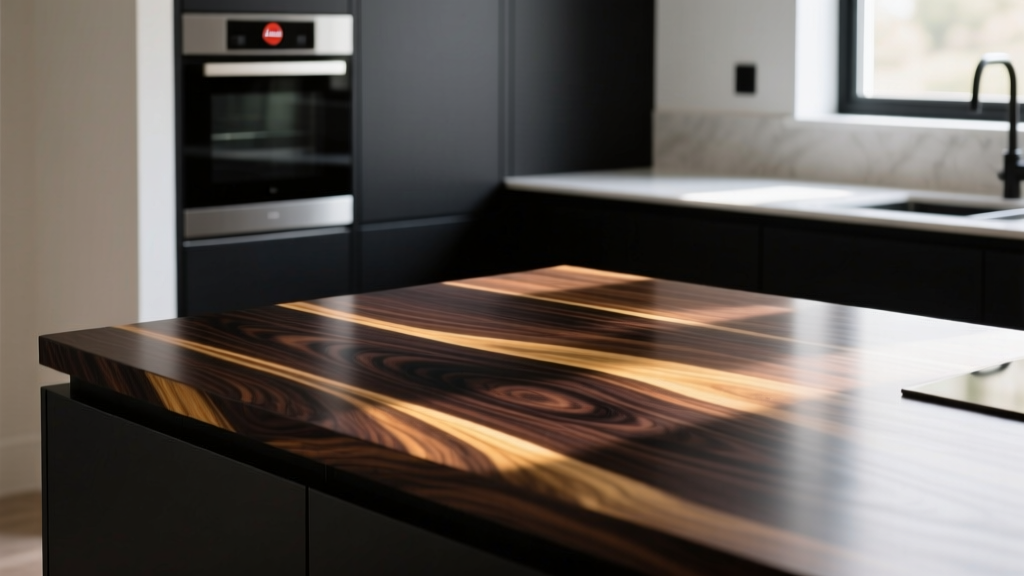
Wenge offers a dark chocolate to near-black color with striking, coarse black grain lines. It is the most commercially viable "black" wood for large-scale architectural applications like flooring and cabinetry. Selection criteria: Choose Wenge when you need the aesthetic of dark wood at a fraction of the cost of true ebony, and when large, wide boards are required. Failure mode: Wenge is notorious for producing sharp, brittle splinters that can easily pierce skin and cause severe septic infections. Sanding requires strict PPE protocols, including N95 respirators, as the dust is a known respiratory irritant and sensitizer. Furthermore, Wenge contains large, open pores that require a dedicated grain filler (like epoxy or pumice) before applying film-forming finishes.
4. Katalox (Swartzia cubensis)
Marketed as "Mexican Royal Ebony," Katalox is a Central American species that oxidizes from a deep reddish-purple to a near-black hue upon UV exposure. With a Janka rating of 3,655 lbf, it rivals true ebonies in hardness but costs roughly 80% less. Selection criteria: Excellent for heavy-traffic commercial flooring, workbench tops, and structural accents where extreme abrasion resistance is required. Machining note: The interlocked grain can cause severe tear-out on planers. Always use a helical cutterhead with a shear angle, and reduce feed rates by 30% compared to standard oak milling.
5. Black Limba (Terminalia superba)
Black Limba is characterized by its stark contrast: a pale yellowish sapwood heavily streaked with dark brown to black heartwood figures. It is relatively soft (670 lbf) and lightweight. Selection criteria: Best utilized as a decorative veneer for elevator cabs, executive boardroom paneling, and electric guitar bodies. It is rarely used for structural or high-wear applications due to its low density and susceptibility to denting.
The Ebonizing Alternative: When to Dye Instead of Buy
The Iron Acetate Protocol:
1. Dissolve #0000 steel wool in white vinegar for 72 hours to create iron acetate.
2. Brew a strong black tea solution (high in tannic acid) and apply it to the raw wood as a base coat.
3. Apply the iron acetate solution. The chemical reaction between the iron and tannins turns the wood a permanent, deep black that penetrates the fibers, unlike surface-level pigment stains.
4. Seal with a water-based polyurethane to prevent the iron from rusting over time.
Procurement & CITES Compliance
Specifying Gaboon Ebony or African Blackwood triggers international trade regulations. Both species are listed under CITES (Convention on International Trade in Endangered Species) Appendix II. According to the official CITES appendices database, this designation does not ban trade but requires strict documentation to ensure the harvest is sustainable and legal.
Procurement Checklist for 2026:
- FSC Certification: Always demand Forest Stewardship Council (FSC) chain-of-custody documentation from your supplier. Uncertified ebony is frequently seized at customs.
- Permit Verification: Ensure the importer has secured both the export permit from the country of origin and the corresponding import permit for your destination country.
- Alternative Sourcing: If CITES paperwork causes project delays, pivot to Katalox or Wenge, which are not currently restricted and offer immediate availability from domestic hardwood distributors.
Machining & Finishing Protocols for Dark Hardwoods
Working with dense, dark woods introduces specific mechanical and chemical challenges. Follow these protocols to prevent catastrophic failure during fabrication:
- Prevent Burning: Woods like Wenge and African Blackwood have high silica and extractive content. Route and saw at slower feed rates, but maintain high cutter RPMs. Use zero-rake or negative-rake carbide saw blades to prevent scorching the end grain.
- Manage Oily Extractives: Many dark tropical woods contain natural resins that inhibit the curing of oil-based polyurethanes and alkyd varnishes. Always apply a barrier coat of dewaxed shellac (e.g., Zinsser SealCoat) before applying your final topcoat. The shellac seals the oils and provides a mechanical tooth for the polyurethane to adhere to.
- Splinter Mitigation: When cross-cutting Wenge or Ebony, apply low-tack painter's tape over the cut line and score it with a utility knife before running it through the saw. This severs the long, brittle fibers and prevents dangerous, jagged tear-out on the exit side.
- Dust Extraction: Dark wood dust, particularly from the Dalbergia genus, is a potent sensitizer that can cause lifelong allergic reactions. Ensure your shop's dust collection system pulls a minimum of 800 CFM at the source, and supplement with ambient HEPA air scrubbers.
Written by
Sarah WhitfieldSarah Whitfield is a chartered quantity surveyor (MRICS) and construction cost analyst with 15 years of experience in material pricing, procurement strategy, and project budgeting. She earned her degree in Construction Management from the University of Reading (UK) and has worked on projects ranging from $2M custom homes to $180M mixed-use developments across North America and Europe. Sarah currently leads cost estimating for BuildMat Insight, maintaining a proprietary database of 4,000+ material price points updated quarterly. She is a frequent contributor to RSMeans cost data panels and has presented at the International Cost Engineering Council (ICEC) congress. Based in Denver, CO, Sarah is an avid trail runner and volunteer mentor for Women in Construction.
More from Sarah Whitfield
View all
Wood & Lumber
What Are the Different Types of Wood? A Builder's Guide
Compare structural softwoods, finish hardwoods, and engineered lumber. Analyze Janka ratings, MOE values, and 2026 pricing for construction.
Aug 4, 2026

Walls & Panels
Steel Framing vs Wood Framing: Corrosion and Moisture Defense
Compare steel framing vs wood framing for moisture resistance. Learn about galvanized coatings, condensation risks, and corrosion protection strategies.
Jul 21, 2026

Stone & Masonry
How to Cut Stone Veneer: Wet Saw vs Grinder Comparison
Compare the best tools for cutting stone veneer. We review wet saws, angle grinders, and chop saws to help you achieve clean, chip-free cuts.
Jul 21, 2026