Hardwood Flooring Finish Options: A Grade & Quality Guide
Compare hardwood flooring finish options by grade and quality. Learn how aluminum oxide, UV-cured, and site-applied polyurethane affect durability.

The Intersection of Wood Grade and Finish Quality
When specifying hardwood flooring, contractors and architects often fixate on the lumber grade (Select, #1 Common, #2 Common) and species hardness (Janka rating). However, the National Wood Flooring Association (NWFA) Technical Guidelines emphasize that a floor's actual performance grade is dictated primarily by its finish system. A premium Select-grade white oak floor with a substandard 1.5-mil site-applied finish will fail in high-traffic commercial environments long before a #1 Common hickory floor protected by a 4.5-mil UV-cured aluminum oxide coating.
Evaluating hardwood flooring finish options requires moving beyond aesthetic sheens (matte, satin, gloss) and analyzing dry film thickness (DFT), abrasion resistance cycles, cross-hatch adhesion ratings, and volatile organic compound (VOC) compliance. As of 2026, strict regional air quality mandates, such as California's SCAQMD Rule 1113, have effectively phased out high-VOC solvent-based finishes in many jurisdictions, elevating the technical requirements for waterborne and UV-cured alternatives.
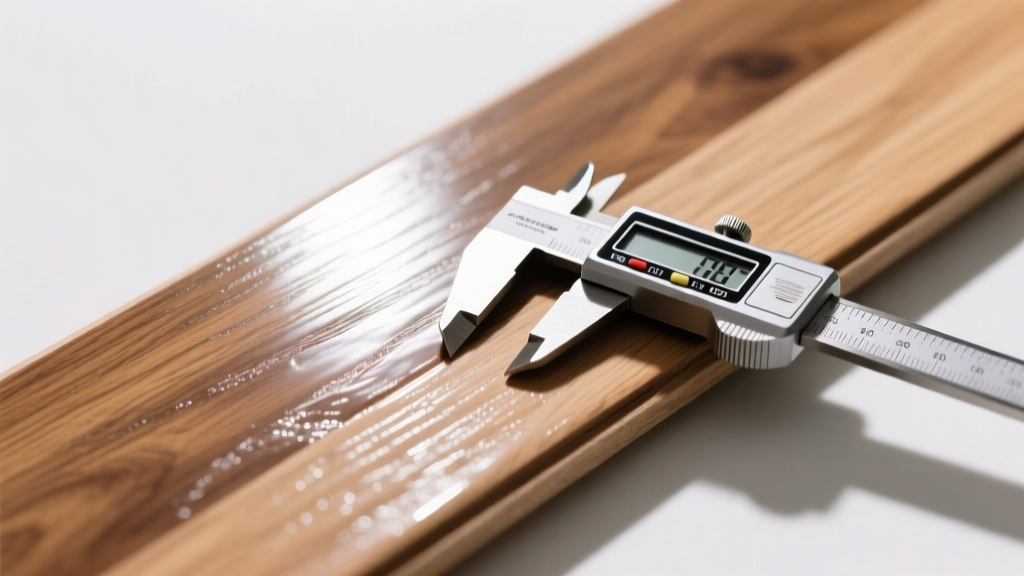
Finish Systems: Factory-Applied vs. Site-Applied Matrix
The fundamental divide in hardwood flooring finish options is between prefinished (factory-applied) and site-finished (field-applied) systems. Factory finishes utilize ultraviolet (UV) light to instantaneously cure reactive polymers, allowing for the suspension of heavy particulates like aluminum oxide. Site-applied finishes rely on oxidative or moisture-cured chemical reactions over 12 to 72 hours.
| Metric | UV-Cured Factory Finish | 2K Waterborne Site Finish | Moisture-Cured Urethane | Oil-Modified Polyurethane |
|---|---|---|---|---|
| Dry Film Thickness (Typical) | 3.0 - 5.0 mils | 2.0 - 3.0 mils (2 coats) | 1.5 - 2.5 mils | 2.0 - 3.5 mils |
| Taber Abrasion (CS-17/1000g) | 4,000 - 8,000+ cycles | 1,500 - 3,000 cycles | 2,500 - 4,000 cycles | 800 - 1,500 cycles |
| VOC Content (g/L) | Near 0 g/L (100% solids) | 100 - 250 g/L | 400 - 600 g/L | 450 - 700 g/L |
| Cure Time to Full Traffic | Immediate (post-cooling) | 24 - 72 hours | 24 - 48 hours | 7 - 30 days |
| Primary Failure Mode | Micro-chipping / Delamination | Adhesion loss between coats | Bubbling from high humidity | Ambering / Soft scratching |
UV-Cured Aluminum Oxide (Factory-Applied)
Premium prefinished hardwood utilizes UV-cured urethane acrylates embedded with aluminum oxide (Al2O3) nanoparticles. According to ASTM D4060 Standard Test Method for Abrasion Resistance, high-quality aluminum oxide finishes withstand 4,000 to 8,000 cycles on the Taber abraser before wearing through to the bare wood. The critical quality indicator here is not just the presence of aluminum oxide, but the suspension quality. In lower-tier imports, the heavy aluminum oxide particles settle at the bottom of the vats during manufacturing, resulting in a top layer that lacks abrasion resistance and a bottom layer that becomes brittle and prone to micro-cracking.
Two-Component Waterborne Polyurethane (Site-Applied)
For site-finished commercial and high-end residential projects, 2K (two-component) waterborne polyurethanes like Bona Traffic HD or Loba 2K Supra represent the top quality tier. These systems require mixing an isocyanate hardener with the polyurethane resin immediately before application. The chemical cross-linking creates a highly durable, non-ambering finish that meets strict 2026 VOC limits (typically under 150 g/L). The primary quality control variable is the pot life; once mixed, these finishes must be applied within 3 to 4 hours, after which the chemical bonds begin degrading, leading to catastrophic adhesion failure.
Moisture-Cured Urethane (Site-Applied)
Moisture-cured urethanes (MCUs) are the traditional heavy-duty commercial standard. They cure by reacting with ambient humidity, requiring an environment between 40% and 60% relative humidity. While they offer exceptional chemical and scuff resistance, their high VOC content (often exceeding 500 g/L) and the presence of toxic solvents like xylene have restricted their use. They are highly susceptible to 'bubbling' if applied when ambient humidity exceeds 65%, as the surface skins over while trapped moisture continues to off-gas.
Quality Verification: The Cross-Hatch Adhesion Test
When evaluating site-applied finish quality, specify ASTM D3359 (Cross-Hatch Tape Test). A finish that achieves a '5B' classification exhibits 0% edge detachment or square removal. If a contractor's mock-up yields a 3B or 4B rating, the subfloor moisture was likely too high, or the intercoat screening was inadequate.
Evaluating Finish Specifications: Beyond the Marketing
Manufacturers frequently use proprietary marketing terms like 'Diamond Shield' or 'Titanium Guard'. To accurately grade hardwood flooring finish options, procurement teams must demand the Technical Data Sheet (TDS) and evaluate the following three metrics:
- Percent Solids: A high-quality waterborne site finish should contain 32% to 38% solids. Lower solids (under 25%) indicate a product diluted with water, requiring more coats to achieve the minimum 2.0-mil DFT.
- Taber Wear Index: Look for the specific wear index number. A lower number indicates better abrasion resistance. Premium commercial finishes boast a wear index of 15 to 25, whereas standard residential oil-modified polys sit between 80 and 120.
- Gardner Gloss Retention: Measures how well the finish maintains its sheen under mechanical stress. A 60-degree gloss meter reading should deviate less than 5 units after 1,000 abrasion cycles.
Hardwood Finish Options by Application Grade
Matching the finish system to the architectural traffic grade prevents both under-specifying (leading to premature replacement) and over-specifying (wasting budget on unnecessary chemical resistance).
Grade 1: Light Residential (Bedrooms, Formal Living Rooms)
- Recommended Finish: Single-component waterborne polyurethane or standard factory UV urethane (without aluminum oxide).
- Target DFT: 2.0 mils.
- Cost Impact: Base material cost of $1.50 - $2.50 per square foot.
- Profile: Low VOC, easy touch-up, acceptable scratch resistance for soft-soled indoor footwear.
Grade 2: Heavy Residential & Pets (Kitchens, Hallways, Foyers)
- Recommended Finish: Factory UV-cured with aluminum oxide, or 2K waterborne site finish (e.g., Bona Traffic HD).
- Target DFT: 3.0 - 4.0 mils.
- Cost Impact: $3.00 - $5.50 per square foot (material and application).
- Profile: High micro-scratch resistance (crucial for pet claws), rapid cure times, high clarity.
Grade 3: Commercial & Institutional (Retail, Offices, Restaurants)
- Recommended Finish: Commercial-grade factory UV (6-8 coats, 4.5+ mils) or 2K waterborne commercial site finish (e.g., Basic Coatings StreetShoe NXT).
- Target DFT: 4.0 - 6.0 mils.
- Cost Impact: $6.00 - $9.00+ per square foot.
- Profile: Extreme Taber cycle ratings, high chemical resistance against commercial cleaning agents, requires professional screening and recoating every 3-5 years.
Common Failure Modes and Edge Cases
Even the highest-graded hardwood flooring finish options will fail if environmental edge cases are ignored during installation. Understanding these failure modes is critical for quality assurance.
Moisture Vapor Transmission (MVT) Delamination
Site-applied finishes act as vapor retarders. If the subfloor's MVT exceeds 3 lbs per 1,000 sq. ft. per 24 hours (measured via ASTM F1869 calcium chloride test), hydrostatic pressure will build beneath the finish, causing it to peel or 'whiten' (blush). Always require a vapor barrier or moisture-mitigating sealer before applying the finish system over concrete subfloors.
Macro-Gouging vs. Micro-Marring
A common misconception is that aluminum oxide finishes make wood 'dent-proof'. Aluminum oxide specifically mitigates micro-marring (the fine, cloudy scratches caused by grit and dust). It does nothing to prevent macro-gouging (deep dents from dropped tools or stiletto heels). If dent resistance is the primary quality metric, the finish grade matters less than the Janka hardness of the wood species itself (e.g., choosing Brazilian Cherry at 2,350 lbf over American Cherry at 950 lbf).
Photo-Oxidation and Ambering
Oil-modified polyurethanes inherently amber over time due to UV exposure and oxidation. While some clients desire this warm, vintage look, it creates severe quality control issues in spaces with area rugs; removing a rug after two years will reveal stark, un-ambered outlines. For consistent color retention, 2K waterborne finishes with aliphatic (non-yellowing) isocyanate hardeners are mandatory, maintaining a water-clear profile indefinitely.
Frequently Asked Questions on Finish Grading
Can a site-applied finish match the durability of a factory UV finish?
In terms of pure Taber abrasion cycles, premium 2K waterborne site finishes approach the durability of mid-tier factory UV finishes (achieving roughly 2,500 to 3,000 cycles). However, site-applied finishes cannot easily suspend heavy aluminum oxide particles without them settling during the drying process. Therefore, factory UV finishes maintain a distinct advantage in long-term micro-scratch resistance.
How does finish sheen affect perceived quality and maintenance?
High-gloss finishes (70+ on a 60-degree gloss meter) highlight every micro-scratch, dust particle, and subfloor undulation, making them generally unsuitable for high-traffic commercial grades. Matte (10-25 gloss) and satin (30-45 gloss) finishes diffuse light, effectively hiding micro-marring and requiring less frequent buffing. From a quality perspective, matte finishes utilize specific flattening agents that can slightly reduce the chemical resistance of the topcoat if not properly formulated.
What is the impact of 2026 VOC regulations on finish options?
The EPA guidelines on Volatile Organic Compounds and stringent state-level rules have effectively eliminated traditional solvent-based sealers in many markets. This has driven rapid innovation in high-solids, low-VOC waterborne epoxies and polyaspartic topcoats, which now offer commercial-grade chemical resistance without the hazardous off-gassing associated with legacy moisture-cured urethanes.
Written by
Sarah WhitfieldSarah Whitfield is a chartered quantity surveyor (MRICS) and construction cost analyst with 15 years of experience in material pricing, procurement strategy, and project budgeting. She earned her degree in Construction Management from the University of Reading (UK) and has worked on projects ranging from $2M custom homes to $180M mixed-use developments across North America and Europe. Sarah currently leads cost estimating for BuildMat Insight, maintaining a proprietary database of 4,000+ material price points updated quarterly. She is a frequent contributor to RSMeans cost data panels and has presented at the International Cost Engineering Council (ICEC) congress. Based in Denver, CO, Sarah is an avid trail runner and volunteer mentor for Women in Construction.
More from Sarah Whitfield
View all
Wood & Lumber
What Are the Different Types of Wood? A Builder's Guide
Compare structural softwoods, finish hardwoods, and engineered lumber. Analyze Janka ratings, MOE values, and 2026 pricing for construction.
Aug 4, 2026

Walls & Panels
Steel Framing vs Wood Framing: Corrosion and Moisture Defense
Compare steel framing vs wood framing for moisture resistance. Learn about galvanized coatings, condensation risks, and corrosion protection strategies.
Jul 21, 2026

Stone & Masonry
How to Cut Stone Veneer: Wet Saw vs Grinder Comparison
Compare the best tools for cutting stone veneer. We review wet saws, angle grinders, and chop saws to help you achieve clean, chip-free cuts.
Jul 21, 2026