What Type of Wood Are Pencils Made Of? Installation & Milling Guide
Discover what type of wood pencils are made of, plus expert milling and installation best practices for Incense Cedar and Basswood architectural trim.

The Core Question: What Type of Wood Are Pencils Made Of?
The vast majority of premium wooden pencils are manufactured from California Incense Cedar (Calocedrus decurrens). Secondary species include Basswood (Tilia americana) and Yellow Poplar (Liriodendron tulipifera). Incense Cedar is the industry standard because its straight, uniform grain lacks the silica and interlocking fibers that cause splintering, allowing it to sharpen cleanly while retaining structural integrity around the graphite core.
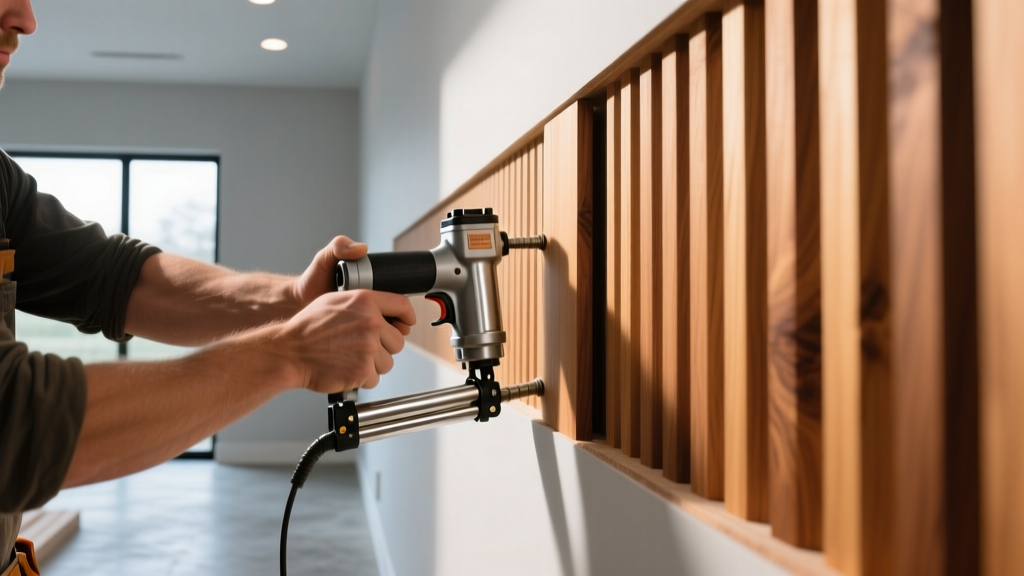
However, the highest-grade, clear-vertical-grain logs of Incense Cedar are rarely diverted to pencil manufacturing. Instead, they are heavily sought after in the architectural millwork sector. In 2026, pencil-grade Incense Cedar and Basswood are dominant materials for high-end interior trim, custom saunas, and acoustic wood slat wall systems. Working with these low-density, highly porous softwoods requires specific machining and installation protocols to prevent tear-out, resin bleed, and fastener blowout.
Material Specification Matrix: Pencil-Grade Softwoods
Understanding the physical properties of these species is critical before milling or installing them in architectural applications. Below is a comparative breakdown based on data from the Wood Database and industry testing.
| Species | Janka Hardness | Specific Gravity | Radial/Tangential Shrinkage | Primary Architectural Application |
|---|---|---|---|---|
| Incense Cedar | 470 lbf | 0.37 | 3.4% / 4.6% | Acoustic slats, sauna paneling, exterior trim |
| Basswood | 410 lbf | 0.32 | 6.6% / 9.3% | Carved millwork, interior casing, paint-grade trim |
| Yellow Poplar | 540 lbf | 0.40 | 4.6% / 5.6% | Paint-grade crown molding, window sash, cabinetry frames |
Machining Best Practices for Low-Density Softwoods
Because Incense Cedar and Basswood sit at the bottom of the Janka hardness scale, they are highly susceptible to tear-out and burning during the milling process. Standard framing or rough-carpentry tooling will destroy the surface finish required for architectural millwork.
Tooling and Feed Rate Specifications
- Blade Selection: Use 80-tooth Alternate Top Bevel (ATB) carbide blades for crosscutting and 40-tooth ATB with a negative hook angle (-2° to -5°) for ripping. High-speed steel (HSS) dulls rapidly against the microscopic resin pockets in Incense Cedar.
- Router Bits: When routing profiles for crown molding or baseboards, utilize solid carbide spiral up-cut bits. Down-cut bits will compress the soft Basswood fibers, leading to severe edge crush and splintering.
- Feed Rates: Maintain a steady, moderate feed rate. Pushing Incense Cedar too slowly through a table saw will cause the resinous wood to burn, while pushing Basswood too fast will result in dangerous kickback due to its ultra-low density and lack of bite against the blade.
Installation Protocols: Trim, Paneling, and Acoustic Slats
Installing pencil-grade softwoods requires a delicate touch. The low specific gravity of Basswood (0.32) means it holds screws and nails poorly compared to hardwoods, while Incense Cedar's dimensional stability makes it ideal for floating installations. Follow these Architectural Woodwork Institute (AWI) aligned best practices for interior integration.
Step 1: Moisture Acclimation and Substrate Prep
Before installation, the wood must be acclimated to the interior HVAC environment. Use a pinless moisture meter to verify the wood has reached an equilibrium moisture content (EMC) of 6% to 8%. Installing Basswood at 12% MC in a climate-controlled winter environment will guarantee severe tangential shrinkage and open miter joints within 60 days.
For acoustic wood slat walls (a dominant interior trend in 2026), do not install Incense Cedar slats directly to drywall. Install a 1/2-inch MDF or plywood backer board first. This provides a consistent nailing substrate and prevents the drywall paper from tearing under the withdrawal pressure of the fasteners.
Step 2: Fastening Schedules and Hardware
- Primary Fastening: Use 18-gauge, 1.5-inch brad nails for face-nailing baseboards and casings. The 18-gauge head is small enough to sink below the surface without splitting the brittle end-grain of the cedar.
- Blind Nailing: For tongue-and-groove cedar paneling, drive 16-gauge finish nails at a 45-degree angle through the tongue. Pre-drill the last 3 inches of every board to prevent the tongue from splitting, which compromises the mechanical lock.
- Micro-Pinning: When installing delicate Basswood appliqué or quarter-round, rely on 23-gauge micro-pins combined with adhesive. 18-gauge nails will blow out the side of narrow Basswood trim.
Step 3: Adhesive Selection
Because softwoods have low screw-withdrawal strength, adhesives carry the structural load in many trim applications. Avoid standard PVA (yellow) wood glues for installed trim, as they require clamping pressure you cannot achieve on a wall. Instead, use a high-tack, polyurethane-based construction adhesive (such as Loctite PL Premium 3X) for bonding MDF-backed cedar slats to substrates. For reversible, historic-restoration millwork, use liquid hide glue, which can be softened with heat and moisture if the trim ever needs to be removed.
Finishing: Managing Resin and Tannin Bleed
The aromatic oils that make Incense Cedar resistant to rot and insects are the exact same compounds that ruin water-based topcoats. If you apply a standard water-based polyurethane directly to raw Incense Cedar, the wood's resin will prevent the finish from curing, resulting in a permanently tacky surface.
The Washcoat Solution
To successfully finish pencil-grade softwoods, you must seal the resin pockets before applying your final topcoat. 1. Sand the surface to 180-grit. Do not exceed 220-grit, as burnishing the soft Basswood fibers will prevent stain penetration. 2. Apply a single washcoat of dewaxed shellac (e.g., Zinsser SealCoat). The alcohol solvent cuts through the cedar's natural oils, and the dewaxed formula ensures your subsequent topcoats will adhere. 3. Once the shellac flashes off (typically 45 minutes), lightly scuff with 320-grit sandpaper and apply your desired water-based or oil-based architectural topcoat.
By understanding the botanical origins of pencil wood and respecting its unique physical limitations, contractors and millworkers can elevate these humble softwoods into premium, high-performance architectural finishes.
Written by
Sarah WhitfieldSarah Whitfield is a chartered quantity surveyor (MRICS) and construction cost analyst with 15 years of experience in material pricing, procurement strategy, and project budgeting. She earned her degree in Construction Management from the University of Reading (UK) and has worked on projects ranging from $2M custom homes to $180M mixed-use developments across North America and Europe. Sarah currently leads cost estimating for BuildMat Insight, maintaining a proprietary database of 4,000+ material price points updated quarterly. She is a frequent contributor to RSMeans cost data panels and has presented at the International Cost Engineering Council (ICEC) congress. Based in Denver, CO, Sarah is an avid trail runner and volunteer mentor for Women in Construction.
More from Sarah Whitfield
View all
Wood & Lumber
What Are the Different Types of Wood? A Builder's Guide
Compare structural softwoods, finish hardwoods, and engineered lumber. Analyze Janka ratings, MOE values, and 2026 pricing for construction.
Aug 4, 2026

Walls & Panels
Steel Framing vs Wood Framing: Corrosion and Moisture Defense
Compare steel framing vs wood framing for moisture resistance. Learn about galvanized coatings, condensation risks, and corrosion protection strategies.
Jul 21, 2026

Stone & Masonry
How to Cut Stone Veneer: Wet Saw vs Grinder Comparison
Compare the best tools for cutting stone veneer. We review wet saws, angle grinders, and chop saws to help you achieve clean, chip-free cuts.
Jul 21, 2026