Choosing the Right Type of Wooden Fences: Treatment & Preservation
Discover which type of wooden fences lasts longest. Compare AWPA treatment grades, wood species rot resistance, and modern preservation protocols.
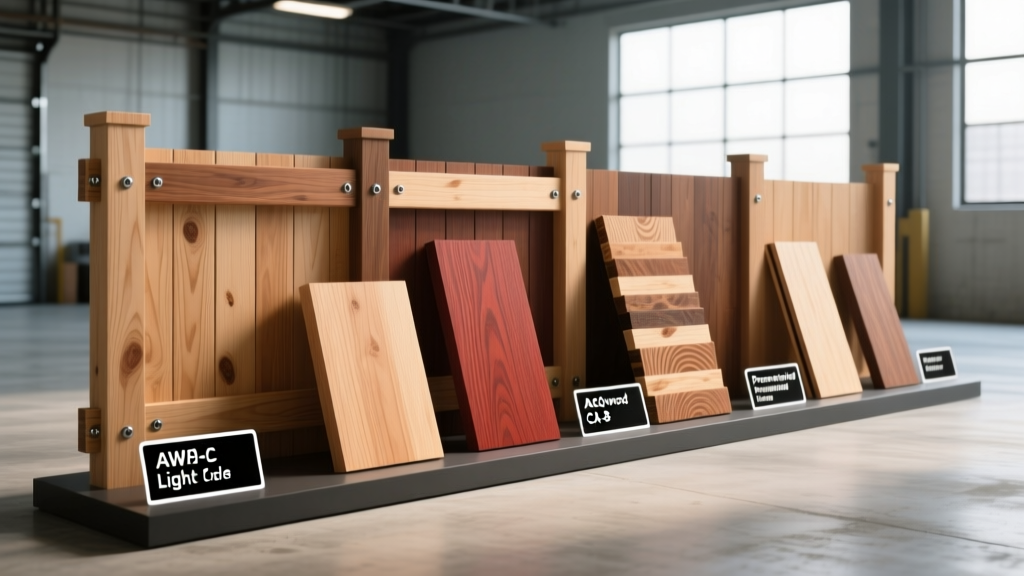
When evaluating which type of wooden fences to install on a property, the decision rarely comes down to aesthetics alone. The true differentiator between a fence that lasts five years and one that stands for twenty-five is the intersection of wood species selection, chemical treatment grades, and field preservation protocols. In 2026, with lumber prices remaining volatile and chemical regulations tightening, understanding the exact preservation requirements of your chosen material is critical for protecting your investment.
The Core Matrix: Wood Species vs. Treatment Requirements
Not all lumber reacts to moisture and biological decay in the same way. The American Wood Protection Association (AWPA) categorizes wood treatments based on exposure levels, but the baseline natural durability of the species dictates the intensity of the chemical intervention required.
| Wood Species | Natural Durability | Required Treatment for Posts | Required Treatment for Rails | Expected Lifespan |
|---|---|---|---|---|
| Southern Yellow Pine (SYP) | None (Highly Susceptible) | AWPA UC4A (Ground Contact) | AWPA UC3B (Above Ground) | 15–20 Years |
| Western Red Cedar | High (Heartwood Only) | Untreated (if 100% Heartwood) | Untreated / Clear Sealer | 20–30 Years |
| Redwood | Very High (Heartwood Only) | Untreated (if 100% Heartwood) | Untreated / Clear Sealer | 25–30 Years |
| Spruce / Whitewood | None | UC4A (Heavy Retention Needed) | UC3B (High Retention) | 10–15 Years |
| Thermally Modified Ash | Extremely High (Carbonized) | No Chemical Treatment Needed | No Chemical Treatment Needed | 25+ Years |
Decoding Pressure-Treated Pine: The AWPA Use Categories
Pressure-treated Southern Yellow Pine remains the most common type of wooden fences built in North America due to its structural strength and cost-effectiveness. However, a pervasive industry failure occurs when contractors use the wrong treatment grade for below-grade applications.
UC3B vs. UC4A: The Post Rot Epidemic
Lumber stamped with UC3B (Above Ground) contains a preservative retention level of roughly 0.15 pounds per cubic foot (pcf) of copper. This is sufficient for pickets, rails, and top caps. However, fence posts require UC4A (Ground Contact), which mandates a retention level of 0.25 pcf or higher. Using UC3B posts to save $1.50 per linear foot guarantees fungal decay at the soil line within 4 to 7 years.
The Heartwood Trap in Cedar and Redwood
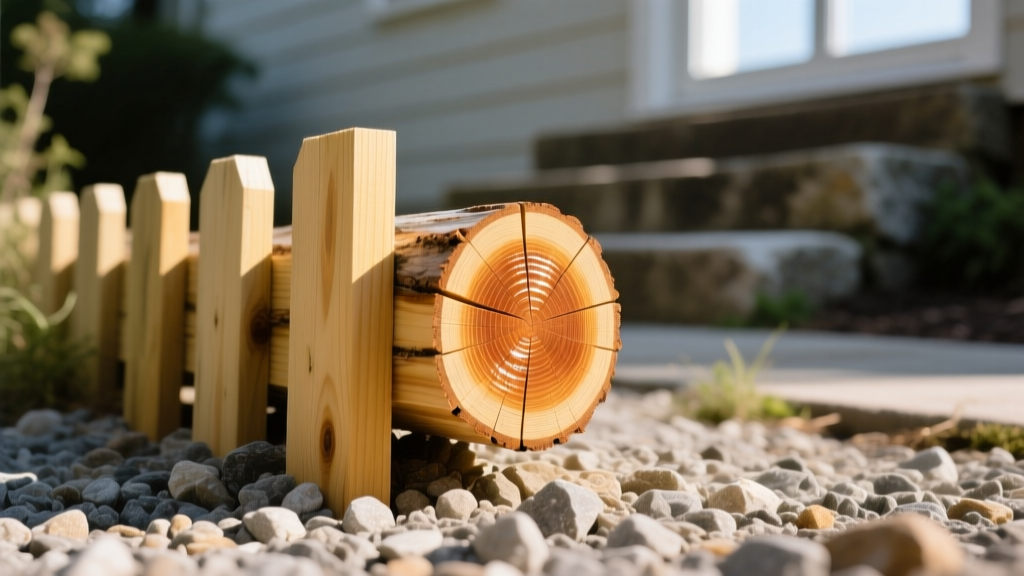
Western Red Cedar and Redwood are frequently marketed as naturally rot-resistant, leading many homeowners to purchase them untreated. According to the USDA Forest Products Laboratory, this resistance is entirely dependent on the presence of extractives found exclusively in the heartwood.
The sapwood—the lighter, outer rings of the log—has virtually zero natural decay resistance. When purchasing cedar for fencing, you must specify "All Heart" or "Clear Heart" grades. Standard "Construction Grade" or "Select Tight Knot" cedar contains up to 30% sapwood. If you use sapwood-heavy cedar for fence posts without applying a supplemental borate or copper-based preservative, those specific boards will rot just as quickly as untreated pine.
Cost vs. Longevity Analysis (Per Linear Foot)
- Standard PT Pine (UC4A Posts / UC3B Pickets): $22 – $28 / linear ft.
- Select Tight Knot Cedar (Sapwood present): $35 – $42 / linear ft. (Requires chemical end-sealing)
- All-Heart Cedar: $48 – $65 / linear ft.
- Thermally Modified Wood: $70 – $85 / linear ft.
Modern Chemical Preservatives and Fastener Corrosion
The shift away from Chromated Copper Arsenate (CCA) in the early 2000s forced the industry toward alkaline copper formulations. Understanding these chemicals is vital because they directly dictate your fastener choices, impacting the structural integrity of the fence.
- Micronized Copper Azole (MCA): Currently the dominant preservative for residential fencing. The copper is ground into micro-particles rather than dissolved. It is less corrosive to metals than older ACQ formulations but still requires hot-dipped galvanized (HDG) fasteners meeting ASTM A153 Class D standards.
- Alkaline Copper Quaternary (ACQ): Highly effective against termites and fungi, but highly corrosive to standard aluminum and electroplated zinc. If your lumber is ACQ-treated, you must use G185 zinc-coated HDG fasteners or 304/316 stainless steel. Standard electroplated nails will corrode and snap within three years.
- Borate Treatments (DOT): Excellent for termite resistance but highly water-soluble. Borate-treated wood should never be used for exterior fencing unless it is fully encapsulated or protected from rain, making it unsuitable for standard perimeter fences.
Field Preservation Protocol: Step-by-Step
Even the best type of wooden fences will fail prematurely if field-cut preservation steps are skipped. The moment you cut a pressure-treated board, you expose untreated core wood to the elements.
1. Cut: Make your dimensional cuts on-site.
2. Coat: Immediately apply a copper naphthenate end-cut preservative (e.g., Copper-Green) to all exposed end grains and drill holes. Do not use standard deck stain for this; it lacks the fungicidal copper concentration required for end-grain wicking.
3. Cure: Allow the end-cut treatment to penetrate for a minimum of 2 hours before setting the post into the ground or attaching the rail.
Troubleshooting Common Fence Failure Modes
When a fence degrades, the failure is rarely random. Use this diagnostic framework to identify and correct preservation breakdowns.
Symptom: Black Staining Radiating from Fastener Heads
Cause: Galvanic corrosion or tannin bleed. If using cedar, the natural tannic acid is reacting with zinc or iron in standard screws. If using PT pine, the copper in the MCA/ACQ treatment is corroding electroplated fasteners.
Fix: For cedar, switch to 305 stainless steel or polymer-coated structural screws. For PT pine, verify your fasteners are hot-dipped galvanized (HDG) or ceramic-coated specifically rated for ACQ/MCA lumber.
Symptom: Posts Rotting Exactly at the Concrete Collar
Cause: Capillary action and moisture trapping. When concrete is poured flush with or above the soil line, it creates a cup that holds water against the wood. The concrete also wicks ground moisture directly into the end grain of the post.
Fix: Do not encase the post entirely in concrete. Dig the hole 6 inches deeper than the frost line, fill the bottom 6 inches with washed gravel for drainage, set the post, and pour concrete only up to 2 inches below grade. Slope the top of the concrete collar away from the post to shed surface water.
Symptom: Severe Checking and Splitting on Rails
Cause: Rapid moisture loss. Pressure-treated lumber is often installed while still saturated with treatment chemicals. When exposed to direct summer sun, the surface dries and shrinks faster than the wet core, causing deep radial splits.
Fix: For PT pine, wait 30 to 90 days after installation before applying a penetrating oil-based water repellent (e.g., TWP or Penofin). Do not use film-forming acrylic sealers, as they will trap internal moisture and peel within one season. For cedar, apply a UV-inhibiting clear sealer immediately upon installation to slow the drying process.
Selecting the correct type of wooden fences requires looking past the initial material cost and evaluating the total lifecycle expense. By matching the AWPA treatment grade to the specific structural component, specifying heartwood for natural species, and enforcing strict field-cut preservation protocols, you can extend the functional lifespan of a wood fence by a decade or more.
Written by
Sarah WhitfieldSarah Whitfield is a chartered quantity surveyor (MRICS) and construction cost analyst with 15 years of experience in material pricing, procurement strategy, and project budgeting. She earned her degree in Construction Management from the University of Reading (UK) and has worked on projects ranging from $2M custom homes to $180M mixed-use developments across North America and Europe. Sarah currently leads cost estimating for BuildMat Insight, maintaining a proprietary database of 4,000+ material price points updated quarterly. She is a frequent contributor to RSMeans cost data panels and has presented at the International Cost Engineering Council (ICEC) congress. Based in Denver, CO, Sarah is an avid trail runner and volunteer mentor for Women in Construction.
More from Sarah Whitfield
View all
Wood & Lumber
What Are the Different Types of Wood? A Builder's Guide
Compare structural softwoods, finish hardwoods, and engineered lumber. Analyze Janka ratings, MOE values, and 2026 pricing for construction.
Aug 4, 2026

Walls & Panels
Steel Framing vs Wood Framing: Corrosion and Moisture Defense
Compare steel framing vs wood framing for moisture resistance. Learn about galvanized coatings, condensation risks, and corrosion protection strategies.
Jul 21, 2026

Stone & Masonry
How to Cut Stone Veneer: Wet Saw vs Grinder Comparison
Compare the best tools for cutting stone veneer. We review wet saws, angle grinders, and chop saws to help you achieve clean, chip-free cuts.
Jul 21, 2026