How Preservative Treatments Affect Different Timber Types of Wood
Discover how preservative treatments interact with different timber types of wood, including retention levels, species treatability, and fastener specs.

The Chemistry of Wood Preservation: Why Species Matters
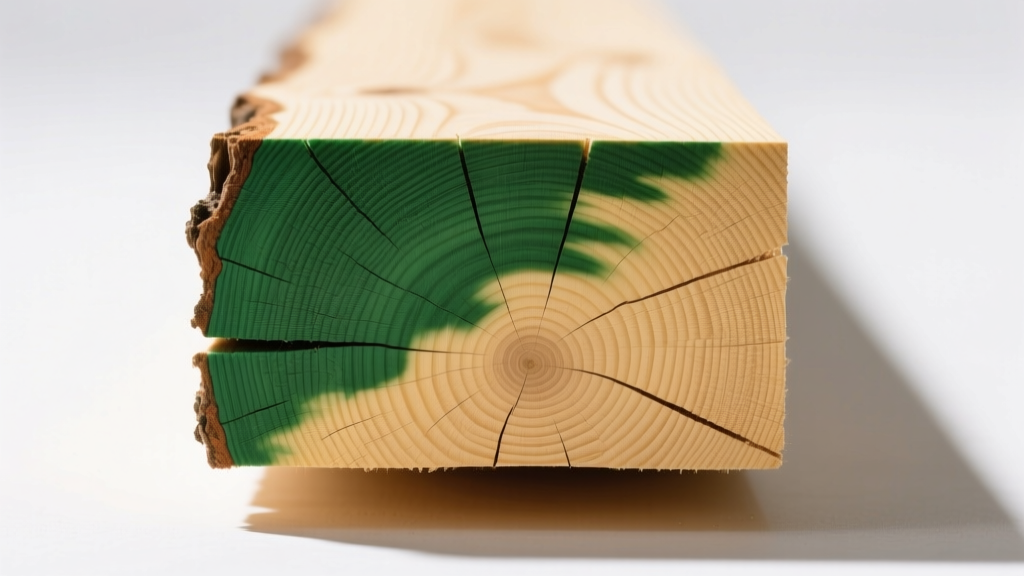
Pressure treatment is not a one-size-fits-all process. The cellular anatomy of different timber types of wood dictates how deeply and uniformly preservative chemicals can penetrate. Wood is essentially a bundle of microscopic straws (tracheids and vessels). In living trees, these straws transport water; in pressure treatment, they transport preservative solutions. However, the presence of tyloses, extractives, and aspirated pits in certain species can block fluid flow, resulting in shallow treatment shells that leave the core vulnerable to decay.
Understanding the treatability of specific timber types of wood is critical for structural engineers, architects, and contractors. Specifying a highly refractory species for a ground-contact application without proper incising or species-specific chemical formulations will lead to premature structural failure, regardless of the treatment label.
Treatability Classifications for Common Timber Types of Wood
The American Wood Protection Association (AWPA) and the USDA Forest Products Laboratory classify species based on their ease of penetration. The following matrix outlines how common structural timbers respond to standard aqueous preservative treatments.
| Timber Species | Sapwood Treatability | Heartwood Treatability | Incising Required? | Primary Structural Use |
|---|---|---|---|---|
| Southern Yellow Pine (SYP) | Very Easy | Moderate to Easy | No | Residential framing, decking, pilings |
| Douglas Fir | Moderate | Refractory (Very Difficult) | Yes (Deep) | Heavy timber, glulam, marine structures |
| Western Red Cedar | Moderate | Refractory | Yes | Exterior siding, shakes (often untreated) |
| Hem-Fir | Moderate | Refractory | Yes | General framing, agricultural buildings |
| Ponderosa Pine | Easy | Difficult | No (for sapwood) | Interior framing, millwork |
The Heartwood vs. Sapwood Penetration Challenge
Sapwood is generally highly permeable because the pits (valves between cells) are open. Heartwood, however, undergoes a physiological change where pits aspirate (seal shut) and extractives accumulate to protect the living tree from pathogens. When treating Douglas Fir, for example, the sapwood may achieve full penetration, while the heartwood remains completely untreated. To mitigate this, refractory timbers must be incised—passed through rollers with teeth that puncture the wood 3/8 to 1/2 inch deep, creating artificial pathways for the preservative to bypass the aspirated heartwood pits.
Preservative Chemicals and AWPA Retention Levels
The efficacy of treated timber types of wood is measured by retention levels, expressed in pounds of preservative per cubic foot of wood (pcf or lb/ft³). The required retention scales with the biological hazard of the environment.
- Alkaline Copper Quaternary (ACQ): Uses copper as the primary fungicide and quaternary ammonium as the insecticide. Retention ranges from 0.25 pcf (Above Ground) to 0.60 pcf (Ground Contact). Highly corrosive to standard steel and aluminum.
- Copper Azole (CA-C): Similar to ACQ but uses tebuconazole as the co-biocide. Slightly less corrosive than ACQ. Retention ranges from 0.25 pcf to 0.31 pcf for most ground-contact applications.
- Micronized Copper Azole (MCA): Suspends microscopic copper particles rather than dissolving them in an amine solvent. Results in a lighter wood color and reduced corrosivity compared to ACQ.
- Borates (DOT - Disodium Octaborate Tetrahydrate): Excellent for termite and fungal protection but highly water-soluble. Retention is typically 0.25 pcf. Strictly limited to protected, above-ground applications (UC1 and UC2) as it will leach out if exposed to rain.
Environment-Specific Treatment Selection Matrix
Matching the timber species and chemical retention to the correct AWPA Use Category prevents both over-specifying (wasting budget) and under-specifying (risking rot).
| AWPA Use Category | Exposure Environment | Minimum CA-C Retention (pcf) | Recommended Timber Types |
|---|---|---|---|
| UC3B | Above Ground, coated, rapid water runoff | 0.25 | SYP, Hem-Fir, Ponderosa Pine |
| UC4A | Ground Contact, general use (deck posts, fence lines) | 0.31 | SYP, Incised Douglas Fir |
| UC4B | Ground Contact, heavy duty (critical structural components) | 0.40 | SYP, Incised Douglas Fir |
| UC4C | Ground Contact, extreme duty (high decay zones, freshwater pilings) | 0.60 | SYP (requires deep sapwood) |
| UC5A | Marine Use (saltwater, high borer activity) | 0.60 (plus Creosote overlay) | Douglas Fir, SYP (often dual-treated) |
Real-World Failure Modes and Edge Cases
Even when the correct timber types of wood and preservatives are specified, field execution errors lead to localized failures. Be aware of these specific edge cases:
When treated lumber is cut on-site, the untreated core is exposed. End-grain acts like a bundle of open straws, wicking moisture directly into the untreated heartwood. Always seal field cuts, drill holes, and notches with a brush-on copper naphthenate solution (minimum 2% copper) or an AWPA-approved wax emulsion end-sealer.
- Checking and Splitting: As treated SYP dries, it develops surface checks. If a check penetrates past the treated shell into the untreated heartwood in a ground-contact application, fungi will colonize the core. Specify 'KDAT' (Kiln-Dried After Treatment) lumber for high-visibility or critical structural applications to minimize post-installation checking.
- Galvanic Corrosion in Wet Environments: The copper in ACQ and CA-C treatments acts as a cathode. When paired with an anodic metal (like standard zinc galvanizing or aluminum) in the presence of moisture, a galvanic cell forms, rapidly destroying the fastener.
- Surface Residue and Leaching: Newly treated wood may have surface chemical residue. Do not use treated timber for beehives, silage silos, or direct-contact vegetable garden beds unless specifically lined with an impermeable membrane (e.g., 6-mil polyethylene).
Fastener Compatibility and Corrosion Rates
The shift from Chromated Copper Arsenate (CCA) to copper-heavy alternatives like ACQ and MCA drastically increased the corrosivity of treated timber types of wood. According to data published by the USDA Forest Products Laboratory, the corrosion rate of bare steel in ACQ-treated wood can be up to 20 times higher than in untreated wood.
| Preservative Chemical | Minimum Fastener Requirement | Acceptable Connectors/Hardware | Metals to STRICTLY Avoid |
|---|---|---|---|
| ACQ (Alkaline Copper Quaternary) | Hot-Dipped Galvanized (ASTM A153 Class D) or Stainless Steel | G185 Zinc coating minimum; Type 304 SS | Aluminum, Electroplated Zinc, Copper |
| CA-C / MCA (Copper Azole) | Hot-Dipped Galvanized (ASTM A153 Class C) or Stainless Steel | G90 or G185 Zinc; Type 304 SS | Aluminum (direct contact) |
| Borates (DOT) | Standard Zinc-Galvanized or Carbon Steel | Standard joist hangers and nails | None (Borates are not corrosive to metals) |
| Creosote | Hot-Dipped Galvanized or Stainless Steel | Heavy-duty marine hardware | Uncoated Carbon Steel (due to moisture) |
For structural connections in ACQ or CA-C treated timber, always specify Type 304 stainless steel for interior or protected exterior applications, and upgrade to Type 316 stainless steel for coastal, marine, or high-humidity environments where chloride ions are present. Never use aluminum flashing or aluminum joist hangers in direct contact with copper-based preservatives; the resulting galvanic reaction will compromise the aluminum within a single season.
Written by
Sarah WhitfieldSarah Whitfield is a chartered quantity surveyor (MRICS) and construction cost analyst with 15 years of experience in material pricing, procurement strategy, and project budgeting. She earned her degree in Construction Management from the University of Reading (UK) and has worked on projects ranging from $2M custom homes to $180M mixed-use developments across North America and Europe. Sarah currently leads cost estimating for BuildMat Insight, maintaining a proprietary database of 4,000+ material price points updated quarterly. She is a frequent contributor to RSMeans cost data panels and has presented at the International Cost Engineering Council (ICEC) congress. Based in Denver, CO, Sarah is an avid trail runner and volunteer mentor for Women in Construction.
More from Sarah Whitfield
View all
Wood & Lumber
What Are the Different Types of Wood? A Builder's Guide
Compare structural softwoods, finish hardwoods, and engineered lumber. Analyze Janka ratings, MOE values, and 2026 pricing for construction.
Aug 4, 2026

Walls & Panels
Steel Framing vs Wood Framing: Corrosion and Moisture Defense
Compare steel framing vs wood framing for moisture resistance. Learn about galvanized coatings, condensation risks, and corrosion protection strategies.
Jul 21, 2026

Stone & Masonry
How to Cut Stone Veneer: Wet Saw vs Grinder Comparison
Compare the best tools for cutting stone veneer. We review wet saws, angle grinders, and chop saws to help you achieve clean, chip-free cuts.
Jul 21, 2026