What Type of Wood Was the Cross Made Of? A Timber Grade Analysis
Discover what type of wood the cross was made of through a modern timber grading lens, analyzing the structural properties of historical species.
The Historical and Botanical Claims of the True Cross
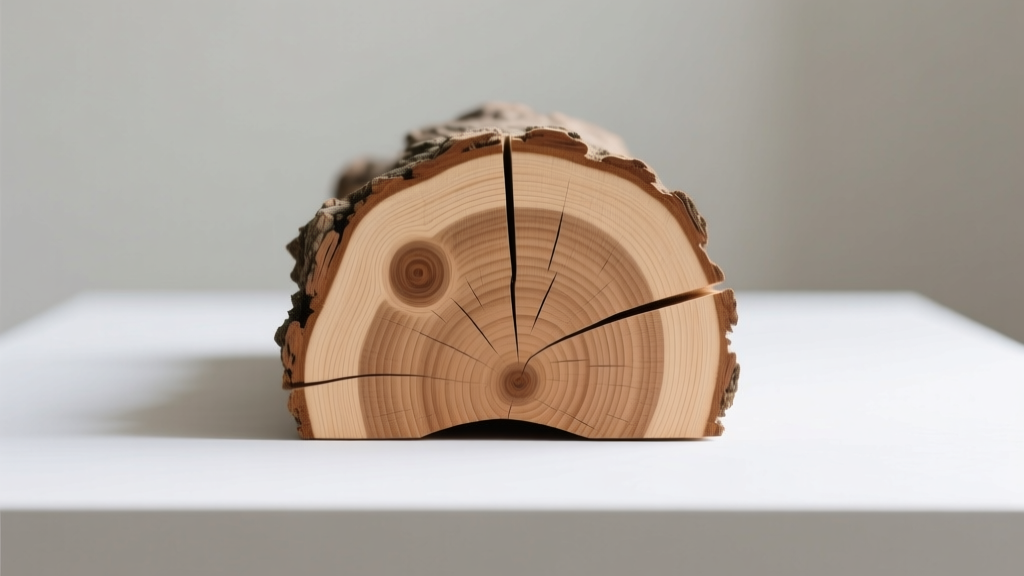
The question of what type of wood was the cross made of has fascinated historians, theologians, and botanists for centuries. While theological traditions offer varying accounts, modern dendrochronology and wood science allow us to evaluate the historical candidates through the rigorous lens of structural timber grading. For architects, timber framers, and specialty builders designing ecclesiastical or memorial structures, understanding the mechanical properties and modern grading equivalents of these ancient species is essential for material specification.
Grading the Candidates: Structural and Durability Profiles
To answer what type of wood was the cross made of, we must subject the primary historical candidates to modern lumber grading standards, evaluating their specific gravity, Janka hardness, and natural decay resistance as outlined by the USDA Forest Products Laboratory Wood Handbook.
1. Lebanese Cedar (Cedrus libani)
Highly prized in antiquity for temple construction, Lebanese Cedar is a low-density softwood. With a Janka hardness of roughly 820 lbf and a specific gravity (SG) of 0.52, it is lightweight and easy to hew with primitive tools. Its heartwood contains natural extractives that provide high decay resistance. Under modern Western Wood Products Association (WWPA) grading rules, clear, straight-grained Cedar would easily achieve a Select Structural or No. 1 grade, provided the slope of grain (SOG) does not exceed 1:12. However, its low bending strength (MOR of ~10,700 psi) makes it less ideal for heavy, unsupported horizontal spans compared to modern Douglas Fir.
2. Olive Wood (Olea europaea)
Frequently cited in religious lore, Olive wood is exceptionally dense and hard. According to the Wood Database, Olive boasts a Janka hardness of 2,710 lbf and an SG of 0.92. While its compressive strength is immense, it is structurally unsuitable for large-scale timber framing. Olive trees grow short, heavily branched, and twisted. The internal stresses within the log cause severe checking, warping, and honeycomb shakes during seasoning. Under National Hardwood Lumber Association (NHLA) rules, Olive is graded for small-dimension turning and craft stock (FAS or Select), but it would fail modern visual stress grading for structural beams due to unavoidable slope of grain and knot clusters.
3. Mediterranean Cypress (Cupressus sempervirens)
Cypress is a tall, columnar softwood with a Janka hardness of 1,300 lbf. It machines well and exhibits excellent dimensional stability once kiln-dried. Its heartwood is highly resistant to fungal decay and insect attack, making it a premium choice for exterior applications. In a modern grading context, structural Cypress timbers are typically graded as No. 1 Beams and Stringers. The primary limitation in antiquity was the difficulty of felling and transporting these dense, heavy logs without modern mechanical assistance.
4. Aleppo Pine (Pinus halepensis)
From a purely pragmatic and historical perspective, Aleppo Pine (or a similar regional pine species) is the most likely answer to what type of wood was the cross made of. Pine was abundant in the Levant, grew tall and straight, and was relatively soft (Janka ~710 lbf), allowing for rapid processing by Roman soldiers. Structurally, it aligns closely with modern Spruce-Pine-Fir (SPF) framing lumber. A straight-grained Aleppo Pine timber with minimal wane would grade as a No. 2 Structural Light Framing or Standard & Better timber under modern guidelines, offering an adequate strength-to-weight ratio for the intended, albeit grim, load-bearing requirements.
Comparative Matrix of Historical Timber Species
| Wood Species | Janka Hardness (lbf) | Specific Gravity | Decay Resistance | Modern Grade Equivalent |
|---|---|---|---|---|
| Lebanese Cedar | 820 | 0.52 | High | Select Structural / No. 1 |
| Olive Wood | 2,710 | 0.92 | Moderate | NHLA FAS (Non-Structural) |
| Mediterranean Cypress | 1,300 | 0.61 | High | No. 1 Beams & Stringers |
| Aleppo Pine | 710 | 0.48 | Low to Moderate | No. 2 SPF / Standard |
Modern Lumber Grading Standards Applied to Antiquity
If a first-century rough-hewn timber were to be evaluated by a certified lumber grader today, it would likely fail to achieve a premium structural grade due to the processing methods of the era. Modern visual stress grading relies heavily on identifying strength-reducing characteristics:
- Wane and Bark Pockets: Roman timbers were often hewn with adzes, leaving significant wane (missing wood on the edges). Modern grading restricts wane to 1/4 to 1/3 of the cross-section depending on the grade.
- Knot Size and Placement: The stipes (upright post) required a straight, relatively clear grain to prevent snapping under lateral stress. A knot cluster in the middle third of the span would downgrade the timber to Utility or Economy grades.
- Moisture Content (MC):strong> Antiquity relied on green or air-dried timber. Today, structural timbers specified for indoor or precision framing must be kiln-dried to 19% MC or less (S-DRY) to prevent post-installation shrinkage and joint loosening.
"When specifying historical wood species for modern ecclesiastical timber framing, builders must prioritize the heartwood content. Sapwood in species like Cedar and Cypress offers virtually zero decay resistance and is highly susceptible to powderpost beetle infestation. Ensure your supplier grades for 'All Heart' (FOHC) when sourcing premium historical equivalents."
— Timber Framers Guild Technical Advisory
Sourcing and Specifying These Species in 2026
For specialty contractors and architects looking to incorporate these symbolic species into modern builds (such as church altars, memorial pavilions, or heritage restorations), procurement requires navigating strict environmental regulations and specialized lumber markets.
Procurement and Cost Guide
- Lebanese Cedar: As of 2026, Cedrus libani is heavily protected, and export of old-growth timber from Lebanon is strictly prohibited. Builders must source plantation-grown Lebanese Cedar from specialty importers in Europe or North America. Expect to pay a premium of $25 to $40 per board foot for clear, kiln-dried 8/4 stock.
- Olive Wood: Sold almost exclusively by the turning block or small flitch. Structural beams are virtually non-existent. Pricing for imported Mediterranean Olive burls and short boards averages $30 to $55 per board foot. It is best specified for inlay work, altar facing, or decorative millwork rather than structural framing.
- Mediterranean Cypress: Available through specialized European timber importers. Often used for exterior cladding, decking, and high-end millwork. Pricing hovers around $12 to $18 per board foot for structural-grade timbers.
- Aleppo Pine: Rarely exported as premium lumber outside the Mediterranean basin. For North American projects requiring a similar aesthetic and structural profile, specifying high-grade Ponderosa Pine or Southern Yellow Pine (SYP) is the most cost-effective and structurally sound alternative, priced at standard framing rates ($2.50 - $4.00 per linear foot for dimensional lumber).
Frequently Asked Questions
Was the cross made of Dogwood?
No. The legend that the cross was made of Dogwood is a 20th-century North American myth. Cornus florida is native to the eastern United States and does not grow in the Middle East. Furthermore, Dogwood is a small, understory tree that cannot produce the straight, load-bearing timber required for structural framing.
How much did a typical Roman execution timber weigh?
Based on the specific gravity of regional Pine and Cedar, a standard stipes (upright post) measuring roughly 9 feet tall and 6x6 inches in cross-section would weigh between 85 and 110 pounds when air-dried. The patibulum (crossbar) would weigh roughly 40 to 60 pounds. These weights align with the physical capabilities of manual transport and erection using primitive block-and-tackle or rope systems.
Can I use modern SPF lumber to replicate historical timber framing?
Yes, for structural replication. Modern Spruce-Pine-Fir (SPF) No. 2 or better shares nearly identical bending and compressive strength properties to the Aleppo Pine used in antiquity. To achieve the historical aesthetic, specify rough-sawn (S2S or S1S2E) timbers and apply a wire-brush finish to simulate adze marks and centuries of weathering.
Written by
Elena RodriguezElena Rodriguez is a civil engineer and technical writer specializing in concrete technology, masonry systems, and ASTM/ACI compliance. She earned her B.S. in Civil Engineering from Texas A&M University and spent a decade at a materials testing laboratory, performing over 2,000 concrete compressive strength tests and masonry prism evaluations. Elena is an ACI-certified Field Testing Technician (Grade I) and a member of ASTM Committee C12 on Natural Building Stone. She currently consults on forensic engineering cases involving concrete failures and moisture intrusion. Based in San Antonio, TX, Elena is a proud member of the Society of Women Engineers (SWE) and coaches her daughter's FIRST Robotics team.
More from Elena Rodriguez
View all
Walls & Panels
Cost Analysis: Light Gauge Steel Framing Advantages and Disadvantages
Evaluate light gauge steel framing advantages and disadvantages through a strict cost analysis lens, comparing material, labor, and lifecycle expenses.
Aug 4, 2026

Walls & Panels
Gypsum Board Types: Exact Specifications, Thickness & Dimensions
Compare standard, Type X, and moisture-resistant gypsum board types. Get exact specifications, thicknesses, dimensions, and ASTM standards for your project.
Aug 4, 2026

Fire Resistance
Best Fire-Resistant Outdoor Decking Materials: 2026 Buyer Guide
Discover the best fire-resistant outdoor decking materials for 2026. Compare Class A PVC, aluminum, and hardwood options for WUI compliance and safety.
Aug 4, 2026