Types of Chicken of the Woods: Timber Decay Costs & Value
Analyze the types of chicken of the woods fungus, their impact on structural timber, brown rot decay costs, and the economic value of salvage milling.

The Economic Duality of Laetiporus: Pathogen and Commodity
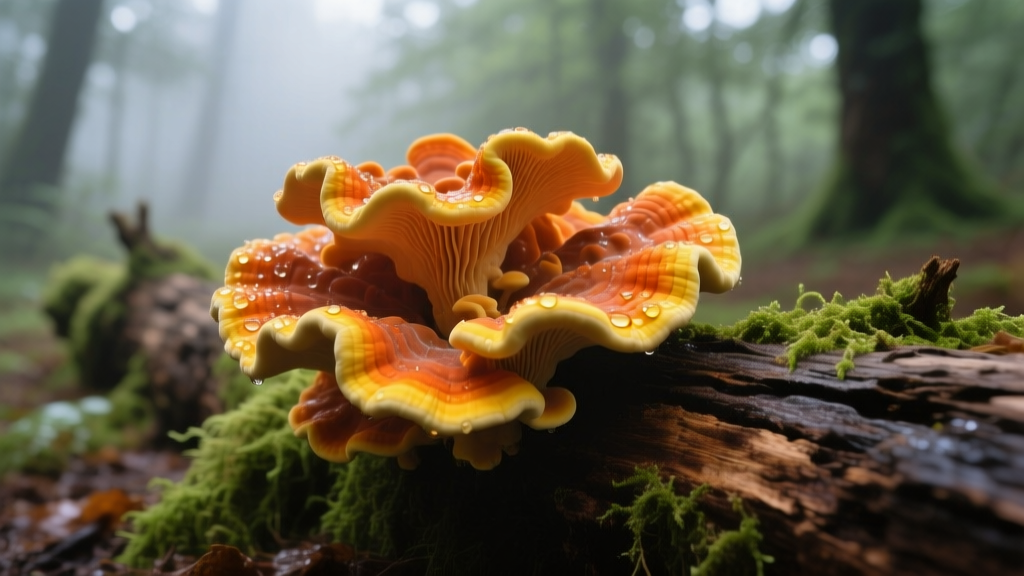
In the forestry, arboriculture, and specialty lumber markets, few organisms present as complex an economic paradox as the Laetiporus genus. Commonly known as chicken of the woods, this bracket fungus is highly prized by foragers and chefs for its meaty texture and culinary value. However, from a timber and structural wood perspective, it is a destructive agent of brown cubical rot. When a landowner or arborist discovers these vibrant orange and yellow shelves protruding from a trunk, it signals advanced internal degradation. Understanding the specific types of chicken of the woods is not merely a botanical exercise; it is a critical step in assessing structural liability, calculating tree removal costs, and determining whether an infected log holds salvage milling value or belongs in the chipper.
Unlike white rot fungi that break down both lignin and cellulose, Laetiporus species primarily consume cellulose and hemicellulose. This leaves the lignin intact, resulting in a brittle, crumbly wood structure that fractures into distinct cubic patterns—a phenomenon known as cubical checking. By the time the fruiting bodies (conks) appear on the exterior bark, the mycelium has typically been compromising the heartwood for five to ten years.
Identifying the Types of Chicken of the Woods
Accurate species identification dictates both the safety of foraging and the expected pattern of wood decay. The genus contains several distinct species, each with specific host preferences and structural implications.
| Species | Common Name | Primary Host Trees | Pore Surface Color | Decay Location | Lumber Impact & Forage Safety |
|---|---|---|---|---|---|
| L. sulphureus | Sulphur Shelf | Hardwoods (Oak, Cherry, Willow) | Bright Yellow | Heartwood (Trunk & Roots) | Severe structural loss. Highly prized edible when young. |
| L. cincinnatus | White-Pored Chicken | Hardwoods (Predominantly Oak) | White to Cream | Root & Butt Rot | Causes base failure. Excellent edible, milder flavor. |
| L. conifericola | Conifer Sulphur Shelf | Conifers (Hemlock, Fir, Pine) | Pale Yellow | Heartwood (Trunk) | Rapid conifer degradation. Toxic (causes severe GI distress). |
| L. gilbertsonii | Eucalyptus Shelf | Eucalyptus | Yellow | Heartwood (Trunk) | Hollows out eucalyptus rapidly. Toxic (causes GI distress). |
Quantifying the Cost of Brown Rot in Urban Timber
When Laetiporus sulphureus or L. cincinnatus is identified on an urban shade tree, arborists immediately classify the tree as a high-risk hazard. The presence of the conk indicates that the internal cross-sectional area of sound wood has been reduced by at least 30% to 50%, severely compromising the tree's ability to withstand wind loads.
Arborist Mitigation and Removal Costs
Because the wood is actively decaying and brittle, standard climbing techniques are often unsafe. The removal of an infected tree requires specialized rigging or crane assistance. As of 2026, the cost breakdown for removing a 30-inch DBH (Diameter at Breast Height) oak tree exhibiting advanced Laetiporus decay includes:
- Crane Mobilization and Operation: $1,200 - $1,800 per day. Crane access is mandatory when the trunk's structural integrity cannot support the dynamic loads of a climber.
- Technical Felling and Rigging: $1,500 - $2,500. Arborists must section the tree carefully to prevent the brittle, punky wood from shattering and causing collateral damage.
- Stump Grinding and Root Zone Treatment: $400 - $800. Because L. cincinnatus specifically targets the root flare, the stump and primary lateral roots must be thoroughly ground to prevent the mycelium from spreading to adjacent healthy trees via root grafts.
Total removal costs for a large, infected urban hardwood routinely range from $3,100 to $5,100. Ignoring the infection poses a massive liability; if a hollowed-out oak fails and damages a structure, property damage claims easily exceed $50,000, and negligence liabilities can be pursued if the fungus was previously documented and ignored.
Salvage Milling: Calculating Board Foot Loss and Spalt Premiums
Once the tree is felled, the economic analysis shifts from liability mitigation to resource recovery. Can you mill wood infected with chicken of the woods? The answer depends entirely on the stage of decay and the target market for the lumber.
The Reality of Board Foot Loss
According to The Wood Database, brown rot fungi can reduce the specific gravity and bending strength of wood by up to 80% before any visual exterior signs appear. If large Laetiporus shelves are present, the inner heartwood is likely entirely compromised. In a 30-inch oak log, the inner 12 to 16 inches may be reduced to a dry, crumbly, cubically fractured mass that is completely useless for structural framing or standard furniture grades. This represents a 40% to 60% loss in usable board feet compared to a clear log.
The 2026 Specialty Lumber Market: The 'Spalt' Premium
However, the transition zone between the sound sapwood and the decaying heartwood often features 'spalting'—intricate, dark demarcation lines created by the fungal mycelium fighting for territory. In the 2026 specialty lumber market, spalted hardwood is highly sought after by woodturners, luthiers, and custom furniture makers.
- Standard Rough-Sawn White Oak: $3.50 - $5.50 per board foot (BF).
- Spalted Oak (Turning Blanks and Live-Edge Slabs): $9.00 - $16.00 per BF, depending on the density of the spalting lines and the structural soundness of the surrounding wood.
To capture this premium, the log must be milled immediately after felling. Laetiporus continues to consume the wood post-harvest. If the log is left unstickered or unsealed, the moisture content fluctuations will accelerate the decay, turning profitable spalt into worthless punk within a single summer season. Portable sawmill operators typically charge $0.35 to $0.55 per BF to mill these logs, but the high value of the resulting spalted slabs easily justifies the milling cost.
Landowner Decision Matrix: Remove, Mill, or Forage?
When faced with an infected tree, landowners and property managers should follow this sequential decision framework to maximize value and minimize risk:
- Assess Structural Liability: Is the tree within striking distance of a home, road, or utility line? If yes, immediate hazard removal is required. The cost of removal is a non-negotiable insurance and safety expense.
- Identify the Fungal Species: Check the pore surface underneath the bracket. If it is white, you are likely dealing with L. cincinnatus (root rot), meaning the base is severely compromised and the tree could uproot. If yellow, it is likely L. sulphureus (trunk rot).
- Evaluate Milling Access: Can a portable sawmill or log truck access the felled tree? If the tree is in a fenced backyard with no crane or winch access, the log cannot be economically extracted for milling and must be chipped on-site.
- Harvest the Fruit (If Safe): If the tree is on conifers or eucalyptus, do not harvest the mushrooms. If it is on a hardwood and the brackets are young, tender, and exuding a watery sap, they can be harvested for culinary use or sold to local foragers and specialty restaurants for $15 to $30 per pound.
Frequently Asked Questions
Does chicken of the woods kill the tree immediately?
No. Laetiporus is a slow-acting heart rot fungus. A tree can continue to produce leaves and grow outward for a decade or more while the inner core is systematically hollowed out. The tree eventually dies not from the fungus directly, but from structural failure (windthrow or trunk snap) or secondary infections that exploit the compromised tissue.
Can I treat the wood to stop the decay and save the tree?
There are no chemical fungicides or trunk injections approved or effective for curing advanced heart rot in mature landscape trees. As noted by Penn State Extension, once the fruiting bodies appear, the internal damage is extensive. The only arboricultural intervention is to reduce the tree's sail area through crown thinning or to remove the tree entirely if it poses a target risk.
Is lumber from a chicken of the woods infected tree safe for indoor furniture?
Yes, provided the wood has been properly kiln-dried to a moisture content of 6% to 8%. The kiln drying process (reaching internal temperatures of 140°F to 160°F) completely kills the Laetiporus mycelium and halts the decay process. The resulting spalted wood is entirely safe, stable, and inert for indoor woodworking applications.
Written by
Sarah WhitfieldSarah Whitfield is a chartered quantity surveyor (MRICS) and construction cost analyst with 15 years of experience in material pricing, procurement strategy, and project budgeting. She earned her degree in Construction Management from the University of Reading (UK) and has worked on projects ranging from $2M custom homes to $180M mixed-use developments across North America and Europe. Sarah currently leads cost estimating for BuildMat Insight, maintaining a proprietary database of 4,000+ material price points updated quarterly. She is a frequent contributor to RSMeans cost data panels and has presented at the International Cost Engineering Council (ICEC) congress. Based in Denver, CO, Sarah is an avid trail runner and volunteer mentor for Women in Construction.
More from Sarah Whitfield
View all
Wood & Lumber
What Are the Different Types of Wood? A Builder's Guide
Compare structural softwoods, finish hardwoods, and engineered lumber. Analyze Janka ratings, MOE values, and 2026 pricing for construction.
Aug 4, 2026

Walls & Panels
Steel Framing vs Wood Framing: Corrosion and Moisture Defense
Compare steel framing vs wood framing for moisture resistance. Learn about galvanized coatings, condensation risks, and corrosion protection strategies.
Jul 21, 2026

Stone & Masonry
How to Cut Stone Veneer: Wet Saw vs Grinder Comparison
Compare the best tools for cutting stone veneer. We review wet saws, angle grinders, and chop saws to help you achieve clean, chip-free cuts.
Jul 21, 2026