Top Types of Wood for Walls: Complete Species Guide
Explore the best types of wood for walls, including SPF framing, cedar siding, and oak cladding. Compare species, costs, and structural grades.

The Three Pillars of Wood Wall Systems
Selecting the correct wood species for wall construction requires separating structural framing from aesthetic cladding and weather-resistant siding. A material that excels in load-bearing capacity may fail catastrophically when exposed to exterior UV radiation and moisture. This guide breaks down the exact species, grading standards, and material properties required for structural framing, interior paneling, and exterior wall cladding in 2026.
- Structural Framing: Spruce-Pine-Fir (SPF), Douglas Fir-Larch, Southern Yellow Pine (SYP).
- Interior Cladding: White Oak, Eastern White Pine, Walnut (requires 6-8% moisture content).
- Exterior Siding: Western Red Cedar, Redwood, Acetylated Wood (requires 12-15% moisture content).
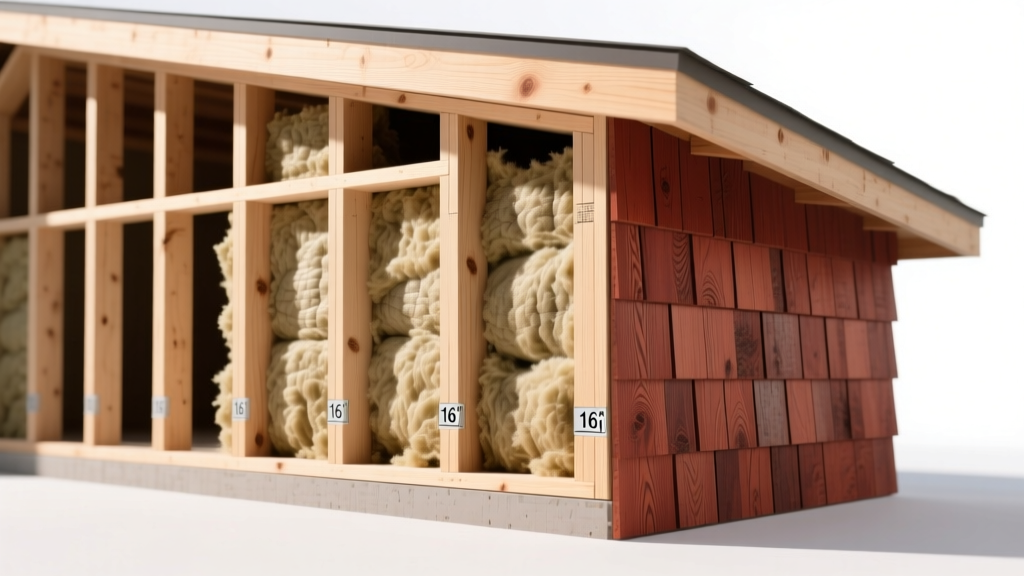
Structural Framing: Softwood Species for Wall Cavities
The structural skeleton of a wood-framed wall relies on dimensional lumber. In North America, framing lumber is governed by the American Wood Council (AWC) span tables and grading rules established by agencies like the NLGA and WWPA.
Spruce-Pine-Fir (SPF)
SPF is the most common framing species group, comprising White Spruce, Lodgepole Pine, and Alpine Fir. For standard residential wall framing, SPF #2 grade is the industry baseline. It offers a Modulus of Elasticity (MOE) of 1.5 x 10^6 psi, providing adequate stiffness for standard 16-inch on-center (OC) wall studs up to 10 feet in height. Avoid 'Stud' grade SPF for load-bearing exterior walls; while cheaper, it permits higher slope-of-grain and wane, reducing structural integrity.
Douglas Fir-Larch (DF-L)
When designing multi-story timber frames or walls subject to high wind/seismic loads, Douglas Fir is the superior choice. With an MOE of 1.9 x 10^6 psi and high bending strength (Fb = 1,500 psi for Select Structural), DF-L studs resist lateral deflection better than SPF. It is the mandatory choice for shear wall boundary elements and hold-down anchor points.
Southern Yellow Pine (SYP)
SYP boasts the highest fastener withdrawal resistance among common framing lumbers. This makes it the required species for structural shear walls utilizing high-density nail patterns (e.g., 8d nails at 2-inch OC) to resist hurricane-force uplift and shear forces.
| Species Group | Grade | MOE (psi) | Specific Gravity | Avg. Cost (2x4x8) |
|---|---|---|---|---|
| Spruce-Pine-Fir (SPF) | #2 & Btr | 1,500,000 | 0.42 | $3.85 - $4.20 |
| Douglas Fir-Larch | #2 & Btr | 1,900,000 | 0.50 | $4.50 - $5.10 |
| Southern Yellow Pine | #2 | 1,700,000 | 0.55 | $4.10 - $4.60 |
Interior Wall Cladding & Paneling: Hardwood & Specialty Species
Interior wall wood serves an aesthetic and acoustic purpose. The critical metric here is dimensional stability and Janka hardness, which dictates dent resistance in high-traffic corridors.
White Oak (Quarter Sawn)
Quarter-sawn White Oak is the premium standard for interior wall paneling. The milling technique exposes the medullary rays (creating a striking 'fleck' pattern) and drastically reduces radial shrinkage. With a Janka hardness of 1,360 lbf, it resists impact damage from furniture and foot traffic. It must be kiln-dried to 6-8% moisture content (MC) and acclimated to the interior HVAC environment for 72 hours prior to installation to prevent joint gapping.
Eastern White Pine
For traditional shiplap or tongue-and-groove (T&G) profiles, Eastern White Pine offers a warm, rustic aesthetic at a fraction of the cost of hardwoods. However, its Janka rating is just 380 lbf, making it highly susceptible to denting. It is best reserved for low-traffic areas like bedroom accent walls or ceiling-to-wall cove transitions.
Exterior Wall Siding: Weather-Resistant Species
Exterior wall cladding must withstand UV degradation, fungal decay, and cyclical moisture swelling. According to data from The Wood Database, natural decay resistance is tied to the presence of extractives in the heartwood.
Western Red Cedar
Western Red Cedar remains the benchmark for exterior siding due to its high concentration of thujaplicins, which act as natural fungicides. For wall applications, specify Clear Heart, Vertical Grain (CVG) bevel or channel-rustic profiles. Vertical grain ensures the wood expands and contracts minimally across the face of the board, preventing the 'cupping' that plagues flat-sawn exterior siding. Expect to pay between $5.50 and $7.50 per linear foot for premium CVG grades.
Acetylated Wood (Accoya)
For projects demanding extreme longevity without the use of toxic chemical preservatives, acetylated radiata pine (commercially known as Accoya) is the leading high-performance cladding. The acetylation process modifies the wood's cell walls, reducing equilibrium moisture content (EMC) by up to 50%. This yields a Class 1 durability rating with a 50-year above-ground warranty, outperforming even old-growth Redwood in wet climates.
"The failure of most exterior wood wall systems is not due to the wood species, but to capillary action at the bottom edge. Always maintain a minimum 6-inch ground clearance and install a drip kerf or flashing to prevent end-grain moisture wicking." — Building Science Corporation guidelines on rain screen design.
Fastener & Finish Compatibility Guide
Pairing the wrong fastener with specific wood species guarantees premature wall failure through corrosion or staining.
- SPF / Douglas Fir Framing: Standard hot-dipped galvanized (HDG) nails (ASTM A153) are sufficient for interior structural framing.
- Cedar / Redwood Siding: The natural acids and tannins in these species will rapidly corrode standard zinc plating, causing black streaks down the wall. You must use Type 304 Stainless Steel ring-shank siding nails. For coastal installations within 5 miles of saltwater, upgrade to Type 316 Stainless Steel.
- Acetylated Wood: Acetylation increases the wood's acidity. Only use high-grade stainless steel (A4/316) or specialized polymer-coated structural screws to prevent fastener degradation.
Frequently Asked Questions
Can I use pressure-treated lumber for interior wall framing?
No. Pressure-treated lumber (typically SYP treated with Alkaline Copper Quaternary - ACQ or Copper Azole - CA-C) is strictly for moisture-prone areas like bottom plates on concrete slabs. Using it for full interior wall cavities introduces unnecessary chemicals into the living space, emits off-gassing odors, and requires expensive corrosion-resistant fasteners due to the copper content.
What is the best wood for a bathroom accent wall?
Bathrooms require species with high dimensional stability and natural rot resistance. Teak or Thermally Modified Ash are excellent choices. Thermal modification bakes the wood at 400°F+, permanently altering its cellular structure to resist moisture absorption, making it highly stable in high-humidity wall applications.
How do I calculate the board footage for a wood-paneled wall?
Measure the wall's square footage (Height x Width). Add 10-15% for waste, cuts, and milling defects. If using T&G paneling, remember that a nominal 6-inch board only yields 5.25 inches of exposed face coverage due to the overlapping tongue. Divide your total square footage by the exposed face width to get accurate linear footage requirements.
Written by
Elena RodriguezElena Rodriguez is a civil engineer and technical writer specializing in concrete technology, masonry systems, and ASTM/ACI compliance. She earned her B.S. in Civil Engineering from Texas A&M University and spent a decade at a materials testing laboratory, performing over 2,000 concrete compressive strength tests and masonry prism evaluations. Elena is an ACI-certified Field Testing Technician (Grade I) and a member of ASTM Committee C12 on Natural Building Stone. She currently consults on forensic engineering cases involving concrete failures and moisture intrusion. Based in San Antonio, TX, Elena is a proud member of the Society of Women Engineers (SWE) and coaches her daughter's FIRST Robotics team.
More from Elena Rodriguez
View all
Walls & Panels
Cost Analysis: Light Gauge Steel Framing Advantages and Disadvantages
Evaluate light gauge steel framing advantages and disadvantages through a strict cost analysis lens, comparing material, labor, and lifecycle expenses.
Aug 4, 2026

Walls & Panels
Gypsum Board Types: Exact Specifications, Thickness & Dimensions
Compare standard, Type X, and moisture-resistant gypsum board types. Get exact specifications, thicknesses, dimensions, and ASTM standards for your project.
Aug 4, 2026

Fire Resistance
Best Fire-Resistant Outdoor Decking Materials: 2026 Buyer Guide
Discover the best fire-resistant outdoor decking materials for 2026. Compare Class A PVC, aluminum, and hardwood options for WUI compliance and safety.
Aug 4, 2026